
DHS issues final rule changing admission period for foreign students and exchange visitors
minhle
News
Receiving a U.S. visa denial is always a disappointing experience, especially when you have prepared meticulously and placed high expectations on your trip. “How soon can I reapply after a U.S. visa refusal?” is a question many applicants ask immediately after their interview. This is a common query, but it is frequently misunderstood, leading individuals to resubmit their applications before they are genuinely qualified. This article by First Consulting Group (FCG) will help you determine the appropriate time to reapply for a U.S. visa and identify the specific factors you need to improve to increase your chances of approval.
There is currently no statutory waiting period or mandatory timeframe required between two U.S. visa applications. You are legally permitted to resubmit your application immediately after a refusal, provided you complete all necessary steps, such as filling out a new application form, paying the visa fee, and scheduling a new interview appointment.
However, being allowed to reapply does not mean you should do so immediately. If your dossier has not undergone substantial changes regarding your finances, employment, ties to your home country, or the purpose of your trip, reapplying too quickly is usually counterproductive. In these situations, the consular officer will compare your current application with the previous record and evaluate whether any real improvement has been made.
You should not reapply for a U.S. visa immediately if:
You have not clearly identified the exact reason for your previous denial.
Your financial profile, employment status, or ties to your country of origin have not changed significantly.
Your declared information and travel purpose remain virtually identical to the last application.
You are reapplying primarily out of anxiety or simply wanting to “try your luck.”
In the scenarios mentioned above, waiting longer to adjust and properly rebuild your dossier generally yields a much higher probability of approval compared to rushing into an immediate reapplication.
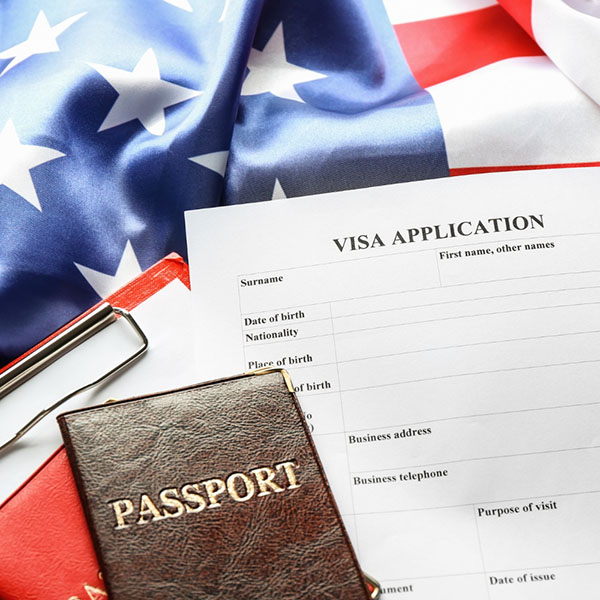
Before worrying about how long to wait before reapplying, you must confirm the definitive outcome of your recent interview. In practice, the result is made clear through the status of your passport and the documents handed to you at the end of the interview.
If the visa is approved: The consular officer will retain your passport to print and affix the physical visa foil, and it will be returned to you via courier later.
If the visa is denied: Your passport will be returned to you immediately at the counter, accompanied by a formal refusal letter. This notice usually only cites the brief statutory section of the law under which you were refused, leaving many applicants confused as to why their specific application fell short.
Under U.S. Immigration Law, consular officers can only issue a visa if the applicant proves eligibility at the exact time of the interview. When a visa is denied, the decision is typically based on the following statutory grounds:
Section 214(b): The applicant failed to establish a bona fide nonimmigrant intent or failed to prove strong, binding ties that would compel their return to their home country after the temporary stay.
Section 212(a): Involves specific grounds of inadmissibility, criminal background, or prior immigration violations, which require careful legal analysis before a reapplication can be attempted.
Failure to prove clear intent to return to the country of origin after the trip.
Employment, financial status, or family ties that are not sufficiently convincing or established.
An ambiguous, poorly planned, or illogical travel purpose or study plan.
Inconsistencies between the information declared on the application form and the verbal answers provided during the interview.
The petition dossier is incomplete or fails to meet specific legal and statutory requirements.
The applicant does not meet the baseline qualifications for the specific visa category being sought.
Failure to adequately prove the underlying qualifying relationship (for family petitions) or professional/technical competency (for employment petitions).
Issues involving personal background checks, criminal history, or a past record of U.S. immigration violations.
In many cases, visa refusals do not stem from a deficiency in the physical paperwork, but rather from verbal interview answers that contradict the filed application data. During the interview, consular officers directly cross-reference your verbal statements with the historical data stored in the electronic system to assess your credibility and honesty.
For example, in an EB-3 employment-based immigrant visa case, details such as the sponsoring employer’s name, the job location, and the specific duties are clearly detailed in the approved Labor Certification (LC). Consular officers frequently ask simple, direct questions such as:
What is the name of your sponsoring company, and where is it located?
What specific position will you assume upon arrival in the United States?
What are your day-to-day job duties?
If the applicant provides vague, hesitant, or inconsistent answers—or simply states, “Once I arrive in the U.S., the company will assign my duties”—the consular officer may question the legitimacy of the employment intent. If they believe the applicant does not genuinely intend to perform the certified job, the visa will be denied.
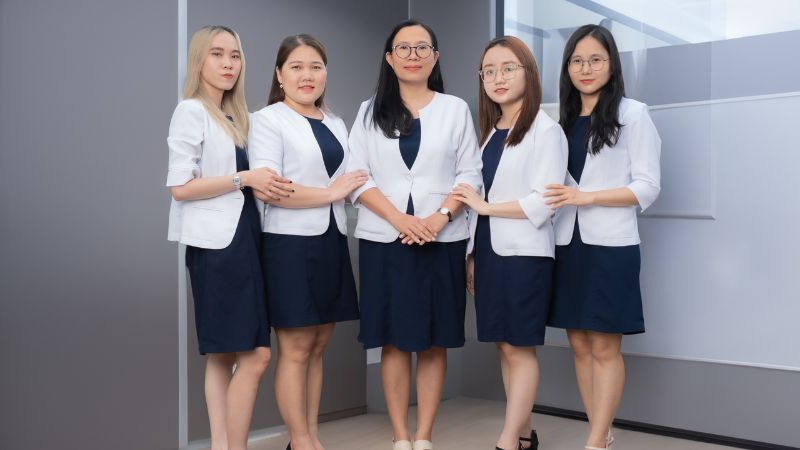
According to the immigration specialists at First Consulting Group (FCG), before resubmitting a U.S. visa application, you should execute the following strategic steps:
Review your entire previously submitted dossier line by line, including all information declared on Form DS-160 (for nonimmigrant visas) or Form DS-260 (for immigrant visas), as well as financial records, employment verification, and travel itineraries.
Cross-check your paperwork against the answers you gave during the first interview to ensure absolute consistency and logic in every detail.
Identify the specific weak points or unconvincing factors of your previous interview, even if they were not explicitly itemized in the standard refusal letter.
Refine your interview communication strategy, focusing directly on the objective, real-world changes in your profile, and avoid repeating robotic or overly generalized answers.
Only submit a new Form DS-160 or DS-260 once your dossier shows clear, demonstrable improvements that can be backed by physical evidence.
At your next interview, the consular officer will deliberately focus on evaluating what has changed since your last refusal. When questioned about your previous denial, you should answer briefly, remain focused, and directly explain the reasons for the prior refusal alongside the specific improvements made to your profile, ensuring all information aligns perfectly with your newly submitted forms.
Knowing how soon you can reapply for a U.S. visa is far less critical than fully understanding why your application was denied in the first place. Only when you accurately identify the specific “bottleneck” can you adjust your strategy and prepare a more persuasive application. Rather than rushing to reapply, take the necessary time to reinforce your weak points, correct your data, and practice your interview skills thoroughly. A clearly improved profile significantly raises your approval rate. First Consulting Group is always ready to guide you through reviewing your dossier, analyzing your refusal, and preparing an optimized strategy tailored to your case.
FOR A FREE CONSULTATION, PLEASE CALL:
– Hotline: (877) 348-7869
– Garden Grove Office: (714) 638-3111
– San Jose Office: (408) 998-5555
– Houston Office: (832) 353-3535
– Vietnam Office: (028) 3516-2118
Disclaimer: All information provided in this document is intended for general informational purposes only and does not constitute formal legal advice. Statistical data and processing timelines reflect the public records available at the time of publication. For precise legal assessments, please schedule a direct consultation with First Consulting Group.
Top Articles
The U.S. immigration process can be intricate, involving detailed legal requirements and procedures. To better address your unique situation, please provide your contact details to arrange a personalized consultation. A member of First Consulting Group’s dedicated team will contact you during business hours to offer expert guidance.

USA
12966 Euclid St., Suite 520, Garden Grove, CA 92840
(714) 638-3111
USA
989 Story Rd., Suite 8075, San Jose, CA 95122
(408) 998-5555
USA
1880 S Dairy Ashford Rd Ste 539, Houston, TX 77077
(832) 353-3535
VIETNAM
8th Floor, Tuoi Tre Tower, 60A Hoang Van Thu St., Duc Nhuan Ward, SaiGon
(028) 3516-2118
VIETNAM
5th Floor, Bao Minh Building, 08 Phan Van Tri St., Ninh Kieu Ward, Can Tho City
(0292) 383-0001
VIETNAM
5th Floor, Viettel Building, 11 Ly Thuong Kiet St., Thuan Hoa Ward, Hue City
(0234) 381-0016
VIETNAM
6th Floor, ACB Building, 218 Bach Dang St., Hai Chau Ward, Da Nang City
0886 00 34 00