What is required to build a quality EB-2 NIW project? 4 crucial characteristics to note
minhle
EB-2 NIW Visa
Many individuals who travel to the United States on a B-1/B-2 visitor visa later develop a desire to pursue long-term education and wonder if changing from a tourist visa to a U.S. student visa is feasible. In reality, USCIS (U.S. Citizenship and Immigration Services) allows a Change of Status from B-1/B-2 to F-1, but it is only approved when strict eligibility criteria are met: a valid Form I-94 arrival record, a Form I-20 issued by an SEVP-certified institution, comprehensive financial proof, and most importantly, evidence that your academic intent developed after entering the country—not as a premeditated plan. Many applications are denied simply because applicants assume holding an I-20 is enough, or they fail to properly articulate the reason for their change of plans. With over 23 years of experience, First Consulting Group helps you understand the requirements and workflows to avoid critical risks that cause rejections.
While inside the United States on a visitor visa, you generally have two primary pathways to execute a change of status to a study program:
F-1 Visa: Tailored for international students pursuing full-time academic courses at universities, community colleges, or SEVP-approved intensive English language programs. This is the most popular choice for individuals seeking long-term degrees or looking to sharpen their English proficiency before entering higher education.
M-1 Visa: Restricted to technical, vocational, or non-academic training programs at certified U.S. vocational schools. This path is suitable if you intend to study short-term practical trades such as cosmetology, automotive mechanics, or other specialized vocational tracks.
Please note that CBP (U.S. Customs and Border Protection) officers hold the absolute authority to evaluate your true intent at the port of entry, especially regarding travelers with irregular itineraries or unusually extended tourist stays. If you are suspected of a “premeditated change of intent”—meaning entering on a tourist visa while harboring a primary desire to study—you may be penalized for material misrepresentation. This carries severe legal consequences, particularly for individuals who originally entered the U.S. on a J-1 exchange visitor visa and later attempt to transition to an academic student status.

The F-1 academic category offers formidable advantages for individuals seeking long-term educational growth:
Access to full-time enrollment at universities, community colleges, or intensive language programs.
Issuance of Form I-20 from an SEVP-certified institution, allowing you to maintain continuous lawful presence throughout your program.
Eligibility to engage in authorized part-time on-campus employment.
The right to remain lawfully in the United States during your studies and access post-graduation practical training (OPT).
However, changing your status from tourism to a student track is highly scrutinized. You must possess:
An unexpired, valid Form I-94 arrival/departure record.
An active Form I-20 from an SEVP-approved institution.
Clear financial proof demonstrating sufficient funds to cover all tuition and living expenses.
A comprehensive statement explaining exactly why your plans changed from vacationing to pursuing an academic degree.
Answering “Can I apply for a student visa after traveling as a tourist?” carries a definitive yes. However, your filing timeline is far more critical than your intent. Filing Form I-539 too quickly after arriving in the United States will lead USCIS to presume that you acted in bad faith and held a hidden academic intent prior to crossing the border.
The M-1 vocational track is the appropriate choice when:
You are pursuing short-term technical trades or vocational certificates lasting 6 to 12 months.
The hosting U.S. trade school provides specialized non-academic certifications.
Your goals center around flight training, cosmetology, or mechanical fields rather than academic degrees.
Critical Regulatory Limitation: The M-1 visa carries a fixed duration and you are completely prohibited from changing your status from an M-1 to an F-1 visa while remaining inside the United States. Once your program starts, you cannot switch tracks unless you completely exit the country and submit a new F-1 application at a U.S. Embassy or Consulate abroad.

Your spouse and unmarried children under the age of 21 can apply for F-2 dependent visas to maintain lawful presence with you in the United States. F-2 children are entitled to free public education from kindergarten through 12th grade (K-12). However, an F-2 spouse is strictly prohibited from engaging in unauthorized domestic employment and cannot enroll in full-time, degree-seeking higher education; they are limited strictly to recreational or part-time courses. Securing F-2 status for accompanying children is highly structured; you must file Form I-539 concurrently with the primary applicant and provide verified financial and relationship proof.
Note: If an F-2 spouse decides to pursue a full-time university or graduate degree to secure an academic credential, they must formally execute an independent change of status to an F-1 visa.
USCIS does not enforce an age limit on education, but adjudicating officers will heavily vet the professional rationale behind an older student’s career transition. If you are between 30 and 45 years old and seeking a change of status from a tourist visa, you must prepare:
A highly detailed statement of purpose (SOP) linking your U.S. studies to your long-term career progression.
Formidable financial statements and well-reasoned academic milestones.
Documented social and economic ties demonstrating your intent to return home post-graduation.
If you have a history of a recent F-1 visa refusal at a U.S. Embassy or Consulate abroad, executing a change of status inside the U.S. becomes significantly more complex. USCIS will meticulously review your entire immigration record and evaluate your true underlying student motivations. Your dossier must be heavily reinforced with fresh evidence and cohesive written explanations, making professional legal guidance highly recommended.
Applicants holding old or inactive SEVIS (Student and Exchange Visitor Information System) identification numbers must execute their filings carefully to prevent automated record conflicts. Similarly, business travelers holding B-1 status who wish to transition to academic tracks must explicitly clarify their academic goals to avoid quick rejections under Section 214(b) due to an unconvincing educational necessity.
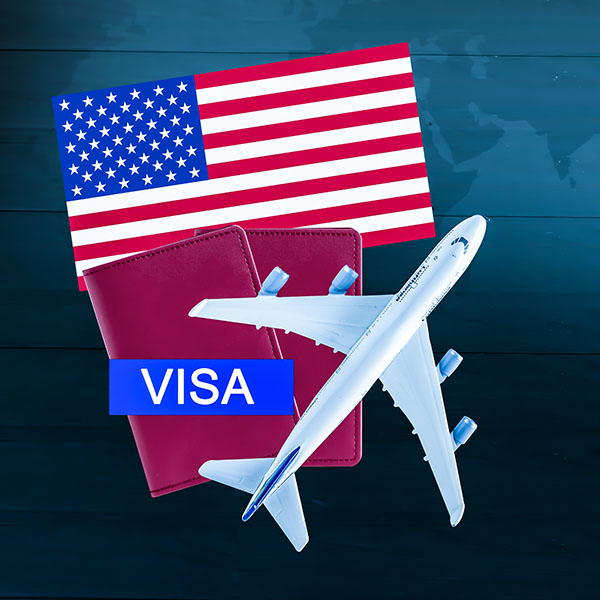
Executing a change of status inside the United States demands rigid compliance with USCIS protocols, alongside an awareness of Department of State (DoS) regulations if you choose to travel back to your country of origin to secure a physical F-1 visa foil in the future.
Filing Windows and Timelines: You must physically submit Form I-539 before the exact expiration date recorded on your Form I-94. It is highly recommended to file at least 15 to 30 days prior to expiration to avoid technical complications. Administrative processing timelines routinely range from 4 to 8 months. Letting your I-94 expire without a pending application triggers immediate Unlawful Presence. Accumulating more than 180 days of unlawful presence carries an automatic multi-year bar on re-entry—the single most severe risk you must avoid, especially as electronic border data tracking becomes highly synchronized across federal agencies.
Form I-20 and SEVIS fees: Your hosting school must be SEVP-certified to generate Form I-20, and a Designated School Official (DSO) will guide you through activating your record within the SEVIS network. You must pay the mandatory $350 SEVIS I-901 fee to the government, while the USCIS Form I-539 processing fees must be funded independently at the time of submission.
Financial Substantiation: Compile comprehensive bank ledgers, certified property assets, or formal affidavits of financial support along with your academic records (transcripts or language certificates if applicable). USCIS requires absolute proof that you possess independent funding to cover all tuition and cost of living metrics without engaging in unauthorized employment.
Strict Study Restrictions Pending Approval: This is a critical pitfall. Individuals holding active B-1/B-2 visitor status are strictly prohibited from enrolling in or attending any formal, full-time academic course of study until Form I-539 is officially approved by USCIS. If the agency has not adjudicated your petition at least 15 days prior to your school’s program start date, you must coordinate with your DSO to formally defer your enrollment to the subsequent semester. You are only legally permitted to commence full-time classes once you physically receive your Form I-797 Approval Notice and your DSO activates your F-1 status within the SEVIS framework.
Tracking Progression: Upon submission, you will receive an official 13-character receipt number, allowing you to track your case progression online via the USCIS dashboard. Depending on your track, you may be scheduled for a mandatory biometrics appointment at a local facility. Ensure you do not miss this appointment, and verify that your file contains a rock-solid Statement of Purpose (SOP) along with your official university admission notices.
A single procedural error or missed deadline can result in an immediate administrative denial, severely compromising any future U.S. visa applications. Filing inaccurate processing fees, submitting late applications, or choosing a non-SEVP-certified institution are common causes for immediate refusal.
Due to recent administrative backlogs, overall processing timelines can extend from 6 to 12 months. During this evaluation phase, USCIS may issue a formal Request for Evidence (RFE) via their portal. If you exit the United States while your Change of Status petition is actively pending, your application is deemed legally abandoned, and you will be forced to undergo standard consular processing and a live interview at a U.S. Consulate abroad before you can return.
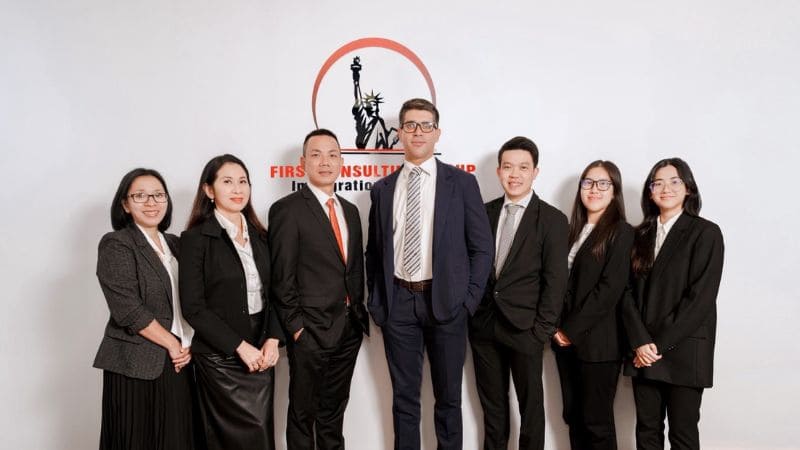
Changing your nonimmigrant status from tourism to an academic student path is a complex legal maneuver, but it remains fully achievable when backed by meticulous preparation and step-by-step specialist oversight. Our firm manages everything from choosing the correct compliant institution and auditing Form I-539 to tracking your case status and resolving complex Requests for Evidence (RFEs).
A minor technical error can permanently derail your academic dreams. Navigating status changes demands real-world immigration insights and absolute legal accuracy. Contact the legal team at First Consulting Group today for a complimentary initial evaluation. We will design a customized processing strategy, handle the exhaustive administrative paperwork, and give you the peace of mind to focus on your educational future.
FOR A FREE CONSULTATION, PLEASE CALL:
– Hotline: (877) 348-7869
– Garden Grove Office: (714) 638-3111
– San Jose Office: (408) 998-5555
– Houston Office: (832) 353-3535
– Vietnam Office: (028) 3516-2118
Disclaimer: All information provided in this document is intended for general informational purposes only and does not constitute formal legal advice. Statistical data and processing timelines reflect the public records available at the time of publication. For precise legal assessments, please schedule a direct consultation with First Consulting Group.
Top Articles

The U.S. immigration process can be intricate, involving detailed legal requirements and procedures. To better address your unique situation, please provide your contact details to arrange a personalized consultation. A member of First Consulting Group’s dedicated team will contact you during business hours to offer expert guidance.

USA
12966 Euclid St., Suite 520, Garden Grove, CA 92840
(714) 638-3111
USA
989 Story Rd., Suite 8075, San Jose, CA 95122
(408) 998-5555
USA
1880 S Dairy Ashford Rd Ste 539, Houston, TX 77077
(832) 353-3535
VIETNAM
8th Floor, Tuoi Tre Tower, 60A Hoang Van Thu St., Duc Nhuan Ward, SaiGon
(028) 3516-2118
VIETNAM
5th Floor, Bao Minh Building, 08 Phan Van Tri St., Ninh Kieu Ward, Can Tho City
(0292) 383-0001
VIETNAM
5th Floor, Viettel Building, 11 Ly Thuong Kiet St., Thuan Hoa Ward, Hue City
(0234) 381-0016
VIETNAM
6th Floor, ACB Building, 218 Bach Dang St., Hai Chau Ward, Da Nang City
0886 00 34 00