
DHS issues final rule changing admission period for foreign students and exchange visitors
minhle
News

Many US permanent residents have been detained at the airport after an extended trip back to their home country to care for relatives, as immigration officers suspected they had abandoned their intention to reside in the US. Reality shows that how long a Green Card holder can stay in their home country is not just a matter of time, but also depends on whether you fully maintain your residential ties to the US. With over 23 years of immigration consulting experience, First Consulting Group has assisted many similar cases in successfully protecting their Green Card status. This article will help you clearly understand the safe timeframes, risk indicators, and appropriate solutions when you need to return to your home country long-term.
Many Green Card holders believe that as long as the card is valid, they can travel freely. However, the rights of a permanent resident are not solely based on the expiration date on the card. They also depend on whether you maintain the intention to reside in the US.
A US Green Card certifies lawful permanent resident status in the United States. Simultaneously, the holder must comply with the obligation to maintain continuous residence.
According to US immigration law, permanent residents must:

This is the most critical question. Everyone holding a US Green Card who returns to their home country needs to clearly grasp this. The law does not specify an exact number, but there are important milestones to keep in mind.
Under 6 months: This is the safest timeframe. In most cases, a Green Card holder leaving the US for under 6 months will not encounter issues upon re-entry. The condition is that you have clear evidence of your ongoing ties to the US.
From 6 to 12 months: This is a highly risky period. Immigration officers have the authority to suspect that you have abandoned your intention of continuous residence in the US. In this scenario, you bear the burden of proving that you have not abandoned your Green Card, rather than the immigration agency having to prove you are at fault. If you are absent for a long time without a Re-entry Permit and lack evidence of ties to the US (such as tax returns, a home, or bank accounts), the immigration officer may deny you entry or refer you to secondary inspection. This does not mean an automatic violation, but your right to keep the Green Card can be questioned at any time—hence it is considered an unpredictable timeframe.
Over 12 months: Leaving the US for too long can be viewed as an intention to abandon your Green Card, unless you have a Re-entry Permit or can prove force majeure circumstances.
Important to remember: The time it takes to lose a Green Card while outside the US is not solely dependent on duration. It is fundamentally based on your intent. USCIS can determine you have abandoned your Green Card even if you are absent for under 6 months. This occurs if there are clear indicators, such as: quitting your job, selling your house, and moving your family completely back to your home country.
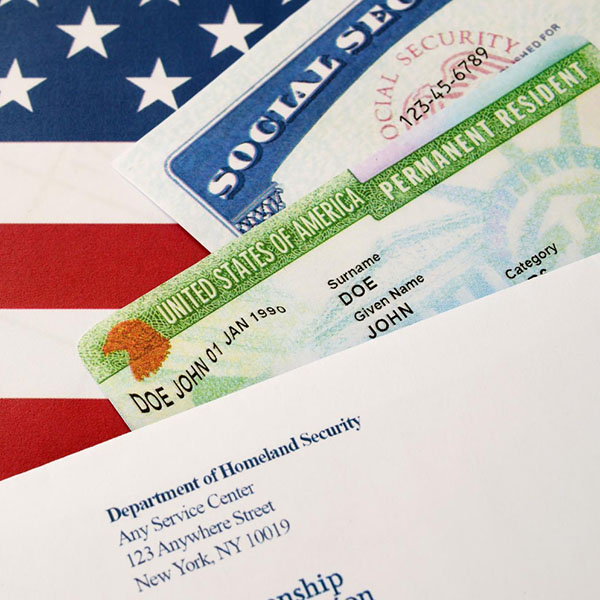
A US permanent resident staying in their home country for too long can face many serious consequences, not simply violating time regulations. CBP and USCIS evaluate your situation based on overall behavior. They closely examine evidence of your intent to reside.
Many permanent residents returning to their home country do not realize they can be considered to have abandoned their intention to settle. This can happen even when the physical card is still valid. CBP has the authority to make this evaluation at the port of entry.
In reality, US immigration officers do not solely rely on the time you spend outside the US. They review multiple indicators to assess whether you still intend to reside long-term in the US. Signs that frequently lead to suspicion of abandoning permanent resident status include:
When several of the above signs appear simultaneously, you may be determined to have abandoned your intent to reside in the US, regardless of your Green Card’s validity.
Why Are You Questioned Extensively When Re-entering the US After a Long Stay in Your Home Country? CBP officers are specifically trained to detect signs of Green Card abandonment. They may ask detailed questions about the purpose of your trip, sources of income, your residence in the US, and future plans.
When returning to the US after a long period in your home country, you may be directed to a secondary inspection area, where customs officers will thoroughly review your records and ask further questions. Here, CBP (US Customs and Border Protection) officers will focus their questions on:
Inconsistent answers or a failure to demonstrate strong ties to the US can put you at risk of being asked to sign a form voluntarily relinquishing your Green Card.
What to Do if Detained at a US Airport? If CBP is suspicious, they may:
Important Note: You have the legal right to refuse to sign Form I-407. Always request to consult with an attorney before signing any documents.
Not every stay in a home country exceeding 6 months results in losing the Green Card. USCIS and CBP may accept legitimate reasons for long-term absences from the US under certain circumstances.
Reasons that are often considered:
Our office has successfully handled numerous cases for clients who faced interrogation at the airport. By comprehensively preparing documents to prove a reasonable cause for their absence, they were permitted entry.
Instead of solely worrying about the permitted time a permanent resident can spend in their home country, proactively apply protective measures. This strategy helps legally safeguard your permanent resident status.
What is a Re-entry Permit? When Is It Mandatory to Apply?
A Re-entry Permit allows a permanent resident to remain outside the US for up to 2 years. During this validity period, you are generally not considered to have abandoned your Green Card. You should apply for this permit when:
Important Note: You must file Form I-131 while you are physically present in the US. You must also complete your biometrics appointments in the US prior to your departure.
Is It More Dangerous for a 2-Year Green Card Holder to Stay in Their Home Country for a Long Time?
A 2-year Conditional Green Card and a 10-year Permanent Green Card carry the exact same obligation to maintain continuous residence. However, a 2-year card requires filing a petition to remove conditions before it expires. If you stay in your home country for an extended period while holding a 2-year card, you will encounter significant difficulties. The primary issue will be a lack of evidence of joint residence when you file your petition to remove those conditions.
Does a Long Stay in the Home Country Affect US Citizenship Naturalization?
Staying in the home country for an extended period directly impacts your eligibility for US citizenship naturalization by disrupting your “continuous residence” (the statutory requirement to live continuously in the US). If a permanent resident is outside the US for over 6 months, their continuous residence is subject to review; if absent for over 12 months, the entire required period of continuous residence is automatically broken and must typically be restarted from scratch. If leaving the US:
Many individuals confuse the rights of a Green Card holder with those of a US Citizen, whereas the travel liberties for these two groups are entirely different:
| Criteria | US Green Card | US Citizenship |
| Time allowed outside the US | Limited | Unlimited |
| Risk of losing residential status | Yes | No |
| Need for a Re-entry Permit | Yes | No |
Therefore, to circumvent legal risks, Green Card holders must clearly understand how long a permanent resident can return to their home country before having to re-enter the US, while also planning accordingly prior to any long-term departure.
How to Prove Continued Residence in the US?
To protect your Green Card when returning to your home country, maintain the following:
To mitigate risks when staying in your home country for a long time, permanent residents should proactively implement steps to maintain their Green Card status, including:

How long can a Green Card holder stay in their home country does not have a universal answer. Every case is evaluated based on the totality of circumstances and the individual’s intent to reside. The golden rule is: the shorter the trip, the safer. Always maintain concrete evidence of your ongoing links to the US.
If you must return to your home country for more than 6 months, apply for a Re-entry Permit in advance. If you have been away for too long and are concerned about re-entry, never voluntarily sign a form to relinquish your Green Card. Seek professional legal counsel immediately.
First Consulting Group features a team of highly experienced immigration attorneys. We are fully prepared to:
Contact our agency immediately for a detailed consultation to protect your permanent resident status. Do not risk losing your Green Card due to a lack of essential legal knowledge!
FOR A FREE CONSULTATION, PLEASE CALL:
– Hotline: (877) 348-7869
– Garden Grove Office: (714) 638-3111
– San Jose Office: (408) 998-5555
– Houston Office: (832) 353-3535
– Vietnam Office: (028) 3516-2118
Disclaimer: All information provided in this document is intended for general informational purposes only and does not constitute formal legal advice. Statistical data and processing timelines reflect the public records available at the time of publication. For precise legal assessments, please schedule a direct consultation with First Consulting Group.
Top Articles



The U.S. immigration process can be intricate, involving detailed legal requirements and procedures. To better address your unique situation, please provide your contact details to arrange a personalized consultation. A member of First Consulting Group’s dedicated team will contact you during business hours to offer expert guidance.

USA
12966 Euclid St., Suite 520, Garden Grove, CA 92840
(714) 638-3111
USA
989 Story Rd., Suite 8075, San Jose, CA 95122
(408) 998-5555
USA
1880 S Dairy Ashford Rd Ste 539, Houston, TX 77077
(832) 353-3535
VIETNAM
8th Floor, Tuoi Tre Tower, 60A Hoang Van Thu St., Duc Nhuan Ward, SaiGon
(028) 3516-2118
VIETNAM
5th Floor, Bao Minh Building, 08 Phan Van Tri St., Ninh Kieu Ward, Can Tho City
(0292) 383-0001
VIETNAM
5th Floor, Viettel Building, 11 Ly Thuong Kiet St., Thuan Hoa Ward, Hue City
(0234) 381-0016
VIETNAM
6th Floor, ACB Building, 218 Bach Dang St., Hai Chau Ward, Da Nang City
0886 00 34 00