
What is required to build a quality EB-2 NIW project? 4 crucial characteristics to note
minhle
EB-2 NIW Visa
During the U.S. family immigration process, there are unfortunately numerous instances where the petitioner passes away before the case is fully finalized. When confronting this devastating circumstance, the beneficiary can legally sustain their immigration path through a process known as Humanitarian Reinstatement. In the article below, First Consulting Group outlines the comprehensive operational details of a humanitarian reinstatement request and analyzes the critical parameters you must evaluate.
Humanitarian reinstatement is a specialized discretionary relief granted by the United States government that permits a foreign national beneficiary to request the restoration of an approved Form I-130 immigrant petition after the original petitioner has passed away. Many view this application process as an administrative “favor” or a legal bridge designed to protect the rights of beneficiaries and mitigate extreme hardships during their U.S. migration path.
However, U.S. Citizenship and Immigration Services (USCIS) strictly audits every unique dossier to determine if the beneficiary fulfills all federal conditions to continue. This compassionate policy was established to prevent the permanent dissolution of families due to external factors completely beyond the applicant’s control.
This type of discretionary petition is never automatically approved. The beneficiary must proactively compile a formal written request, submit compelling objective evidence documenting severe humanitarian hardships, and secure an eligible substitute financial sponsor. Every case is adjudicated independently against distinct evaluation indices.
See also: Step-by-Step Guide on Filing a Form I-601A Provisional Waiver
To successfully request a humanitarian reinstatement after the passing of your petitioner, you must satisfy the following strict federal conditions:
Beneficiaries residing outside the United States: The original petitioner must have passed away after the Form I-130 had already been formally approved by USCIS. If the petitioner passes away while the Form I-130 is still under administrative review (Pending status), the file is statutorily ineligible for humanitarian reinstatement abroad.
Beneficiaries residing inside the United States: If the beneficiary is currently residing legally inside the U.S., they may request reinstatement even if the petitioner passed away while the Form I-130 was still pending approval, under specific statutory exceptions.
Because the original petitioner’s financial contract (Form I-864) becomes void upon their passing, the beneficiary must secure a Substitute Sponsor (sub-sponsor) to underwrite the case. The substitute sponsor must fulfill the following strict legal criteria:
Must be a U.S. citizen or a Lawful Permanent Resident (LPR).
Must be at least 18 years of age.
Must be a contractually defined Qualifying Relative residing legally in the United States. Eligible relations are strictly restricted to the beneficiary’s spouse, parent, mother-in-law, father-in-law, sibling, child, son-in-law, daughter-in-law, sister-in-law, brother-in-law, grandparent, grandchild, or legal guardian.
The dossier must present robust, objective secondary evidence demonstrating Extreme Hardship that the substitute sponsor, the beneficiary, and/or their U.S.-based family members would suffer if the petition remains permanently revoked.
USCIS evaluates broader equities, including the applicant’s length of legal residence, deep social ties to the home country, critical health issues, or any distinct community benefits the applicant provides to the United States.
This statement is the single most critical component of your file. The written brief must clearly and persuasively articulate the following elements:
Detailed medical, financial, or psychological hardships that your U.S.-based family will suffer if your immigrant visa is permanently denied.
Objective records detailing the profound socio-economic and emotional bonds connecting the applicant to their family inside the United States.
The extensive historical wait times already endured and the sudden, external nature of the petitioner’s passing.
Strategic Compliance Note: Your arguments must focus strictly on the extreme hardships of your U.S.-based qualifying relatives, rather than detailing how the visa approval would simply elevate your personal lifestyle, wealth, or career opportunities inside the United States.
You must assemble a comprehensive financial underwriting portfolio, featuring a fully executed Form I-864 (Affidavit of Support) signed contractually by the substitute sponsor. This package must include recent IRS tax transcripts, unexpired corporate pay stubs, and employment verification letters. The substitute sponsor should ideally demonstrate a stable household income that comfortably exceeds the Federal Poverty Guidelines to minimize public charge screening challenges.
The complete humanitarian reinstatement package must be mailed directly to the exact USCIS field office or service center that issued the original Form I-130 approval notice. Upon logging the files, USCIS will issue a formal receipt notice. Standard administrative processing times routinely extend for 2 years or longer. The unique application tracking number will remain identical to the original approved Form I-130 identifier.
Navigating a humanitarian reinstatement request features heavy regulatory friction. Every step demands flawless data entry and precise tracking. Many independent applicants face rapid denials due to structural data gaps or poorly compiled evidence.
Absolute data consistency: Every piece of metadata supplied within the reinstatement request must perfectly match the historical parameters input on the initial Form I-130. Any discrepancy regarding dates of birth, family relationship timelines, or historical address data will trigger severe agency skepticism regarding the integrity of your entire record.
Managing extensive agency backlogs: Because processing windows are lengthy, applicants must maintain immense patience. Regularly audit your case status on the official USCIS portal. Systematically preserve all physical mail items and receipt records. If you change your physical residence or telephone contact details during this wait time, you must immediately execute an address update with USCIS. Missing an agency notification or failing to respond to a Request for Evidence (RFE) within the mandated deadline will result in the permanent administrative closure of your file.
Certified translation requirements: Ensure all foreign-language documents are accompanied by an accurate, verified English translation backed by a professional certification of translation accuracy. Submitting non-compliant documents will delay your case and cause unnecessary financial overhead.
Prohibition on unauthorized interview attendance: It is vital to remember that submitting a reinstatement request does not mean your immigration file is actively active. You are strictly prohibited from scheduling or attending a visa interview at the U.S. Consulate until you formally receive an official written Approval Notice from USCIS and the dossier is systematically reactivated and transferred to the National Visa Center (NVC).
Understanding discretionary relief rules: Prepare your family expectations for all administrative scenarios. Humanitarian reinstatement is a purely discretionary legal benefit; it is not a statutory right. USCIS reserves the absolute authority to reject your request without extensive explanations if they determine that your humanitarian equities are insufficient. Therefore, investing heavily in professional legal engineering and objective evidence from the very beginning is vital.

Securing an official written notice confirming the approval of your humanitarian reinstatement is a major procedural milestone that safely reactivates your immigration pathway. The specific structural rights you recover include:
Pristine preservation of your original priority date: This is your greatest legal advantage. Your case maintains its exact original filing date and priority position from the initial Form I-130. This ensures you do not lose your place in line and completely bypasses the need to initiate a new multi-year wait list. If your priority date has already become current according to the monthly Visa Bulletin, your dossier transitions immediately to active processing rather than starting from scratch.
Seamless reactivation within the National Visa Center network: Following approval, USCIS instructs the NVC to safely reactivate your file. The applicant can then move forward with the standard finalization steps, such as funding mandatory immigrant visa fees, submitting civil documents through the electronic portal, and preparing for the final medical check and consular interview.
Path to lawful permanent residency and future citizenship: Upon passing your interview at the U.S. Embassy or Consulate, you are formally granted an immigrant visa. The moment you enter a U.S. Port of Entry, you legally become a Lawful Permanent Resident (LPR) and your physical Green Card is issued. This secures your right to permanently live and work anywhere in the United States, protects you under federal law, and establishes a transparent 5-year pathway to apply for full U.S. Citizenship, unlocking voting rights and a U.S. passport.
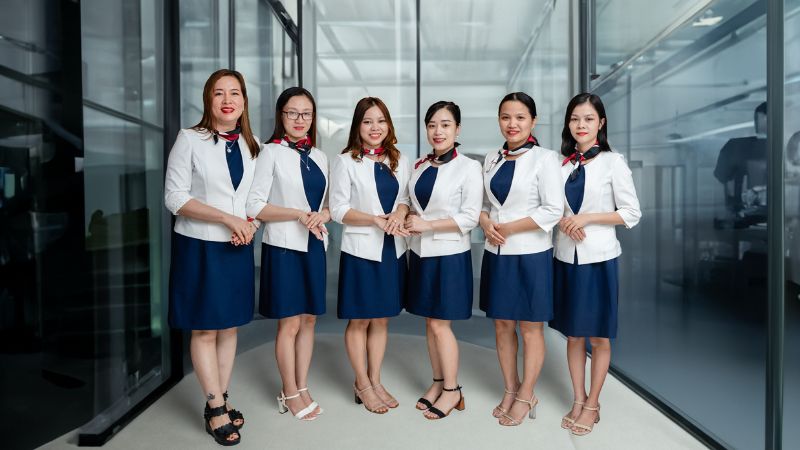
Building a compliant humanitarian reinstatement dossier requires sophisticated legal mapping and zero margin for data error. The legal team at First Consulting Group holds over 23 years of specialized experience guiding families through complex U.S. immigration backlogs. We carefully analyze each profile parameter to construct a resilient evidence portfolio. Contact our office today to secure your custom case consultation.
FOR A FREE CONSULTATION, PLEASE CALL:
– Hotline: (877) 348-7869
– Garden Grove Office: (714) 638-3111
– San Jose Office: (408) 998-5555
– Houston Office: (832) 353-3535
– Vietnam Office: (028) 3516-2118
Disclaimer: All information provided in this document is intended for general informational purposes only and does not constitute formal legal advice. Statistical data and processing timelines reflect the public records available at the time of publication. For precise legal assessments, please schedule a direct consultation with First Consulting Group.
Top Articles

The U.S. immigration process can be intricate, involving detailed legal requirements and procedures. To better address your unique situation, please provide your contact details to arrange a personalized consultation. A member of First Consulting Group’s dedicated team will contact you during business hours to offer expert guidance.

USA
12966 Euclid St., Suite 520, Garden Grove, CA 92840
(714) 638-3111
USA
989 Story Rd., Suite 8075, San Jose, CA 95122
(408) 998-5555
USA
1880 S Dairy Ashford Rd Ste 539, Houston, TX 77077
(832) 353-3535
VIETNAM
8th Floor, Tuoi Tre Tower, 60A Hoang Van Thu St., Duc Nhuan Ward, SaiGon
(028) 3516-2118
VIETNAM
5th Floor, Bao Minh Building, 08 Phan Van Tri St., Ninh Kieu Ward, Can Tho City
(0292) 383-0001
VIETNAM
5th Floor, Viettel Building, 11 Ly Thuong Kiet St., Thuan Hoa Ward, Hue City
(0234) 381-0016
VIETNAM
6th Floor, ACB Building, 218 Bach Dang St., Hai Chau Ward, Da Nang City
0886 00 34 00