
DHS issues final rule changing admission period for foreign students and exchange visitors
minhle
News

Many families globally believe that opening a savings account with a large balance is enough to prove financial capacity for US study abroad or immigration applications. In reality, many cases are rejected or face requests for further explanation despite having prepared savings accounts worth millions of dollars. The issue lies in the fact that proving financial capacity with a savings account is not just about the numbers; it is also about the logic behind the source of funds, timing, and purpose. This article, together with First Consulting Group, will help you understand the true nature of this method and how to properly prepare so that your application is genuinely convincing.
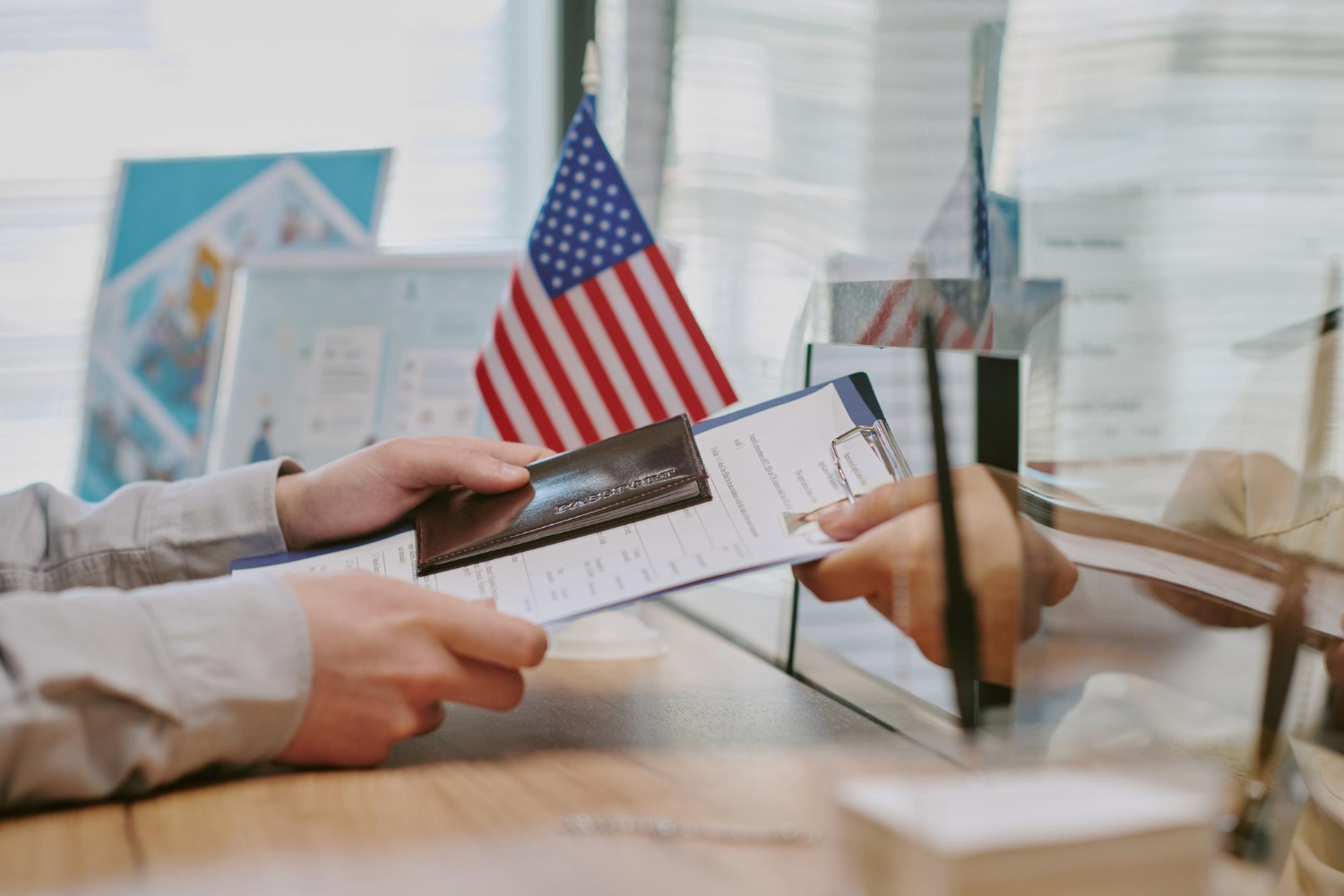
When the reviewing agency evaluates a study abroad or immigration application, they do not just look at the numbers in the bank account. They want to see evidence that you or your sponsor has the ability to be financially self-sufficient throughout your stay in the US. The ultimate goal is to ensure that the international student or immigrant does not become a public charge to the host country. This is exactly why this method is accepted as a valid tool in most visa categories.
Proving financial capacity with a savings account is a popular option in many countries; however, there is no specific regulation from the US government requiring the sole use of this particular method.
Not all immigration applications are required to use a savings account to verify financial capacity. However, this is the most common method in the following scenarios:
Financial requirements vary depending on the school, study program, and living location. Some US universities list the total estimated costs on the I-20 form, which typically includes tuition, insurance, and living expenses. Therefore, the amount you need to prove when opening a savings account for a visa application should be based on the official information provided by the school. A comprehensive assessment always considers the compatibility between your educational goals, expected costs, and available financial resources.
A savings account is not the only factor that determines the review outcome, but it plays a crucial role in demonstrating liquidity and financial readiness. This is a source of funds that can be accessed immediately, helping the reviewing agency evaluate your level of proactiveness in paying for tuition and living expenses during your stay.
In practice, this procedure is often combined with proof of income or proof of assets. Each method plays its own role in building a consistent financial narrative. For applications showing a stable income, a savings account helps solidify credibility.
For families with significant accumulated assets (such as real estate) but whose monthly income is not clearly reflected through bank statements (e.g., freelance or self-employed businesses), a savings account needs to be opened early to prove that it is long-term accumulated wealth. This helps avoid depositing a massive amount of cash all at once, which could raise suspicions regarding the source of the funds.
During the visa review process, a savings account is not viewed simply as an independent number. Rather, it is evaluated based on the consistency between the source of funds, income, and the declared study plan.
You need to meet the following core criteria when preparing a savings account for US study abroad:
Preparing early and maintaining stability are key factors that help minimize suspicion during the application review process, especially when setting up a savings account for study abroad. Reviewing a study abroad financial proof application requires a high level of logical consistency to avoid raising doubts. Confirming a bank balance only reflects one part of the document set. The deciding factor remains the ability to explain the origin of the finances and the consistency of all documents. Therefore, building a financial plan with a clear roadmap when opening a savings account for study abroad financial verification will help create a coherent, continuous “financial narrative” from the source of income through the accumulation process.
In addition to checking documents, the reviewing agency also evaluates the savings account based on the criteria of actual financial capacity. The core objective is to determine whether the applicant meets the principle of not becoming a public charge. Because of this, financial rationality and the consistency among income, savings, and the study plan are often prioritized over the absolute numbers on the account statement.

Even with a savings account, many applications are still rejected or face requests for supplementary documents due to illogical preparation and a lack of synchronization with other paperwork. The main reason usually does not lie in the amount of money, but in the inability to explain the source and the lack of consistency among income, time of deposit, and the scale of assets. Understanding these errors will help you avoid prolonged reviews or an unconvincing financial evaluation.
The common errors that we frequently encounter include:
Why is a visa still rejected even after a savings account has been opened to complete the study abroad financial profile? The answer lies in a lack of consistency. If an average income is declared but a large sum of money suddenly appears in the savings account right before the submission deadline, the applicant may be required to explain this discrepancy. This usually happens when there is a lack of consistency among income, savings, and the timing of the financial development.
To reduce the risk of suspicion and increase persuasiveness, you should:
Preparing a savings account for a visa application according to a structured roadmap can help the application avoid requests for supplementary information or prolonged review times. When the reviewing agency sees clear consistency and logic, they tend to trust the applicant’s ability to be self-sufficient more. This is an important part of the process but does not absolutely guarantee the outcome, as the final decision also depends on many other factors such as the visa interview, academic records, and the study plan.
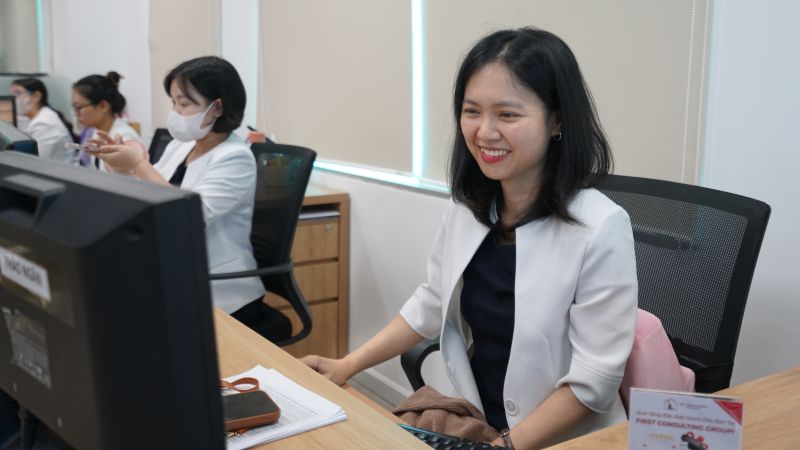
If you need deeper insights into the requirements for proving financial capacity with a savings account for US study abroad or immigration applications, contact First Consulting Group immediately.
FOR A FREE CONSULTATION, PLEASE CALL:
– Hotline: (877) 348-7869
– Garden Grove Office: (714) 638-3111
– San Jose Office: (408) 998-5555
– Houston Office: (832) 353-3535
– Vietnam Office: (028) 3516-2118
Disclaimer: All information provided in this document is intended for general informational purposes only and does not constitute formal legal advice. Statistical data and processing timelines reflect the public records available at the time of publication. For precise legal assessments, please schedule a direct consultation with First Consulting Group.
Top Articles


The U.S. immigration process can be intricate, involving detailed legal requirements and procedures. To better address your unique situation, please provide your contact details to arrange a personalized consultation. A member of First Consulting Group’s dedicated team will contact you during business hours to offer expert guidance.

USA
12966 Euclid St., Suite 520, Garden Grove, CA 92840
(714) 638-3111
USA
989 Story Rd., Suite 8075, San Jose, CA 95122
(408) 998-5555
USA
1880 S Dairy Ashford Rd Ste 539, Houston, TX 77077
(832) 353-3535
VIETNAM
8th Floor, Tuoi Tre Tower, 60A Hoang Van Thu St., Duc Nhuan Ward, SaiGon
(028) 3516-2118
VIETNAM
5th Floor, Bao Minh Building, 08 Phan Van Tri St., Ninh Kieu Ward, Can Tho City
(0292) 383-0001
VIETNAM
5th Floor, Viettel Building, 11 Ly Thuong Kiet St., Thuan Hoa Ward, Hue City
(0234) 381-0016
VIETNAM
6th Floor, ACB Building, 218 Bach Dang St., Hai Chau Ward, Da Nang City
0886 00 34 00