What is required to build a quality EB-2 NIW project? 4 crucial characteristics to note
minhle
EB-2 NIW Visa
Many applicants compile their documentation packages with extreme care but still face a rapid visa refusal simply because they do not know what questions they will encounter at the U.S. Consulate. In reality, this live interaction typically lasts only 2 to 5 minutes. However, it serves as the ultimate deciding factor regarding whether your visa will be approved or denied. This comprehensive guide from First Consulting Group will detail the most common U.S. tourist visa interview questions and explain how to practice them at home according to the consular officer’s adjudication logic, building your confidence and minimizing the risk of an unfortunate visa rejection.

Before exploring specific U.S. tourist visa questions, it is vital to master the core administrative mindset of the consular officer. Under Section 214(b) of the Immigration and Nationality Act (INA), every nonimmigrant visa applicant—whether traveling for casual tourism or executing a short-term trip to visit relatives—is statutorily presumed to harbor immigrant intent from the very start of the interview. This means that the U.S. Consulate views you as an intending immigrant unless you successfully provide clear, objective evidence to prove otherwise. Your primary objective during this brief interaction is to completely break that legal presumption using transparent and persuasive answers.
The B-1/B-2 visa classification is a temporary nonimmigrant visa designed exclusively for short-term international travel, business endeavors, or casual tourism. When screening an applicant for this visa, the consulate utilizes every question to score three foundational parameters:
Is the underlying purpose of your proposed travel completely transparent and explicit?
Do you possess sufficient independent financial self-sufficiency to fund all travel liabilities?
Do you possess powerful, unresolved socio-economic ties to ensure a return to your home country upon program completion?
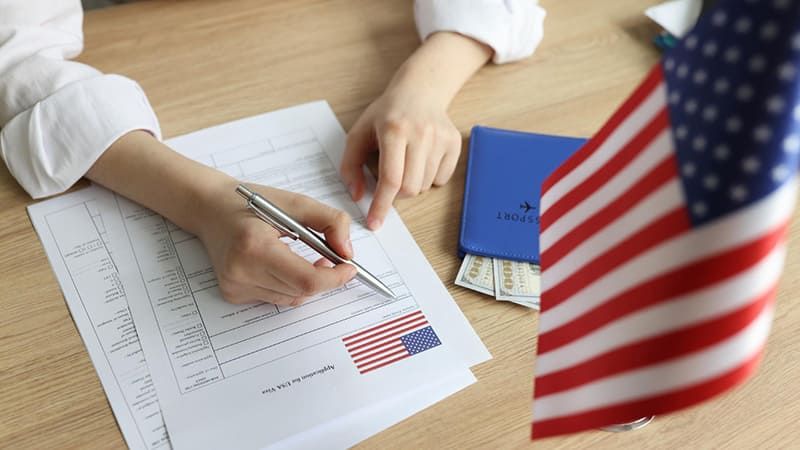
The interview questions are never designed to catch you in a trap; rather, they serve to evaluate the overall logical consistency of your background narrative. If you approach the window showing an excessive fear of visa refusal or fail to practice your answers thoroughly, your probability of an immediate denial scales significantly higher than that of an applicant utilizing a structured, compliant preparation strategy.
At its core, this screening functions under strict regulatory guidelines managed by the U.S. Department of State. The adjudicating officer references federal database tracking, the information input on your Form DS-160, and your live verbal responses to issue an administrative decision right at the window. Therefore, maintaining perfect consistency between your physical documents, your spoken words, and your behavioral poise is your ultimate key to success.
Adjudicating officers need to verify your genuine motivations for traveling to the United States. They will explore your specific itinerary, your intended length of stay, and the distinct landmarks you plan to visit. The stated purpose of your travel must be highly logical and perfectly match the metadata input on your online Form DS-160. If you claim to travel as a tourist but display a vague knowledge of your destination or propose an unusually long stay that disrupts standard vacation baselines, the officer will question your true intent.
The financial liabilities of your trip also serve as a high-stakes detail. You must concisely explain exactly who is underwriting the travel costs, verify their source of funds, and show why you or your guarantor possess the liquid stability to cover these expenses. Constructing a realistic, concrete travel timeline that aligns with your active financial profile creates a highly favorable record during case review.
Consular officers routinely ask targeted questions regarding your relatives permanently settled in the United States, their historical migration paths, and your personal international travel history to determine if you present a high risk of overstaying your authorized stay. If you possess a record of a prior visa refusal or have never previously traveled outside your borders, your narrative must be completely consistent and transparent. Responding honestly and matching data directly against the consulate’s electronic registry ensures your profile is not flagged for immigration misrepresentation.
This screening track allows the consulate to calculate the overall strength of your home-country roots. Verifying your financial capacity requires more than displaying a raw cash balance in a savings account; you must document an active career that generates stable, recurring household income. Holding registered real estate assets, business licenses, or immediate family dependencies remaining behind in your home country serves as primary objective proof that you possess deep roots at home.
Statistically, applicants who are unemployed, single, lack registered assets, or possess zero international travel history face elevated visa refusal rates. Conversely, maintaining a verified corporate career, a robust salary stream, immediate family anchors, and clear real estate holdings in your home country drastically optimizes your probability of an approval.

Below is a master list of the primary interview questions that almost every nonimmigrant applicant must face at the window. These queries are specifically engineered to test for hidden immigrant intent, analyze your home-country ties, and cross-reference your statements against Form DS-160 records:
What is the explicit purpose of your trip to the United States? This question measures whether your travel goals are legitimate. Respond concisely: outline a dedicated vacation plan, state the specific landmarks you plan to see, or clearly note that you are visiting a family member if applicable.
How long do you intend to remain in the United States? Your proposed duration of stay must align logically with your travel purpose. For standard casual tourism, a timeline spanning 1 to 3 weeks is safest. Avoid requesting excessively long stays, as this triggers severe consular skepticism.
Who is contractually funding and paying for this trip? If you are self-funding the journey, be prepared to articulate your active income streams. If a sponsor is financing the travel, clearly state your exact relationship and explain the logical reasoning behind their financial support.
What is your active professional employment or job scope? Provide specific, transparent details regarding your job title, corporate entity, and your overall tenure with the company. Avoid generic descriptions, as the officer needs to verify your professional stability.
What is your exact monthly or annual recurring income? The figures you state verbally must perfectly match the financial metrics and employment verification letters attached to your application. Never inflate these numbers, as the officer can demand immediate physical proof.
Have you previously traveled to any foreign nations? Possessing a verified record of international travel in visa-regulated countries serves as a massive procedural advantage. If you have never previously crossed your borders, explain clearly why this is your first international trip and justify why you selected the United States as your destination.
Do you have any immediate or extended relatives currently living in the United States? This is an exceptionally sensitive line of questioning. If you have family in the U.S., disclose their presence with absolute honesty and clarify your relationship. Attempting to conceal or lie about U.S. relatives results in an automated visa rejection and a potential long-term fraud flag.
What specific activities or obligations await you after you complete your trip? This serves to test your intent to return home. Emphasize your ongoing corporate responsibilities, urgent family duties, or active commercial projects that require your physical presence back in your home country.
Although these questions appear simple on the surface, your verbal responses leave zero room for discrepancy with your Form DS-160. Our legal team recommends drafting a direct comparative mapping sheet at home to cross-reference your input metadata against your planned verbal responses to ensure perfect alignment.
Answering with accurate facts is only half the battle; your delivery methodology is equally vital. Ensure your responses are concise, completely honest, and delivered with professional confidence. Never offer lengthy narratives or volunteer secondary information that the officer did not explicitly ask for. Consular officers operate under severe time constraints; if your answers become disorganized or run on too long, they will rapidly lose patience and move toward a denial.
Your behavioral poise heavily influences the final administrative outcome. Maintain direct eye contact with the officer, project a clear voice, and avoid trembling or looking away. Displaying excessive nervousness or hesitation prompts the officer to presume that you are attempting to conceal material details or misrepresent your profile.
Always remember that Section 214(b) explicitly permits the consulate to refuse your visa if you fail to independently overcome the legal presumption of immigrant intent. You must clearly show that you have no motive to perform unauthorized domestic labor or remain in the United States illegally. Structure every piece of information to showcase your deep socio-economic roots in your home country.
Practice delivering your answers aloud in front of a mirror or execute mock runs with family members. Speaking your answers aloud trains your cognitive memory to deliver information naturally and factually, preventing your responses from sounding stiff or overly rehearsed. Match every stated fact against your Form DS-160 data sheet to eliminate technical contradictions.
Be prepared to handle unexpected follow-up questions, such as an officer asking for a deeper explanation of your daily corporate duties or questioning why you selected this specific time of year to take a vacation. Keep your phrasing short, direct, and logical.
If you feel anxious about navigating this process independently, we highly recommend utilizing specialized mock interview coaching services. Partnering with an expert who can simulate a live consular environment, analyze your behavioral blind spots, and refine your delivery will drastically optimize your approval rate.

A U.S. consular interview is not a trap, but experiencing a rapid visa refusal is highly probable if you enter the window without a calculated preparation strategy. Practicing systematically at home minimizes risk and maximizes your success rate for a B-1/B-2 approval on your very first attempt.
First Consulting Group is ready to assist you—from initial Form DS-160 data validation to comprehensive mock interview training. Contact our office today to secure your professional case evaluation.
FOR A FREE CONSULTATION, PLEASE CALL:
– Hotline: (877) 348-7869
– Garden Grove Office: (714) 638-3111
– San Jose Office: (408) 998-5555
– Houston Office: (832) 353-3535
– Vietnam Office: (028) 3516-2118
Disclaimer: All information provided in this document is intended for general informational purposes only and does not constitute formal legal advice. Statistical data and processing timelines reflect the public records available at the time of publication. For precise legal assessments, please schedule a direct consultation with First Consulting Group.
Top Articles

The U.S. immigration process can be intricate, involving detailed legal requirements and procedures. To better address your unique situation, please provide your contact details to arrange a personalized consultation. A member of First Consulting Group’s dedicated team will contact you during business hours to offer expert guidance.

USA
12966 Euclid St., Suite 520, Garden Grove, CA 92840
(714) 638-3111
USA
989 Story Rd., Suite 8075, San Jose, CA 95122
(408) 998-5555
USA
1880 S Dairy Ashford Rd Ste 539, Houston, TX 77077
(832) 353-3535
VIETNAM
8th Floor, Tuoi Tre Tower, 60A Hoang Van Thu St., Duc Nhuan Ward, SaiGon
(028) 3516-2118
VIETNAM
5th Floor, Bao Minh Building, 08 Phan Van Tri St., Ninh Kieu Ward, Can Tho City
(0292) 383-0001
VIETNAM
5th Floor, Viettel Building, 11 Ly Thuong Kiet St., Thuan Hoa Ward, Hue City
(0234) 381-0016
VIETNAM
6th Floor, ACB Building, 218 Bach Dang St., Hai Chau Ward, Da Nang City
0886 00 34 00