What is required to build a quality EB-2 NIW project? 4 crucial characteristics to note
minhle
EB-2 NIW Visa
U.S. citizenship is the lifelong aspiration of millions around the globe, offering access to exclusive rights, protections, and privileges reserved solely for citizens of the United States. To transform this aspiration into reality, lawful permanent residents must fulfill mandatory periods of statutory residence and meet comprehensive legal requirements under federal regulations. How long does it take to obtain U.S. citizenship? The statutory answer extends far beyond a simple three- or five-year timeframe as commonly assumed. First Consulting Group understands the complex anxieties associated with this extensive journey. This comprehensive guide outlines the required legal milestones to ensure precise filing and prevent catastrophic procedural mistakes that could delay or jeopardize the naturalization application under current 2026 regulations.
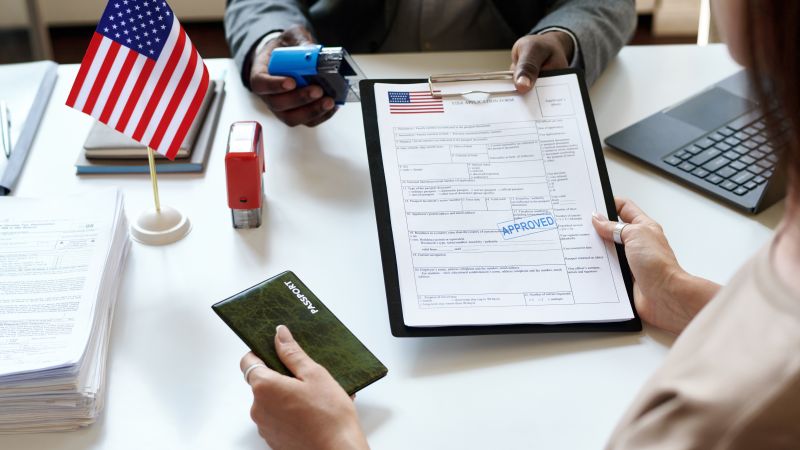
The inquiry regarding the timeline for naturalization represents one of the most frequent legal questions in U.S. immigration practice. A common misconception persists that maintaining a Permanent Resident Card for exactly five years automatically grants eligibility to file for naturalization. The statutory reality under federal law is substantially more rigorous. The Immigration and Nationality Act (INA) dictates strict provisions governing uninterrupted continuous residence.
Applicants must maintain unbroken lawful permanent resident status throughout the entire statutory statutory period without violating federal residency mandates. Naturalization law requires the petitioner to produce affirmative proof establishing both physical presence and continuous residence within the jurisdiction of the United States.
The federal immigration agency enforces stringent statutory criteria. Every component of an applicant’s background is thoroughly audited prior to granting naturalization.
Key factors determining naturalization eligibility include:
USCIS conducts an exhaustive review of the applicant’s complete international travel history to verify adherence to continuous residence provisions. Extended absences outside the borders trigger administrative scrutiny regarding whether the applicant intended to disrupt or abandon permanent resident status. The Good Moral Character standard requires a verification process confirming the absence of disqualifying criminal convictions, unresolved tax liabilities, or non-compliance with federal laws.

The required timeline to secure U.S. citizenship is not uniform. The statutory milestones are determined directly by the specific immigrant classification under which the permanent resident status was obtained.
| Green Card Category | Required Continuous Residence | Specific Legal Prerequisites | Minimum Physical Presence |
| Marriage to a U.S. Citizen (CR1/IR1) | 3 Years | Must remain living in marital union with the U.S. citizen spouse | Minimum of 18 Months |
| Family-Sponsored Preferences (F1/F2/F3/F4) | 5 Years | No exceptional marital conditions | Minimum of 30 Months |
| Employment-Based Preferences (EB-1, EB-2, EB-3) | 5 Years | Continuous lawful employment verification | Minimum of 30 Months |
| Immigrant Investor Program (EB-5) | 5 Years | Maintenance of the qualifying commercial investment | Minimum of 30 Months |
| Military Service | Wartime (INA §329): Immediate eligibility | Honorable military service certification | Flexible military exceptions |
| Military Service | Peacetime (INA §328): Minimum 1 year of honorable service | Honorable military service certification | Flexible military exceptions |
Applicants are legally permitted to submit Form N-400 up to exactly ninety days before reaching the absolute three-year or five-year continuous residence milestone. This regulatory provision is designed to accelerate administrative processing. Utilizing the ninety-day early filing provision does not compromise the validity of the petition. The processing timeframe for Form N-400 varies depending on local field office backlogs and federal agency caseloads.
Upon satisfying the statutory residency and presence requirements, the applicant advances to the formal documentation and testing phase. The administrative processing of a naturalization application typically spans between 9 to 14 months from the initial filing date.
Petitioners must prepare the naturalization application package with extreme accuracy. Form N-400 serves as the official statutory petition for naturalization. The applicant must disclose comprehensive biographical data, residential history, employment records, and answer intensive background questions verifying Good Moral Character.
Mandatory Application Package Components:
During the administrative review, applications are audited over an average span of eight to twelve months depending on the specific regional jurisdiction. Processing times for Form N-400 may extend beyond standard estimates if the file suffers from missing evidence or requires supplemental background checks. The federal processing roadmap encompasses background vetting, a formal interview, and the administration of the educational examinations.
Applicants can monitor the real-time status of their naturalization petition via the secure online portal maintained by the federal immigration agency using the unique receipt number assigned to the file.
Following the administrative acceptance of the petition, the applicant receives an official appointment notice to appear for the naturalization interview. The interview includes the mandatory English and civics examinations.
The naturalization examination comprises three distinct components:
The first component is the civics test evaluating knowledge of United States history and government structures. The applicant must correctly answer at least six out of ten questions selected dynamically from the standardized one-hundred-question study pool. The civics component measures fundamental comprehension of American constitutional democracy, civic rights, and federal responsibilities.
The second component assesses English reading proficiency. The examining officer presents a standardized sentence and requires the applicant to read it aloud. This exercises basic English auditory and reading comprehension.
The third component evaluates English writing proficiency. The applicant must accurately write at least one out of three sentences dictated by the examining officer. This verifies foundational written English communication skills.
In the event of an examination failure, federal regulations permit a second opportunity to retake the failed portion within sixty to ninety days. The re-examination is restricted solely to the failed component rather than a complete reset of the entire application, offering a strategic second chance to establish eligibility.
Upon successful completion of all interview components, the applicant receives an official notice to appear for the Naturalization Oath Ceremony. This represents the final administrative milestone required to formally attain U.S. citizenship. At the ceremony, the applicant takes the Oath of Allegiance to the United States and receives their official Certificate of Naturalization.
Statutory Exemptions from the Educational Testing Requirements
Federal regulations provide specialized age and residency exemptions regarding the English language and civics testing criteria for long-term permanent residents and individuals with qualifying medical conditions:

Does International Travel Outside the United States Disrupt the Naturalization Timeline?
Departing the United States for an uninterrupted period exceeding six months can break the required chain of continuous residence. Federal authorities apply a regulatory presumption that the applicant intended to abandon permanent residency. To safeguard a permanent resident card during extended international absences, a Re-entry Permit must be obtained prior to departure.
Note: A Re-entry Permit preserves the validity of a permanent resident card during long absences abroad, but it does not preserve continuous residence for naturalization purposes.
Can an Application for Naturalization Be Submitted Prior to the Five-Year Mark?
An application may only be submitted up to ninety days prior to reaching the absolute three-year or five-year statutory continuous residence milestone. Any petition transmitted earlier than this ninety-day window will be rejected. Precise mathematical calculation of the filing window is critical to avoid immediate rejections and lost filing fees.
Can Conditional Permanent Residents Apply for U.S. Citizenship?
Conditional permanent residents holding a two-year card must successfully remove the conditions on their residency before they can be granted naturalization. The applicant must file Form I-751 to transition to a ten-year permanent resident card, which proceeds in conjunction with or prior to the final adjudication of Form N-400.
Does a Naturalization Denial Result in the Automatic Revocation of a Permanent Resident Card?
A denial of a naturalization application does not automatically revoke permanent resident status. The applicant generally retains their lawful permanent resident standing. However, if the naturalization vetting process uncovers underlying immigration fraud committed during the initial acquisition of the green card, the agency may initiate formal removal proceedings.
What is the Current Federal Filing Fee for U.S. Citizenship?
Under the current USCIS fee schedule, the filing fee for Form N-400 is $710 for applications submitted online and $760 for petitions filed via paper mail, which encompasses both administrative processing and biometric services. Low-income applicants may qualify for a complete fee waiver or a fee reduction. Our legal team assists eligible clients in preparing the necessary fee exemption applications.
If you require expert guidance concerning the exact timeline to secure U.S. citizenship or need strategic legal assistance with family sponsorship petitions and complex federal immigration filings, contact First Consulting Group to speak with our dedicated legal team. Our firm provides comprehensive representation from initial documentation through the receipt of your Certificate of Naturalization.
FOR A FREE CONSULTATION, PLEASE CALL:
– Hotline: (877) 348-7869
– Garden Grove Office: (714) 638-3111
– San Jose Office: (408) 998-5555
– Houston Office: (832) 353-3535
– Vietnam Office: (028) 3516-2118
Disclaimer: All information provided in this document is intended for general informational purposes only and does not constitute formal legal advice. Statistical data and processing timelines reflect the public records available at the time of publication. For precise legal assessments, please schedule a direct consultation with First Consulting Group.
Top Articles


The U.S. immigration process can be intricate, involving detailed legal requirements and procedures. To better address your unique situation, please provide your contact details to arrange a personalized consultation. A member of First Consulting Group’s dedicated team will contact you during business hours to offer expert guidance.

USA
12966 Euclid St., Suite 520, Garden Grove, CA 92840
(714) 638-3111
USA
989 Story Rd., Suite 8075, San Jose, CA 95122
(408) 998-5555
USA
1880 S Dairy Ashford Rd Ste 539, Houston, TX 77077
(832) 353-3535
VIETNAM
8th Floor, Tuoi Tre Tower, 60A Hoang Van Thu St., Duc Nhuan Ward, SaiGon
(028) 3516-2118
VIETNAM
5th Floor, Bao Minh Building, 08 Phan Van Tri St., Ninh Kieu Ward, Can Tho City
(0292) 383-0001
VIETNAM
5th Floor, Viettel Building, 11 Ly Thuong Kiet St., Thuan Hoa Ward, Hue City
(0234) 381-0016
VIETNAM
6th Floor, ACB Building, 218 Bach Dang St., Hai Chau Ward, Da Nang City
0886 00 34 00