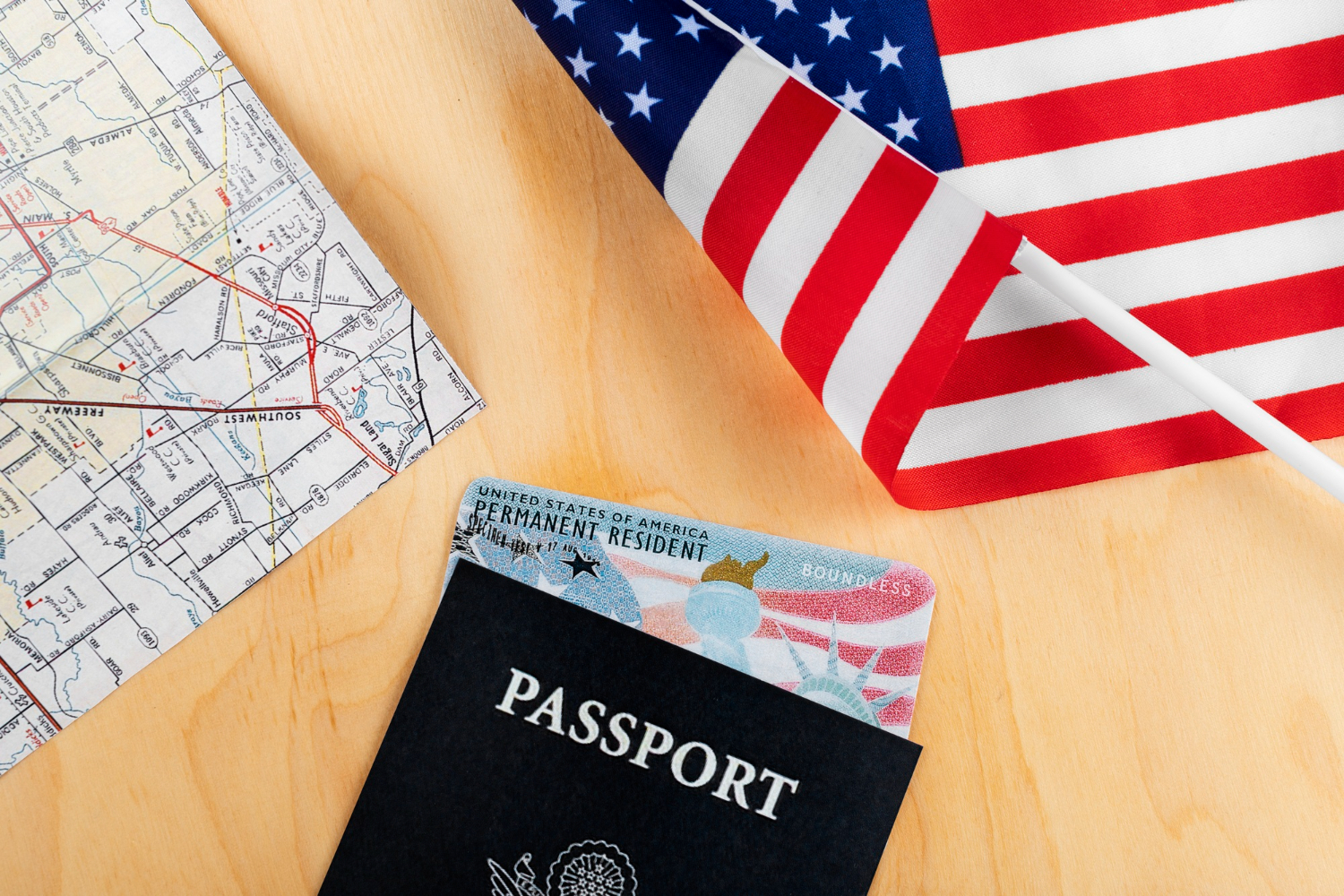
U.S. TO MAKE VISA BOND PROGRAM PERMANENT FOR APPLICANTS FROM DOZENS OF COUNTRIES
minhle
News

The question “which countries can you visit with a U.S. visa” is always a common inquiry for foreign nationals wishing to maximize the benefits of this powerful travel document. In this article, First Consulting Group will provide a comprehensive list of countries that accept a U.S. visa, along with their lawful entry conditions, helping you save time and travel costs.

In practice, many individuals wonder “Which countries can I visit with a U.S. visa?” The specific answer depends entirely on the immigration and entry policies of each individual country.
Currently, there are more than 20 countries and territories that allow holders of a valid U.S. visa to enter visa-free or obtain a visa on arrival. Below is the detailed list by region:
| Region | Country / Territory | Maximum Stay | Detailed Applicable Conditions |
| Americas & Caribbean | Mexico | Up to 180 days | Must hold a valid Multiple-Entry U.S. visa. Mexican immigration authorities determine the actual duration of stay upon arrival (typically 180 days). Return ticket and proof of sufficient financial means are required. |
| Panama | Up to 30 days | The U.S. visa must be a Multiple-Entry visa and must have been used at least once previously. Passport must be valid for at least 3 months, and a return ticket is required. | |
| Costa Rica | Up to 30 days | The U.S. visa (B1/B2, F1, J1, etc.) must be valid for at least 30 days from the date of entry. | |
| Bermuda | Up to 180 days | The U.S. visa must remain valid for at least 45 days after the scheduled completion of the trip. | |
| Aruba, Curaçao | Up to 30 days | Enjoy a 30-day visa exemption with a valid Multiple-Entry U.S. visa. This applies to Aruba and Curaçao (Dutch Caribbean territories). | |
| Asia | Philippines | 7 days | The U.S. visa must be valid for at least 6 months. Applicants must possess a return flight ticket or an onward ticket to a third country. |
| Taiwan | 14 days | Applicants must register online for a Travel Authorization Certificate (TAC) prior to boarding the flight (free of charge). | |
| Singapore | Up to 96 hours | Applicable strictly for transit purposes under the Visa Free Transit Facility (VFTF) en route to or returning from the United States. An onward ticket to a third country is mandatory. | |
| Turkey | 30 days | Permitted to apply for an e-Visa (electronic visa) quickly and easily online. | |
| Georgia | 90 days | The U.S. visa must remain valid at the exact time of entry. | |
| Europe (Balkans) | Serbia | 90 days | The U.S. visa must remain valid throughout the entire duration of the stay. |
| Albania | 90 days | The U.S. visa must be a valid Multiple-Entry visa and must have been used previously. | |
| Montenegro | 30 days | The U.S. visa must be valid. Please note that immigration regulations may change based on the tourist season. | |
| Bosnia & Herzegovina | 30 days | Must hold a valid Multiple-Entry U.S. visa. | |
| Middle East | Oman | 30 days | Eligible to apply for an e-Visa or obtain a Visa on Arrival if you possess a valid U.S. visa. |
| Qatar | 30 days | Eligible for a visa exemption or can apply for an eTA (Electronic Travel Authorization) if holding a valid U.S. visa. |

| Region | Duration of Stay | Outstanding Advantages | Suitable Target Profiles |
| Americas & Caribbean | 30-180 days | Long duration of stay, straightforward procedures, widely accepted for Multiple-entry U.S. visas | Tourists, business travelers, and international students on summer break |
| Asia | 7-90 days | Proximity to home countries, cost-efficient flights, convenient transit (Singapore), easy e-Visa processing (Turkey) | International students returning home who wish to visit neighboring countries, or short-term transit travelers |
| Europe (Balkans) | 30-90 days | Affordable European cultural exploration experiences | Travel enthusiasts seeking exploration |
| Middle East | 30 days | Convenient transit options for those wishing to experience a unique culture | Long-haul flight passengers |
A question that many people care about most is whether a U.S. visa grants entry into Europe, Canada, Japan, or South Korea. The short answer is: No.
A U.S. visa cannot substitute for a Schengen visa, a Canadian visa, a Japanese visa, or a South Korean visa. You are still legally required to apply for a separate, designated visa for these countries despite having a valid U.S. visa stamped in your passport.
Some critical points to note:
The Schengen Zone (which comprises 25 European Union member states and 4 European Free Trade Association (EFTA) member states: Iceland, Liechtenstein, Norway, and Switzerland) requires its own distinct Schengen visa. Immigration authorities in these countries do not accept a U.S. visa as a substitute. However, having a valid U.S. visa in your passport enhances your overall profiling and credibility when applying for a Schengen visa.
A U.S. visa cannot be used to enter Canada.
– For foreign nationals holding a U.S. visa who wish to travel to Canada
Note: If you already possess a valid U.S. visa, this will significantly strengthen your Canadian visa file by demonstrating a compliant international travel history, but it does not bypass the requirement for a full visa review.
– For U.S. citizens wishing to travel to Canada: only a valid U.S. passport is required for tourist entries; no visa or eTA is necessary.
Certain European nations permit short-term airport transit without a transit visa if you possess a valid U.S. visa and remain strictly within the designated international transit area for a few hours. This policy is highly beneficial for travelers booking connecting flights.

Which countries offer visa exemptions for U.S. visa holders, and what conditions must be satisfied to ensure smooth entry? Because every nation enforces its own sovereign immigration laws, you must carefully research and prepare your documentation package in strict alignment with current operational policies.
Checklist of mandatory conditions:
Experiencing a border rejection or violating immigration regulations can leave an adverse record on your international travel history, severely damaging your future application profiles. These incidents do not merely disrupt your current travel plans; they can directly jeopardize your ability to renew existing visas, obtain new visas, or execute long-term relocation goals. Therefore, strict adherence to entry conditions and the meticulous preparation of accurate documents are mandatory to maintain your lawful standing.
Even when an official visa exemption policy is in place, the final admission into any country remains entirely at the sole discretion of the border customs and immigration officers at the port of entry. Immigration authorities reserve the absolute right to deny entry if they suspect the intent of your trip, find inconsistencies in your documentation, or discover an un-transparent history of stay. It is vital to recognize that a visa exemption does not guarantee entry, and all final determinations rest upon the authority of the airport immigration officers.
The immense power of a U.S. visa is reflected in the fact that many foreign governments place deep trust in the rigorous vetting and background check processes conducted by the United States. Once you have successfully passed the extensive document review, personal interview, and security background checks mandated by the U.S. Consulate, other nations view it as a strong indicator of your personal credibility and financial stability.
Countries that accept a U.S. visa often maintain strong diplomatic relations with the United States or seek to attract high-value tourists and international students from the U.S. travel market. They operate under the confidence that an individual holding a valid U.S. visa is highly unlikely to violate local immigration or labor laws.
Even if you have mastered the list of countries offering visa exemptions for U.S. visa holders, you must still comprehend critical risks and operational guidelines to avoid facing an abrupt entry denial.
“Having a U.S. visa allows you to travel to every country in the world” – This is entirely false. A U.S. visa is only accepted by specific nations that have enacted distinct, independent entry policies.
“An expired U.S. visa can still be used to enter other countries” – This is a dangerous assumption. The vast majority of countries strictly require the U.S. visa to be active and valid.
“A single-entry U.S. visa cannot be used for third-country entry” – This is inaccurate. Whether your U.S. visa is classified as single-entry or multiple-entry does not affect your visa-free privileges in a third country, provided that the U.S. visa remains unexpired and valid.
If your background falls into any of the following scenarios, you should immediately contact an immigration professional:
The professional immigration team at First Consulting Group provides exhaustive document audits, real-time visa status evaluations, and proactive legal risk mitigation for clients utilizing a U.S. visa to travel globally. This strategic oversight is vital for individuals planning future studies, employment, or long-term residency in the United States.
Checklist for safe travel preparation:
Which countries can you set foot in with a U.S. visa without applying for additional paperwork? The answers have been detailed comprehensively in the preceding sections. However, the most critical element is not merely the list of nations, but whether you fully satisfy every underlying entry condition.
Throughout our extensive legal consulting experience, our legal team has identified numerous cases where travelers were denied entry at border checkpoints despite possessing a seemingly complete document package. The root causes of these rejections almost always stem from an illogical travel itinerary or inconsistent answers provided during initial customs questioning. This highlights that meticulously preparing the exact purpose of your stay and demonstrating robust socioeconomic ties to your home country remain the ultimate deciding factors. If these practical risks are not professionally evaluated before your departure, they can inflict severe, long-lasting damage on your future global mobility plans.

For many individuals, international travel between third countries is simply the preliminary phase of a long-term, multi-tiered immigration roadmap. If you maintain plans to study, work, or relocate legally, your entire case file must be evaluated holistically to prevent down-stream legal complications. Specifically, when you already hold a valid U.S. visa, you should thoroughly research which countries you can visit to maximize your visa-free privileges or benefit from simplified entry procedures. Setting this direction early allows you to build sustainable travel, educational, and residential pathways that align seamlessly with your personal and family goals.
If you require detailed information, custom legal advice regarding family-sponsored petitions, or support with intricate immigration pathways, contact First Consulting Group. Our highly specialized legal professionals are committed to guiding you through every milestone, delivering the most professional, transparent, and effective immigration solutions.
FOR A FREE CONSULTATION, PLEASE CALL:
– Hotline: (877) 348-7869
– Garden Grove Office: (714) 638-3111
– San Jose Office: (408) 998-5555
– Houston Office: (832) 353-3535
– Vietnam Office: (028) 3516-2118
Disclaimer: All information provided in this document is intended for general informational purposes only and does not constitute formal legal advice. Statistical data and processing timelines reflect the public records available at the time of publication. For precise legal assessments, please schedule a direct consultation with First Consulting Group.
Top Articles


The U.S. immigration process can be intricate, involving detailed legal requirements and procedures. To better address your unique situation, please provide your contact details to arrange a personalized consultation. A member of First Consulting Group’s dedicated team will contact you during business hours to offer expert guidance.

USA
12966 Euclid St., Suite 520, Garden Grove, CA 92840
(714) 638-3111
USA
989 Story Rd., Suite 8075, San Jose, CA 95122
(408) 998-5555
USA
1880 S Dairy Ashford Rd Ste 539, Houston, TX 77077
(832) 353-3535
VIETNAM
8th Floor, Tuoi Tre Tower, 60A Hoang Van Thu St., Duc Nhuan Ward, SaiGon
(028) 3516-2118
VIETNAM
5th Floor, Bao Minh Building, 08 Phan Van Tri St., Ninh Kieu Ward, Can Tho City
(0292) 383-0001
VIETNAM
5th Floor, Viettel Building, 11 Ly Thuong Kiet St., Thuan Hoa Ward, Hue City
(0234) 381-0016
VIETNAM
6th Floor, ACB Building, 218 Bach Dang St., Hai Chau Ward, Da Nang City
0886 00 34 00