USCIS ISSUES NEW GUIDANCE ON PUBLIC CHARGE INADMISSIBILITY: WHAT APPLICANTS NEED TO KNOW
minhle
News
Sponsoring an unmarried child under 21 includes the IR2/CR2 categories (children of US Citizens) and F2A category (children of Permanent Residents). Depending on the petitioner’s residency status, each category will have different documentary requirements and waiting times. Accurately identifying the correct visa category from the beginning plays a key role in helping the child maintain their unmarried status and eligible age until they enter the US. First Consulting Group will guide you in detail through the child sponsorship roadmap, giving you a clear and accurate overview before filing.
Sponsoring a child under 21 is a legal process that allows US citizens or permanent residents to petition for their unmarried children to be granted an immigrant visa and live legally in the United States. This is one of the most common family-based categories, but it is also fraught with strict conditions.
The processing time depends on the parents’ residency status:
| CRITERIA | IR2/CR2 CATEGORY | F2A CATEGORY |
| WHO CAN FILE? | US citizens with an unmarried child under 21 | Permanent residents with an unmarried child under 21 |
| ANNUAL VISA LIMIT | No visa limit → fast processing | Subject to visa limits → waiting time depends on backlog |
| PROCESSING TIME | Generally shorter, usually around 1 – 1.5 years, as there is no need to wait for a visa bulletin priority date | The review process can take 3 – 4 years, depending on immigration policies and the application backlog |
| PROCEDURE AFTER I-130 APPROVAL | The application will be forwarded to the National Visa Center (NVC) for further processing | Must wait for the priority date to become current on the visa bulletin before further processing |
| ABILITY TO UPGRADE THE CASE | No need to upgrade as it is already the fastest waiting time | When the parent naturalizes, they can request to upgrade the case to an immediate relative category to shorten the waiting time |
For an application to sponsor an unmarried child under 21 to be processed smoothly, the petitioner needs to simultaneously meet several important conditions related to legal standing, financial capacity, and the validity of the family relationship. Each factor directly affects the processing timeline and the likelihood of the application’s approval. Understanding each requirement clearly from the beginning will help you proactively prepare all necessary documents and minimize potential risks during the review process.
The petitioner must have valid legal standing in the United States. For US citizens, an unmarried child under 21 will be processed as an immediate relative (IR2/CR2 category), which is not subject to annual visa limits.
Meanwhile, permanent residents can only sponsor their unmarried children under 21 under the F2A family preference category and must wait according to the Visa Bulletin. In both cases, the child’s age may be recalculated under the Child Status Protection Act (CSPA) to determine their eligibility.
Financially, the petitioner must prove an income of at least 125% of the federal poverty guideline based on their household size. If the income is insufficient, you can find a joint sponsor or use assets to compensate. Every individual in the household in the US must be counted in the household size when determining the minimum income threshold.

Cases involving children born out of wedlock or adopted children must meet additional specific conditions as prescribed. Because the documents are complex and governed by various legal regulations, you should consult an immigration lawyer to build a suitable roadmap for each specific case.
Depending on the application, the petitioner may need to provide supplemental documents such as a legal adoption certificate, proof of cohabitation, or documents proving a bona fide relationship, such as DNA test results, legal guardianship papers, or relationship confirmation. Preparing the correct and complete types of documents helps limit Requests for Evidence (RFEs) and avoids prolonging the processing time.
Stage 1: Filing the Petition with USCIS
This is the stage of establishing the legal relationship between the parent and the child under 21 according to US immigration law. After receiving the application, USCIS will carefully review the evidence and issue corresponding notices regarding the processing status.
Complete and accurate preparation from the very beginning is a key factor, helping to minimize unfavorable notices such as requests for additional evidence or responses that delay processing times. A well-organized document package not only facilitates a smooth process but also contributes to shortening the waiting time, bringing the application closer to the approval stage sooner.
Documents for sponsoring a child under 21 include:
Form I-130 filed by the father or mother.
Documents proving the petitioner’s residency status:
Documents proving the parent-child relationship, depending on the case:
The filing fee is applied according to the current rate prescribed by USCIS, depending on the submission method. For online filing, the fee is $625. If filed by mail (paper filing), the applicable fee is $675. Choosing the appropriate method should be considered carefully from the start to ensure the intake process goes smoothly and limits unnecessary issues.
In cases where a birth certificate has missing information, discrepancies, or was registered late, you may need to provide additional documents confirming the legal relationship to increase the chances of approval.
Stage 2: Completing the Application at the NVC
After the Form I-130 is approved, the petition for the child under 21 will be forwarded to the National Visa Center (NVC) to process civil documents and financial sponsorship in preparation for the immigrant visa issuance.
Forms and documents to submit:
Accompanied by:
If income is insufficient, a joint sponsor may be required according to regulations.
Civil documents of the beneficiary
Before filling out the DS-260, two types of fees must be paid on the CEAC system:
All non-English documents must be validly translated and notarized before being submitted to the NVC system.
Stage 3: Interview at the US Consulate
This is the final stage to cross-check information, conduct medical examinations, and confirm the actual relationship before issuing an immigrant visa to the child.
Documents to bring to the interview include:
Interview appointment letter from the Consulate.
DS-260 confirmation page.
Visa delivery address registration confirmation page.
Medical examination and vaccination records from a designated medical facility.
Originals and copies of civil documents:
Financial sponsorship documents:
If complete financial sponsorship documents have already been submitted to the NVC, the applicant does not need to submit them again at the interview. If not completed previously, the applicant needs to fully prepare them to supplement on the interview day.
Evidence proving the parent-child relationship: Thoroughly prepare documents confirming the relationship between the applicant and the petitioner, as well as any accompanying dependents (if applicable), such as joint photographs, school records, old household registration books, money transfer receipts, etc.
Consistent and complete preparation of documents across all three stages will ensure smooth processing and minimize any risks arising during the review.
Step 1: Filing I-130 with USCIS
After submitting the application, you will receive an I-797 receipt notice indicating the priority date. USCIS reviews cases within approximately 12–24 months, depending on the category and application backlog. While waiting, the petitioner must promptly update their address if there are any changes.
Step 2: NVC Opens the Case and Issues a Case Number
When the I-130 is approved, the case is transferred to the National Visa Center (NVC).
Step 3: Medical Examination and Vaccination
Only after receiving the official Interview Appointment Letter can the beneficiary undergo a medical examination and vaccination. The examination must be conducted at medical facilities designated by the US Consulate, such as IOM or authorized local hospitals.
During the visit, the doctor will conduct mandatory tests such as blood tests, chest X-rays, and administer or update all required vaccines according to US immigration law. The medical exam results are valid for 6 months, so you should not take the exam too early to avoid the results expiring before the US entry date.
Once completed, the results will be sealed according to regulations and must be brought to the interview (or sent directly to the Consulate, depending on the process applicable at that time).
Step 4: Consulate Interview
The Consulate will send an interview letter with a specific date and time. For the F2A category, the interview is only scheduled when the Priority Date passes the cutoff on Chart A (Final Action Dates) of the Visa Bulletin.
When attending the interview, the child must bring their passport, all original documents, and medical examination results. The consular officer will focus on verifying the relationship with the petitioner and the plans for living in the US.
If the application is incomplete or requires further verification, the Consulate may temporarily hold the case and issue a Blue Sheet under section 221(g) requesting additional information. If the interview is successful, the immigrant visa is usually stamped into the passport after about a week.
Step 5: Entering the US and Receiving the Green Card
If the interview is passed, the child will be issued an immigrant visa stamped in their passport. Before flying to the US, you must pay the immigrant fee (USCIS Immigrant Fee – $235) according to USCIS instructions.
After entering the United States, the official green card will be mailed to the US address in about 30-90 days. During the waiting period, the admission stamp on the passport serves as a temporary green card, allowing for legal residence, study, and work.
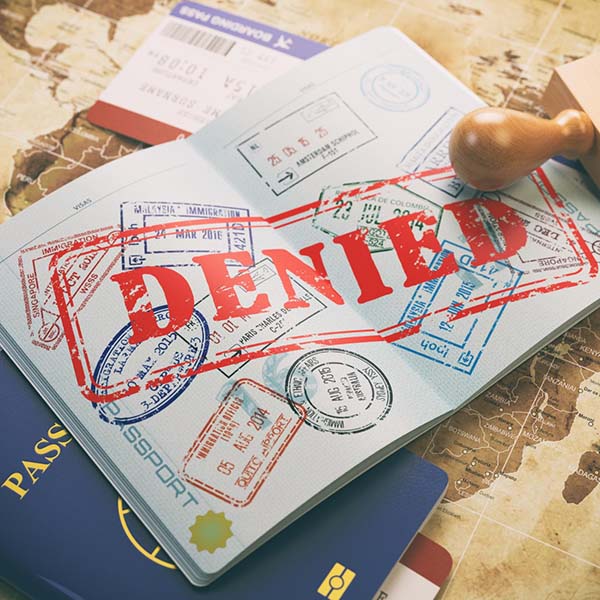
The child gets married while the application is pending: This is a serious mistake, but the consequences depend on the petitioner’s status. If the petitioner is a permanent resident, the F2A category will be permanently canceled and cannot be restored. If the petitioner is a US citizen (IR2 category), the processing is not canceled but will convert to the F3 category (married children), causing the waiting time to be significantly longer. Therefore, the unmarried status must be maintained until the child completes their entry and is stamped into the US.
Failing to update address with immigration agencies: Not notifying USCIS of an address change can result in missing an interview letter or important notices. Use Form AR-11 or update online to avoid interruptions in the application.
Missing documents or mismatched information leading to RFEs: Missing documents or inconsistent information will also lead to a Request for Evidence. Each time an RFE is received, the application process is paused until you submit sufficient documents. To avoid this, carefully review every page of documentation before submitting.
Legally, both children under 18 and those between 18–21 are classified in the “unmarried child under 21” group when parents file a sponsorship petition. However, during the actual review process, there are certain differences in how the documents are evaluated and how the Consulate handles the cases for these two age groups.
| COMPARISON CRITERIA | CHILD UNDER 18 YEARS OLD | CHILD 18-21 YEARS OLD |
| NATURE OF THE CASE | Considered a minor | Reached 18 years old, considered more independently |
| REVIEW METHOD | Simpler, focuses on family relationship | Focuses on assessing family ties, financial capacity, and immigration intent. |
| INTERVIEW | Usually light, confirmative in nature | More detailed questions |
| RISK LEVEL | Lower | Higher if preparation is inadequate |
In general, parents sponsoring a child under 18 to the US often have a significant advantage in terms of waiting times under the CSPA law, helping to minimize the risk of changing categories due to aging out during processing. For the 18–21 age group, document preparation needs to be done more carefully to avoid issues arising during processing.
First Consulting Group will help comprehensively evaluate the application for sponsoring a child under 21, analyze feasible options, and consult on a suitable roadmap to optimize processing time. You can contact First Consulting Group for a free consultation and clear, professional support with the procedures.
FOR A FREE CONSULTATION, PLEASE CALL:
– Hotline: (877) 348-7869
– Garden Grove Office: (714) 638-3111
– San Jose Office: (408) 998-5555
– Houston Office: (832) 353-3535
– Vietnam Office: (028) 3516-2118
Disclaimer: All information provided in this document is intended for general informational purposes only and does not constitute formal legal advice. Statistical data and processing timelines reflect the public records available at the time of publication. For precise legal assessments, please schedule a direct consultation with First Consulting Group.
Top Articles
The U.S. immigration process can be intricate, involving detailed legal requirements and procedures. To better address your unique situation, please provide your contact details to arrange a personalized consultation. A member of First Consulting Group’s dedicated team will contact you during business hours to offer expert guidance.

USA
12966 Euclid St., Suite 520, Garden Grove, CA 92840
(714) 638-3111
USA
989 Story Rd., Suite 8075, San Jose, CA 95122
(408) 998-5555
USA
1880 S Dairy Ashford Rd Ste 539, Houston, TX 77077
(832) 353-3535
VIETNAM
8th Floor, Tuoi Tre Tower, 60A Hoang Van Thu St., Duc Nhuan Ward, SaiGon
(028) 3516-2118
VIETNAM
5th Floor, Bao Minh Building, 08 Phan Van Tri St., Ninh Kieu Ward, Can Tho City
(0292) 383-0001
VIETNAM
5th Floor, Viettel Building, 11 Ly Thuong Kiet St., Thuan Hoa Ward, Hue City
(0234) 381-0016
VIETNAM
6th Floor, ACB Building, 218 Bach Dang St., Hai Chau Ward, Da Nang City
0886 00 34 00