USCIS ISSUES NEW GUIDANCE ON PUBLIC CHARGE INADMISSIBILITY: WHAT APPLICANTS NEED TO KNOW
minhle
News
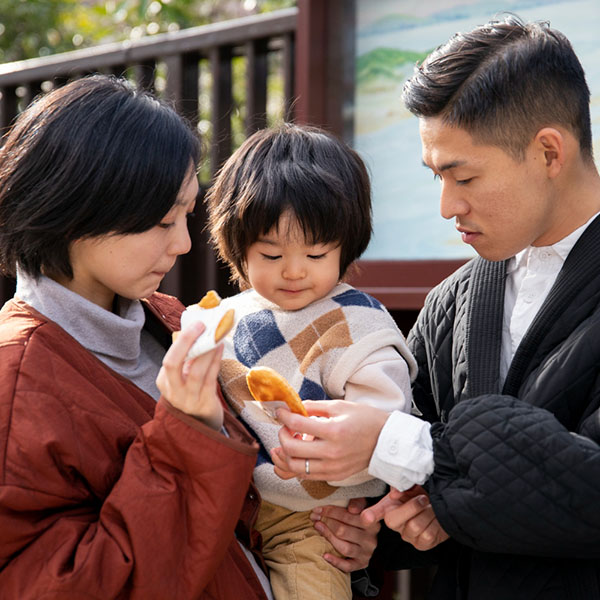
Many immigrant families in the US, after completing legal adoption procedures in their home country, often wonder whether their adopted child will be considered the same as a biological child when sponsoring them to the US. In reality, adoption immigration petitions have strict legal requirements, particularly regarding the two-year legal custody and two-year joint residence conditions. This article will help you understand the processing times, the applicable categories under Form I-130, and the key requirements that must be met for your petition to be approved by USCIS.
When a US citizen or permanent resident completes a legal adoption in their country and meets all the requirements for legal custody and joint residence, their adopted child can be sponsored to the US using the same petition process as a biological child (via Form I-130).
The processing time for sponsoring an adopted child to the US depends on several important factors.
The processing time primarily depends on the sponsor’s immigration status (US citizen or permanent resident), as well as the age and marital status of the adopted child at the time of filing. Each category has a different processing and visa waiting time under US immigration law.
For US Citizens
For US Permanent Residents
Permanent residents can only sponsor adopted children who are unmarried, including:
Note:
The timelines mentioned above are for reference only and can change depending on various factors, such as the USCIS service center processing the case, the country of application, the backlog of petitions, the completeness of documents, and changes in US immigration policy.
To accurately estimate the timeline for a specific case, the petition must be evaluated based on the legal status and actual circumstances of both the sponsor and the beneficiary.
Several factors influence the processing speed of an adoption petition. The initial quality of the application plays a crucial role. A petition with complete evidence of two years of legal custody and two years of actual joint residence will reduce the risk of receiving a Request for Evidence (RFE). Cases with insufficient or inconsistent evidence are often delayed because the immigration agency will issue an RFE.
The sponsor’s status also has a significant impact. US citizens generally experience faster processing times than permanent residents because they do not have to wait for preference category visa quotas. Additionally, cases requiring further verification of the actual parent-child relationship or security background checks can take an extra 3 to 6 months.
According to US immigration law, the 2-year joint residence and 2-year legal custody periods can be calculated cumulatively; they do not have to be continuous. However, both conditions must be fully met before the petition is filed.
Accurately recording residence periods through the household registry and temporary residence confirmations is crucial. This helps shorten the review process and limits the risk of the petition being doubted for authenticity.
According to the US Immigration and Nationality Act, not every adoption is recognized for family-based sponsorship. For an adopted child to be treated as a biological child in an immigration petition, both the sponsor and the beneficiary must simultaneously meet all the following legal requirements.

Requirements for the Sponsor (Adoptive Parents)
Requirements for the Beneficiary (Adopted Child)
Meeting all the above requirements is critical for the adoption petition to be recognized as valid by USCIS and reviewed under the family-based immigration category.
If the child’s country of origin is a member country of the Hague Convention on the Protection of Children and Co-operation in Respect of Intercountry Adoption, the general rule is that US citizens adopting a child from that country must follow the Hague adoption process. This process does not use Form I-130 and is completely different from regular family-based sponsorship.
However, in certain exceptional cases, USCIS may still approve an I-130 petition for an adopted child if the sponsor can prove that the Hague Convention does not apply to their situation. Specifically, USCIS may consider the petition if it falls under one of the following scenarios:
In the above cases, if the sponsor can prove that the adoption is full, final, legal, and meets the 2-year custody and 2-year joint residence rules, USCIS may allow the filing of an I-130 petition.
Conversely, if none of the exceptions apply, the sponsor must go through the Hague Convention adoption process, and Form I-130 will not be accepted.
In an I-130 petition for an adopted child, the requirement for 2 years of legal custody and 2 years of actual joint residence is mandatory for the child to be recognized as a biological child under US immigration law. This time is not just based on administrative documents but must be proven through a genuine family relationship established in reality.
To be approved by US Immigration, the application must demonstrate consistency among the following elements:
During the review process, immigration authorities will strictly cross-reference actual residence time, family activities, and the establishment of the parent-child relationship to evaluate the petition’s validity.
Additionally, US immigration law allows an age exception in some cases. Specifically, an adopted child aged 16 to under 18 can still be sponsored if they are the biological sibling of another child legally adopted by the same parents before the age of 16. This is to prevent the separation of biological siblings within the same family.
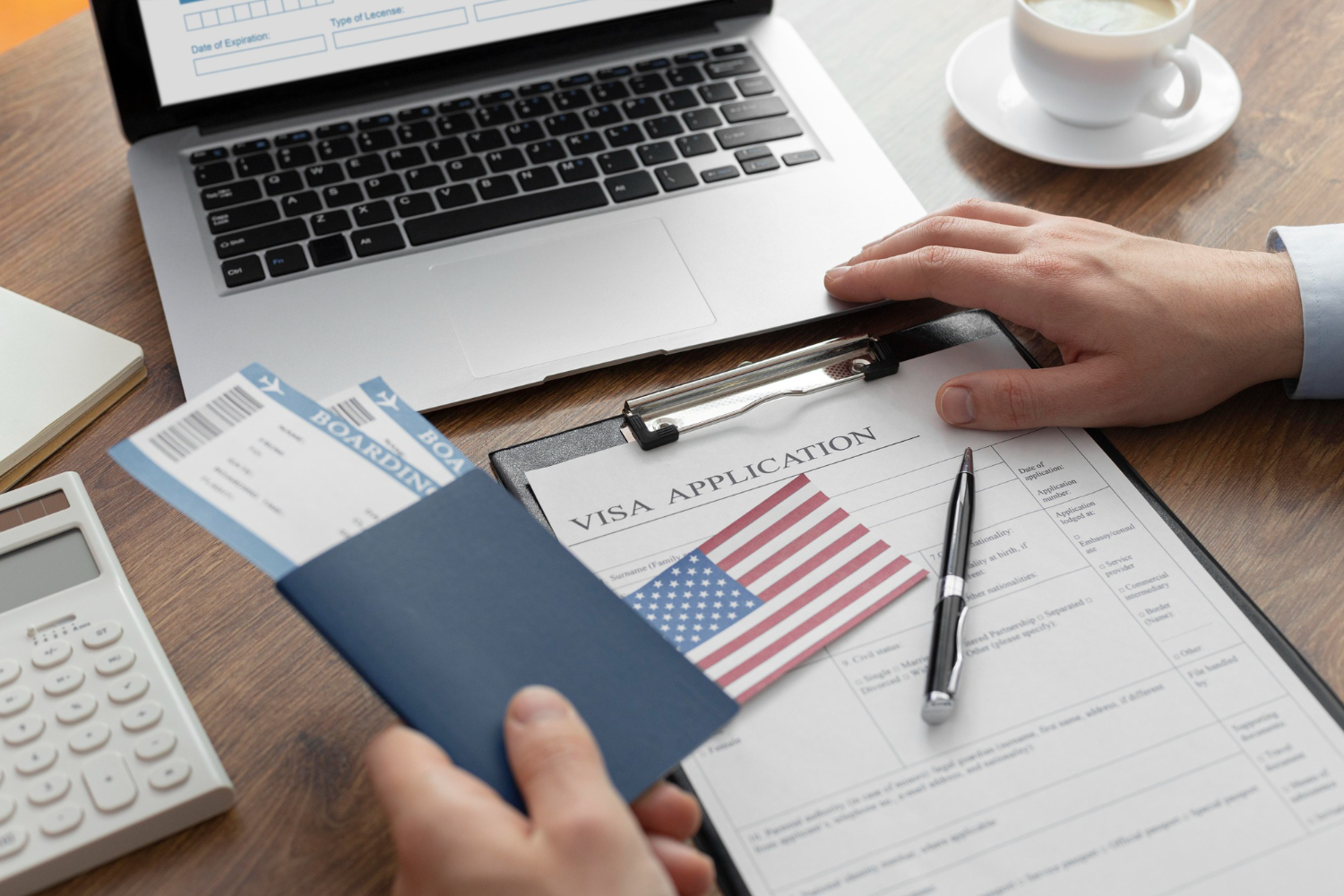
The I-130 adoption petition process consists of several consecutive stages, requiring the sponsor to prepare a complete, consistent set of legal documents and evidence of a genuine family relationship. Each stage directly affects the likelihood of approval.
Stage 1: Filing the Petition with US Citizenship and Immigration Services (USCIS)
This is the most crucial step to establish the right to sponsor an adopted child under the family category. The sponsor must review all legal documents and submit Form I-130 along with:
USCIS will review the validity of the adoption and assess whether the conditions are met for the child to be recognized as a biological child under US immigration law.
Stage 2: Processing at the National Visa Center (NVC)
After USCIS approves the I-130 petition, the case is transferred to the National Visa Center (NVC) to continue the immigrant visa application procedures. At this stage, the sponsor must:
Preparing clear and transparent financial documents will help the NVC process go more smoothly.
Stage 3: Interview at the US Consulate
This is the final and decisive step. During the interview, the consular officer will verify:
If the petition meets all requirements, the adopted child will be issued an immigrant visa and will become a US permanent resident immediately upon entering the US.
In an I-130 adoption petition, documents must be comprehensive and consistent regarding time, location, and the actual family relationship. USCIS evaluates the application based on the following main categories of evidence:
Evidence of Legal Adoption
A certified copy of the adoption decree or certificate issued by a competent authority.
Documents proving the adoption was completed before the child turned 16 (or before 18, under the sibling exception).
Proof that the adoption is full and final, not temporary or formalistic.
Evidence of Full Two-Year Legal Custody
Legal documents issued by a Court or a competent state authority establishing the adoptive parent’s legal custody over the child.
The legal custody period must total at least 2 years, can be accumulated, does not have to be continuous, but must be completed before the child turns 21.
Evidence of Full Two-Year Actual Joint Residence
Documents proving the adoptive parents and child lived together for at least 2 years, such as:
All documents must be consistent in time and location, avoiding any contradictions.
Evidence of Exemption from the Hague Convention
In cases where a US citizen is sponsoring an adopted child from other countries, the sponsor needs to prove the case is exempt from the mandatory Hague Convention requirements.
Generally, this is demonstrated by proving actual joint residence and legal custody for a full 2 years outside the United States prior to filing the I-130.
Note: All foreign language documents must be translated into English and notarized, complying strictly with US immigration formatting requirements.

Sponsoring an adopted child to the US is a complex process with strict requirements regarding the period of legal custody and evidence of joint residence. With over 23 years of experience in US immigration, First Consulting Group partners with you to build an accurate and effective petition roadmap from the very beginning. Contact us for in-depth legal consultation and continuous support throughout your immigration journey.
FOR A FREE CONSULTATION, PLEASE CALL:
– Hotline: (877) 348-7869
– Garden Grove Office: (714) 638-3111
– San Jose Office: (408) 998-5555
– Houston Office: (832) 353-3535
– Vietnam Office: (028) 3516-2118
Disclaimer: All information provided in this document is intended for general informational purposes only and does not constitute formal legal advice. Statistical data and processing timelines reflect the public records available at the time of publication. For precise legal assessments, please schedule a direct consultation with First Consulting Group.
Top Articles
The U.S. immigration process can be intricate, involving detailed legal requirements and procedures. To better address your unique situation, please provide your contact details to arrange a personalized consultation. A member of First Consulting Group’s dedicated team will contact you during business hours to offer expert guidance.

USA
12966 Euclid St., Suite 520, Garden Grove, CA 92840
(714) 638-3111
USA
989 Story Rd., Suite 8075, San Jose, CA 95122
(408) 998-5555
USA
1880 S Dairy Ashford Rd Ste 539, Houston, TX 77077
(832) 353-3535
VIETNAM
8th Floor, Tuoi Tre Tower, 60A Hoang Van Thu St., Duc Nhuan Ward, SaiGon
(028) 3516-2118
VIETNAM
5th Floor, Bao Minh Building, 08 Phan Van Tri St., Ninh Kieu Ward, Can Tho City
(0292) 383-0001
VIETNAM
5th Floor, Viettel Building, 11 Ly Thuong Kiet St., Thuan Hoa Ward, Hue City
(0234) 381-0016
VIETNAM
6th Floor, ACB Building, 218 Bach Dang St., Hai Chau Ward, Da Nang City
0886 00 34 00