
DHS issues final rule changing admission period for foreign students and exchange visitors
minhle
News
Are you preparing to travel to your home country for summer vacation but realize your visa is nearing its expiration date? This represents a highly prevalent scenario that thousands of international students encounter annually. Many students mistakenly assume that holding a valid Form I-20 is sufficient; however, in practice, if your physical visa stamp expires, you will be statutorily barred from re-entering the United States. A minor operational defect—such as misstatements on Form DS-160, a missing travel signature from your DSO, or an inadequate financial portfolio—can trigger an immediate visa refusal. In this comprehensive compliance overview, First Consulting Group delivers a detailed walkthrough to ensure your U.S. F1 student visa renewal is processed swiftly and accurately.
An F1 visa is a temporary nonimmigrant visa category designated for international students pursuing a full-time academic curriculum at educational institutions certified by the Student and Exchange Visitor Program (SEVP). Numerous international students frequently confuse a physical F1 visa stamp with maintaining valid F1 nonimmigrant status; although these two concepts are integrated, they serve completely distinct legal functions.
The visa stamp affixed within your physical passport merely functions as an entry credential authorizing you to request admission at a U.S. port of entry, whereas your F1 nonimmigrant status is actively maintained locally through an uncompromised Form I-20 and an active SEVIS record. Your underlying F1 status remains perfectly valid inside the country even if the physical visa stamp lapses, provided you remain physically present within the United States. Administrative compliance hurdles surface only when you choose to travel internationally or return to your home country; at this juncture, you are legally mandated to execute a U.S. F1 visa renewal to secure re-entry and successfully continue your academic program.
An approved F1 visa confers the lawful right to pursue full-time academic curricula within the United States, participate in formal institutional activities, and engage in compliant on-campus employment under strict hourly limitations. International students are authorized to engage in off-campus or on-campus labor up to a maximum of 20 hours per week while the academic semester is actively in session, or transition to full-time hours during official institutional vacation windows. Concurrently, programmatic components such as Curricular Practical Training (CPT) and Optional Practical Training (OPT) empower students to acquire real-world professional experience directly integrated with their major field of study.
However, these nonimmigrant privileges are counterbalanced by rigid statutory obligations. You must verify that your electronic SEVIS tracking record continuously maintains an active standing, ensure your Form I-20 is extended prior to its expiration if your program timeline increases, and adhere strictly to the minimum mandatory credit-load thresholds each semester. Violating any of these federal parameters will trigger the immediate forfeiture of your lawful F-1 status, causing severe disruptions to your long-term academic blueprint.

You must formally initiate a U.S. F1 visa renewal under the following specific operational scenarios:
Important Compliance Exception: If your current visa stamp remains active and unexpired, you are legally permitted to present it alongside a newly issued Form I-20 to execute a successful port-of-entry admission without re-applying for a visa, provided your underlying SEVIS record has been maintained continuously without a break in status.
To secure a successful adjudication on an international student visa renewal application, you must comprehensively satisfy all legal presence parameters and compile a pristine documentation package. According to senior advisors at First Consulting Group, this phase represents the absolute core of the process, dictating the ultimate outcome of your nonimmigrant petition.
First and foremost, your underlying F1 nonimmigrant status within the United States must be completely uncompromised. Your SEVIS record must actively display an “Active” standing and must not be flagged as terminated or suspended. Your Form I-20 must hold active structural validity and display a travel endorsement signature executed by a Designated School Official (DSO) within the preceding 12 months. If the form is nearing its programmatic end date, you must fully complete an institutional extension workflow with your school prior to initializing subsequent filing steps.
Furthermore, you bear the burden of proof to demonstrate ongoing financial capability to cover all tuition liabilities and localized living costs for the remainder of your academic tenure. The Consular Section maintains the authority to audit liquid savings accounts, bank ledgers, or formalized sponsor affidavits executed by your family. The baseline capitalization amount verified must, at a minimum, equal or exceed the total 1-year cost of attendance itemized on the face of your Form I-20.
Concurrently, your ongoing academic record must be completely transparent. Presenting up-to-date certified transcripts and an official enrollment verification letter confirming your full-time student status serves as primary evidence that you are successfully fulfilling your nonimmigrant obligations.
Once you have compiled your core documentation package, you can initialize the formal steps to process your F1 student visa renewal. Each sequential phase carries specific compliance requirements and must be executed in its exact order to eliminate data errors.
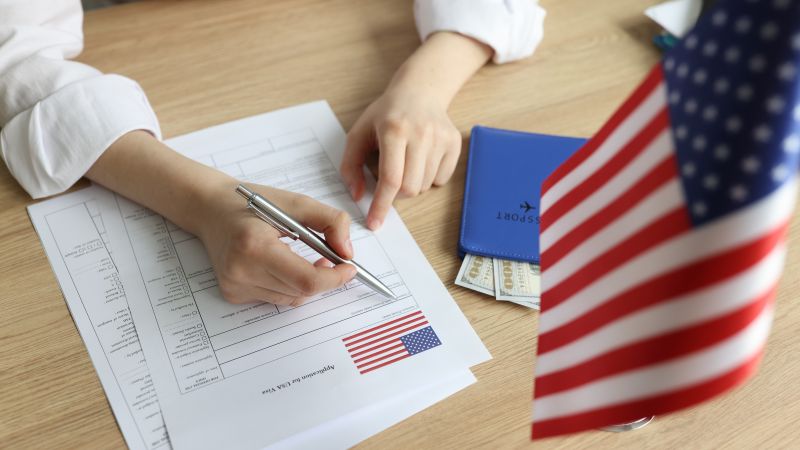
Step 1: Validate your Form I-20 and verify your electronic SEVIS standing
Interface with your campus DSO to request an updated Form I-20 or to verify that your active document is in perfect compliance. The DSO must formally execute a valid travel signature on the reverse page of Form I-20. This endorsement must hold active validity (spanning 12 months for actively enrolled students, or restricted to 6 months for students participating in post-graduation OPT).
Concurrently, log into the online SEVIS database to verify that your electronic profile is flagged as “Active”. If your program requires an extension due to delayed graduation timelines, ensure the school issues an extended Form I-20 before proceeding.
Step 2: Complete the electronic Form DS-160 online
Access the official nonimmigrant visa portal managed by the U.S. Department of State at https://ceac.state.gov/genniv/ to complete your Form DS-160.
Ensure you have all tracking data points prepared: personal biographical profiles, passport details, historical records of all prior U.S. arrivals and departures, real-time Form I-20 specifications (including your SEVIS ID string, institutional code, and major), your U.S. residential address, and emergency point-of-contact details. Direct intense focus to the “Previous U.S. Travel Information” module, guaranteeing that all historical departure and arrival dates match federal border records with absolute precision.
Upon successful transmission, the portal will generate a unique confirmation string (formatted as AA00XXXXXX)—safeguard this identifier and print out the high-resolution barcode confirmation page.
Step 3: Settle the mandatory MRV processing fee
Access the authorized regional visa scheduling platform at https://www.usvisascheduling.com/ and configure your secure profile user account.
The scheduling engine will calculate and output your Machine Readable Visa (MRV) processing fee of $185 USD (converted to localized currency based on real-time portal exchange metrics). Generate and print the official localized bank payment slip and settle the transaction at a designated participating financial institution or execute an online transaction following the strict instructions provided within the system.
Step 4: Audit your eligibility for an Interview Waiver
Once your financial transaction is updated and verified by the portal ledger, the system will prompt you with a series of screening compliance questions to audit your eligibility to bypass an in-person appearance and renew via mail. The baseline statutory requirements encompass: your prior F1 visa stamp must have expired within the preceding 48 months, you are seeking an identical renewal within the F1 classification, your underlying purpose of entry has not been altered, and your file contains no history of a prior un-waived visa refusal.
If you satisfy these screening gates, the portal will issue your official Interview Waiver Confirmation Letter, which must be printed immediately. If your profile is flagged as ineligible, you must proceed to book a traditional in-person interview date at the U.S. Embassy or Consulate.
Step 5: Package and transmit your physical application file
If you qualify for the mail-in Interview Waiver pathway:
If your profile mandates an in-person consular appearance:
Step 6: Track your application status and retrieve your passport
Following document intake, log into the Consular Electronic Application Center (CEAC) database at https://ceac.state.gov/ceac/ to track your application’s progress. Input your passport number or unique Form DS-160 Application ID to review real-time updates.
Prevalent status markers displayed in the portal database: “Ready” (your file has been successfully received and is awaiting active officer review), “Administrative Processing” (your application is undergoing a secondary review or requires the submission of additional clarifying documentation), “Issued” (your visa has been successfully printed and affixed to your passport), “Refused” (in the context of a mail-in renewal, this status indicator frequently does not mean a final denial but rather typically signals that the visa processing has been paused, requiring the applicant to appear for a follow-up in-person interview or mail in missing secondary files).
Standard processing timelines for mail-in dropbox applications average between 5 to 7 business days, whereas an in-person consular path can require 10 to 15 business days to finalize routing. Once your tracking status shifts to “Issued”, your physical passport housing the new visa stamp will be securely couriered to your registered shipping address, or held at a designated collection hub for physical pick-up. Carefully audit all printed data fields on the face of the visa stamp—including your full legal name, date of birth, SEVIS ID tracking string, and visa validity dates—prior to departing the collection facility.
Your physical passport photograph must conform perfectly to biometric standards: measuring exactly 5×5 cm, captured against an unblemished solid white background, with no eyeglasses worn, and ensuring your facial features remain completely unobstructed. The tracking tracking barcode printed on your Form DS-160 confirmation sheet must be high-resolution and free from any blurriness or cropping defects. Your physical passport must retain at least one completely blank visa page to allow the printing and placement of the visa stamp. All mandatory federal payment records—including your MRV and SEVIS fee receipts—must be explicitly integrated into the package.
From a financial perspective, your submitted bank ledgers should demonstrate a consistent and stable balance over the preceding 3 to 6 months; you should avoid depositing large, unexplained lump-sum cash amounts immediately prior to application submission. Your official institutional enrollment letter must explicitly state that you are actively pursuing a full-time curriculum, display your current Grade Point Average (GPA), and outline your projected graduation date.
Systemic procedural errors to completely eliminate: declaring an incorrect institutional name or school code within your Form DS-160, forgetting to affix your physical signature to the student attestation block on your Form I-20, submitting digital or physical photographs that violate standardized biometric size specifications, omitting core government processing or financial transactional receipts from the package. Committing any of these seemingly minor technical oversights will trigger extensive processing delays or result in an administrative visa refusal.
Managing a U.S. F1 student visa renewal online is a highly predictable and straightforward administrative workflow, provided you compile a compliant documentation portfolio and execute each step in its proper chronological sequence. Utilizing a rigorous document checklist and analyzing detailed filing guidelines saves time, eliminates technical errors, and ensures a high approval probability on your initial attempt. Do not allow an expired visa stamp to jeopardize your international academic status or disrupt your capacity to return to your studies in the United States.
FOR A FREE CONSULTATION, PLEASE CALL:
– Hotline: (877) 348-7869
– Garden Grove Office: (714) 638-3111
– San Jose Office: (408) 998-5555
– Houston Office: (832) 353-3535
– Vietnam Office: (028) 3516-2118
Disclaimer: All information provided in this document is intended for general informational purposes only and does not constitute formal legal advice. Statistical data and processing timelines reflect the public records available at the time of publication. For precise legal assessments, please schedule a direct consultation with First Consulting Group.
Top Articles
The U.S. immigration process can be intricate, involving detailed legal requirements and procedures. To better address your unique situation, please provide your contact details to arrange a personalized consultation. A member of First Consulting Group’s dedicated team will contact you during business hours to offer expert guidance.

USA
12966 Euclid St., Suite 520, Garden Grove, CA 92840
(714) 638-3111
USA
989 Story Rd., Suite 8075, San Jose, CA 95122
(408) 998-5555
USA
1880 S Dairy Ashford Rd Ste 539, Houston, TX 77077
(832) 353-3535
VIETNAM
8th Floor, Tuoi Tre Tower, 60A Hoang Van Thu St., Duc Nhuan Ward, SaiGon
(028) 3516-2118
VIETNAM
5th Floor, Bao Minh Building, 08 Phan Van Tri St., Ninh Kieu Ward, Can Tho City
(0292) 383-0001
VIETNAM
5th Floor, Viettel Building, 11 Ly Thuong Kiet St., Thuan Hoa Ward, Hue City
(0234) 381-0016
VIETNAM
6th Floor, ACB Building, 218 Bach Dang St., Hai Chau Ward, Da Nang City
0886 00 34 00