What is required to build a quality EB-2 NIW project? 4 crucial characteristics to note
minhle
EB-2 NIW Visa

The analytical question “does having tattoos affect your eligibility for U.S. immigration?” has become increasingly prevalent among global applicants preparing their permanent residency portfolios. First Consulting Group recognizes that this represents a valid concern that must be thoroughly analyzed based on active statutory immigration laws, rather than relying on unverified rumors or informal hearsay.
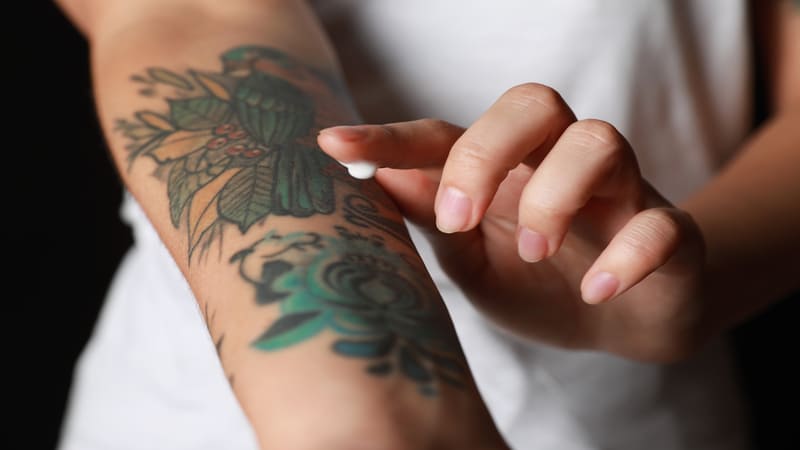
Many applicants experience anxiety that possessing tattoos will automatically operate as a structural barrier when filing a permanent residency petition. In reality, this concern stems from a fundamental misunderstanding of how U.S. immigration authorities evaluate files. To secure an accurate legal conclusion, it is essential to master exactly what federal statutes mandate and analyze the specific compliance factors scrutinized during the review workflow.
U.S. immigration law contains absolutely no direct statutory prohibitions or restrictive clauses targeting tattoos. The Immigration and Nationality Act (INA) does not classify tattoos as a legal ground of inadmissibility or a basis for visa refusal, applicable across both immigrant and nonimmigrant visa categories. Concurrently, USCIS has never issued an official directory or restrictive index penalizing body art within its standard adjudication criteria.
The legal evaluation of tattoos within the U.S. immigration framework is managed under broader background security parameters. Every single application package undergoes an exhaustive criminal history audit, comprehensive security screening, and a rigorous assessment of good moral character—which functions as the baseline evaluation of the applicant’s character and lifestyle. Tattoos never operate as a standalone, independent adjudication metric. However, an adjudicating consular officer maintains the regulatory authority to pose direct questions regarding the underlying meaning or socioeconomic context of your body art.
Immigration authorities analyze tattoos strictly in connection with your comprehensive portfolio, never as an isolated element. Procedural risks only manifest if the tattoos interlock with latent legal infractions or security vulnerabilities. Furthermore, certain indicators can compromise the overall credibility of the application in the eyes of the interviewing officer. While there is no official listing of tattoos that trigger automatic visa rejections, the following categories possess a substantially higher probability of drawing intense consular scrutiny:
Whether a tattoo impacts your U.S. visa issuance is heavily dictated by the cumulative quality and transparency of your complete application package. When a file exhibits existing weaknesses regarding financial capability metrics, fluid employment records, or ambiguous immigrant intent, any non-standard indicator—explicitly including controversial body art—can prompt an officer to execute a much more invasive review of your profile.
Tattoos do not function as a formal adjudication metric within a U.S. immigrant visa portfolio. On mandatory federal immigration forms (such as Form DS-260), there are absolutely no sections requiring the disclosure or declaration of personal body art. During the mandatory immigrant medical examination phase, tattoos are documented strictly as standard, benign physical identifying markers and carry no negative impact on your medical admissibility evaluation.
The final visa adjudication relies completely on core compliance pillars, such as your certified criminal background check, robust financial substantiation records, and verified nonimmigrant or immigrant intent. However, in specific instances, body art can still be introduced as a topic of discussion during your live consular interview. Fliers who master when this occurs and understand the appropriate remediation methods can easily eliminate unnecessary procedural anxiety.
In actual administrative practice, body art rarely becomes the central focus of a nonimmigrant or immigrant interview. In a limited number of profiles, an adjudicating consular officer may pose targeted inquiries if the tattoos:
These specific scenarios are highly uncommon and are never deployed as the primary deciding factor during the case evaluation. The ultimate issuance decision remains firmly anchored to core compliance pillars, specifically your clean criminal history record, solid financial backing, and clear adherence to visa category parameters.
To guarantee a flawless presentation, applicants should follow these core principles:

There is absolutely no provision within federal U.S. immigration law or administrative guidelines that mandates an applicant must erase, modify, or conceal tattoos before appearing for a consular interview or executing an adjustment of status application. Consular officers possess absolutely no statutory authority to demand or enforce modifications to an applicant’s physical appearance regarding their body art.
In many scenarios, attempting to aggressively alter your appearance immediately prior to your scheduled interview block can introduce unexpected administrative disadvantages. For context, consider these risks:
If your body art does not interlock with unlawful organizations or radical messaging, maintaining your natural appearance and being fully prepared to deliver an honest, transparent explanation represents the safest and most compliant strategy.
A vital, practical note for travelers: If a tattoo is located on a highly visible region (such as the face, neck, or hands) and has been recently added or completely removed—resulting in a significant visual alteration compared to the biometric data printed on the face of your current passport—the applicant should proactively update their passport photograph. Taking this step eliminates identification delays during consular processing or when executing a port-of-entry admission.
In summary, if you possess standard personal, artistic, or cultural tattoos, you can move forward with absolute confidence, as these elements have no bearing on your medical screening outcomes or your lawful admission into the United States.
Navigating the complex administrative parameters of a U.S. immigration petition demands precise case mapping, flawless data cross-matching, and total alignment with federal screening statutes. To completely eliminate procedural risks, protect your processing timeline, and ensure your background presents a transparent narrative, secure specialized assistance from First Consulting Group. Our dedicated immigration experts deliver comprehensive case tracking, meticulous records audits, and tailored, individualized guidance throughout your entire journey. Connect with our offices today to lock in your professional consultation and secure a trusted partner to guide you through every milestone of your path to the United States.
FOR A FREE CONSULTATION, PLEASE CALL:
– Hotline: (877) 348-7869
– Garden Grove Office: (714) 638-3111
– San Jose Office: (408) 998-5555
– Houston Office: (832) 353-3535
– Vietnam Office: (028) 3516-2118
Disclaimer: All information provided in this document is intended for general informational purposes only and does not constitute formal legal advice. Statistical data and processing timelines reflect the public records available at the time of publication. For precise legal assessments, please schedule a direct consultation with First Consulting Group.
Top Articles


The U.S. immigration process can be intricate, involving detailed legal requirements and procedures. To better address your unique situation, please provide your contact details to arrange a personalized consultation. A member of First Consulting Group’s dedicated team will contact you during business hours to offer expert guidance.

USA
12966 Euclid St., Suite 520, Garden Grove, CA 92840
(714) 638-3111
USA
989 Story Rd., Suite 8075, San Jose, CA 95122
(408) 998-5555
USA
1880 S Dairy Ashford Rd Ste 539, Houston, TX 77077
(832) 353-3535
VIETNAM
8th Floor, Tuoi Tre Tower, 60A Hoang Van Thu St., Duc Nhuan Ward, SaiGon
(028) 3516-2118
VIETNAM
5th Floor, Bao Minh Building, 08 Phan Van Tri St., Ninh Kieu Ward, Can Tho City
(0292) 383-0001
VIETNAM
5th Floor, Viettel Building, 11 Ly Thuong Kiet St., Thuan Hoa Ward, Hue City
(0234) 381-0016
VIETNAM
6th Floor, ACB Building, 218 Bach Dang St., Hai Chau Ward, Da Nang City
0886 00 34 00