What is required to build a quality EB-2 NIW project? 4 crucial characteristics to note
minhle
EB-2 NIW Visa
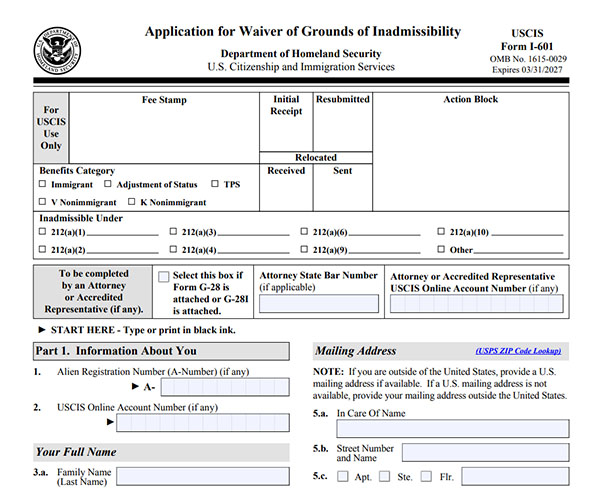
Form I-601, Application for Waiver of Grounds of Inadmissibility, serves as a critical legal step for applicants who have been denied a U.S. visa due to specific grounds of inadmissibility. U.S. Citizenship and Immigration Services (USCIS) enforces exceptionally stringent adjudication standards for these waivers. Consequently, your documentation portfolio must be compiled with deep legal precision, and navigating the process requires immense patience during extended processing windows. Drawing from extensive professional experience in managing high-stakes and sensitive cases, First Consulting Group provides a transparent, realistic, and legally grounded approach to maximize your probability of success.
Form I-601 officially functions as a petition to request a waiver for specific statutory violations that bar a foreign national from legally entering the United States. This application is submitted directly to USCIS, which holds the exclusive federal authority to evaluate and adjudicate inadmissibility waivers.
While both forms serve as petitions to waive immigration bans, they are executed within entirely different procedural and legal frameworks:
Form I-601: Covers a broad array of statutory bars, including material misrepresentation, specific criminal convictions, immigration violations, and unlawful presence. It is typically submitted from outside the United States after a formal visa refusal at a U.S. Embassy or Consulate, or domestically during active Adjustment of Status processing.
Form I-601A (Provisional Unlawful Presence Waiver): Restricted exclusively to waiving the 3-year or 10-year unlawful presence bars. It is filed inside the United States while the applicant is still physically present in the country, allowing them to secure the waiver approval before departing for their immigrant visa interview abroad.
To secure a waiver approval, the application package must flawlessly establish three core legal pillars:
Existence of a qualifying relative: The applicant must possess an immediate relative who is a U.S. citizen or a Lawful Permanent Resident (LPR). Depending on the specific ground of inadmissibility being waived, a qualifying relative is strictly defined as a spouse, parent, or child.
Demonstration of extreme hardship: This is the absolute center of the dossier. The applicant must present compelling, objective secondary evidence proving that their qualifying relative inside the U.S. will suffer severe, extraordinary hardships across medical, financial, educational, or psychological dimensions if the waiver is denied.
Good moral character and humanitarian factors: USCIS performs a comprehensive balancing test to determine whether the applicant’s admission yields a positive social utility for the United States, and whether their current rehabilitation and positive attributes outweigh their historical infractions.
The applicant files Form I-601 or Form I-601A with USCIS. At this stage, the dossier must explicitly address the precise statutory grounds of inadmissibility triggered during your interview. You must clearly document your complete rehabilitation, show a clear history of compliance with past penalties, and demonstrate the catastrophic consequences your qualifying U.S. relative would face if the family remains separated. Assembling an empirical evidence package focused on Extreme Hardship is the single most critical milestone of this phase.
Waiver applications face extensive administrative backlogs, with standard processing times routinely ranging from 22.5 to 37 months, depending heavily on service center volumes and case complexity. During this evaluation window, USCIS may issue a formal Request for Evidence (RFE) demanding supplemental documentation.
USCIS will issue a written notice confirming either the approval or denial of your petition. Upon securing an approval notice, your immigration file will resume standard processing. If you are abroad, the file transitions back to the National Visa Center (NVC) and the local U.S. Embassy or Consulate to finalize your immigrant visa issuance or Green Card scheduling.
See also: In-Country Adjustment of Status via Marriage: Forms, Costs, and Timelines

This ground includes actions such as submitting fraudulent documents, making false statements on visa forms, or facing a visa refusal due to a suspected sham marriage. If permitted under federal regulations, an applicant can seek an I-601 waiver if backed by a qualifying U.S. citizen or LPR relative, proving that a permanent ban would cause extreme hardship to that sponsor.
Critical Warning: Specific categories of fraud trigger a permanent, un-waivable bar on entry, meaning an I-601 waiver cannot be utilized. These include:
Falsely claiming to be a U.S. citizen for any federal or state benefit.
Prior administrative findings of entering into a fraudulent marriage solely for immigration purposes.
Statutory violations that require an approved waiver include:
Crimes involving moral turpitude (CIMT).
Specific controlled substance violations (typically restricted to simple possession of 30 grams or less of marijuana).
Historical involvement in or organization of prostitution.
Having two or more criminal convictions with an aggregate prison sentence exceeding 5 years.
Your eligibility to apply for a criminal waiver depends heavily on the specific charge, the date of the offense, and your rehabilitation history.
Infractions over 15 years old: The applicant may secure a waiver by proving complete rehabilitation and demonstrating that their entry does not compromise the national security or public welfare of the United States.
Infractions under 15 years old: The applicant must possess a qualifying U.S. citizen or LPR relative and satisfy the strict extreme hardship standard. Note that serious drug trafficking offenses are completely excluded from waiver eligibility.
Health-related grounds that bar entry include lacking mandatory vaccinations, carrying communicable diseases of public health significance, active drug addiction, or possessing physical or mental disorders that present a threat to property or public safety.
If a health condition can be resolved via standard procedures—such as completing treatment or taking mandatory boosters—the applicant should fulfill those medical requirements directly. An I-601 waiver should only be initiated when a medical condition is un-waivable due to certified contraindications, severe allergies, or medical complications confirmed by a licensed panel physician.
Accumulating unlawful presence inside the United States triggers automated statutory bans upon departure:
Unlawful presence exceeding 180 continuous days but less than 1 year triggers a 3-year bar.
Unlawful presence exceeding 1 continuous year triggers a 10-year bar.
Applicants can choose to remain outside the U.S. until the multi-year penalty expires or apply for a waiver. If the applicant is inside the U.S. and has no other violations beyond unlawful presence, they can file a Form I-601A provisional waiver after their underlying family petition is approved. Once the I-601A is approved, they can safely depart the country to attend their scheduled consular visa interview abroad.
Under U.S. immigration law, individuals holding membership in a Communist party are generally inadmissible. However, an applicant may overcome this bar if they can document that their affiliation was a “non-meaningful membership” (lacking ideological or political substance) or fits within distinct statutory exceptions:
The membership was entirely involuntary.
Enrollment occurred while under the age of 16.
Membership was mandated by family tradition or was an absolute requirement to secure employment or education (e.g., working in public schools, state hospitals, or public administrative offices).
Affiliation was driven strictly by basic living necessities rather than political ideology.
For individuals who have formally terminated their party membership, entry is permitted if they satisfy two key elements:
The membership was officially terminated at least 5 years prior to the date of the visa application.
The applicant presents no threat to the national security or public safety of the United States.
If you fail to meet these criteria, you must file an I-601 waiver and satisfy the following concurrent conditions:
Possess at least one qualifying U.S. citizen or LPR relative.
Demonstrate that your admission is justified based on humanitarian goals and family unity.
Prove that your entry does not compromise U.S. security.
See also: Comprehensive Guide on Renewing a 10-Year Green Card

USCIS evaluates the “Extreme Hardship” standard by analyzing the cumulative weight of your family’s unique circumstances, rather than viewing each factor in isolation. The primary categories scrutinized include:
Health: Chronic medical conditions, specialized psychological dependencies, or advanced treatments that are only accessible or effectively managed inside the United States.
Financial capacity: Severe reduction in household income, asset loss, corporate dissolution, or an inability to sustain the family’s basic cost of living.
Education: Structural disruption to academic milestones, loss of specialized training opportunities, or language barriers in a foreign market.
Personal and familial impact: Profound emotional and psychological trauma triggered by the forced separation of spouses, parents, or minor children.
Special country factors: Cultural, linguistic, or religious barriers, or documented safety risks in the applicant’s country of origin.
To optimize your waiver approval probability, your documentation portfolio must be built with extreme care:
Target the qualifying relative: Every legal argument must focus exclusively on the severe hardships experienced by your U.S. citizen or LPR relative (spouse or parent), not the applicant.
Compile clinical medical portfolios: Avoid submitting scattered, unverified lab results. Compile an official medical record paired with a comprehensive expert statement from your treating physician detailing the exact prognosis and verifying that the applicant’s presence is vital to the sponsor’s care.
Maintain total data integrity: Every piece of evidence must possess absolute authenticity. Presenting unverified or fraudulent records during a waiver process will result in an immediate permanent ban on entry.
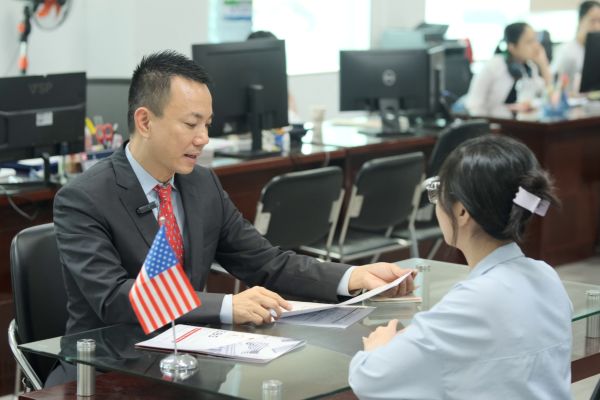
First Consulting Group holds over 23 years of professional experience guiding the community through complex U.S. immigration tracks. Our specialized legal team approaches each waiver dossier with deep care and transparent case management to optimize your approval rate. Contact our offices today to secure a dedicated professional evaluation of your case.
FOR A FREE CONSULTATION, PLEASE CALL:
– Hotline: (877) 348-7869
– Garden Grove Office: (714) 638-3111
– San Jose Office: (408) 998-5555
– Houston Office: (832) 353-3535
– Vietnam Office: (028) 3516-2118
Disclaimer: All information provided in this document is intended for general informational purposes only and does not constitute formal legal advice. Statistical data and processing timelines reflect the public records available at the time of publication. For precise legal assessments, please schedule a direct consultation with First Consulting Group.
Top Articles


The U.S. immigration process can be intricate, involving detailed legal requirements and procedures. To better address your unique situation, please provide your contact details to arrange a personalized consultation. A member of First Consulting Group’s dedicated team will contact you during business hours to offer expert guidance.

USA
12966 Euclid St., Suite 520, Garden Grove, CA 92840
(714) 638-3111
USA
989 Story Rd., Suite 8075, San Jose, CA 95122
(408) 998-5555
USA
1880 S Dairy Ashford Rd Ste 539, Houston, TX 77077
(832) 353-3535
VIETNAM
8th Floor, Tuoi Tre Tower, 60A Hoang Van Thu St., Duc Nhuan Ward, SaiGon
(028) 3516-2118
VIETNAM
5th Floor, Bao Minh Building, 08 Phan Van Tri St., Ninh Kieu Ward, Can Tho City
(0292) 383-0001
VIETNAM
5th Floor, Viettel Building, 11 Ly Thuong Kiet St., Thuan Hoa Ward, Hue City
(0234) 381-0016
VIETNAM
6th Floor, ACB Building, 218 Bach Dang St., Hai Chau Ward, Da Nang City
0886 00 34 00