What is required to build a quality EB-2 NIW project? 4 crucial characteristics to note
minhle
EB-2 NIW Visa
Many international students, upon completing their academic programs in the United States, ask themselves a crucial question: is it possible to remain and adjust status to a permanent resident rather than returning to their home country? In reality, transitioning from student status to a Green Card for international students is not only highly achievable but also opens up vast career horizons and long-term stability in the U.S.
However, this path demands a profound understanding of federal legal conditions, selecting the exact right immigration category, and avoiding fatal mistakes that could trigger an immediate denial. This article outlines the core requirements, the distinct advantages international graduates possess, and the hidden noncompliance risks you must bypass to optimize your success rate with First Consulting Group.
Answering whether a Green Card for international students is attainable requires an objective analysis of the statutory criteria enforced by U.S. Citizenship and Immigration Services (USCIS). These benchmarks are not mere administrative formalities; they represent the legal foundation that determines whether your case is approved or refused. Fully understanding these parameters from the outset empowers you to construct a compliant immigration map, mitigate fatal tracking risks, and optimize your transition into permanent residency.
Transitioning from a nonimmigrant student status to an immigrant visa track is a major legal milestone that requires strict adherence to USCIS regulations.
Lawful presence maintenance: The student must maintain continuous lawful status throughout their entire duration of stay in the United States. You must completely avoid severe violations within the student tracking network or allow any regulatory lapses in your lawful presence. When evaluating a Form I-485 Adjustment of Status (AOS) application, USCIS will meticulously audit your entire historical F-1 status compliance.
The doctrine of immigrant intent: Because an F-1 student visa is strictly classified as a nonimmigrant visa, filing an immigrant petition displays a clear intent to reside permanently. Therefore, the exact timeline of your Adjustment of Status filing must be calculated with extreme precision. Specifically, the federal 90-day rule can heavily jeopardize the validity of your application if filed too quickly following an international entry into the United States.
The role of post-graduation practical training: The post-graduation Optional Practical Training (OPT) period serves as the critical operational bridge for an F-1 to Green Card transition. This phase authorizes you to maintain legal employment while systematically assembling your permanent residency dossier. Graduates holding qualified STEM degrees enjoy an extended 3-year authorization period, providing an ideal timeline to cultivate professional experience and gather objective evidence to fortify their petitions.
Maintaining pristine, continuous lawful presence in the United States, particularly during transitions between academic programs, CPT, and OPT phases.
Having a valid underlying immigrant petition filed on your behalf. This can be sponsored by a qualifying relative or a U.S. employer. Alternatively, qualified professionals can self-petition, or file under specialized statutory provisions such as investor tracks or humanitarian self-petitions for victims of abuse.
Maintaining a flawless record with zero history of unauthorized employment, tax noncompliance, or border law infractions.
Providing absolute documentation verifying financial self-sufficiency or being backed by a financially qualified, contractually binding sponsor.
Ensuring total data consistency across all historical documents—from your initial student applications to your current adjustment forms. Any material discrepancy can trigger an extensive Request for Evidence (RFE) or an outright denial.
Graduates must master the technical timeline leading from practical training to formal adjustment filing to eliminate operational errors. During periods of severe visa retrogression, the window to formally submit your Adjustment of Status package can face lengthy delays. Maintaining flawless nonimmigrant compliance throughout these backlogs is your ultimate defense against immigrant intent complications or international travel restrictions.
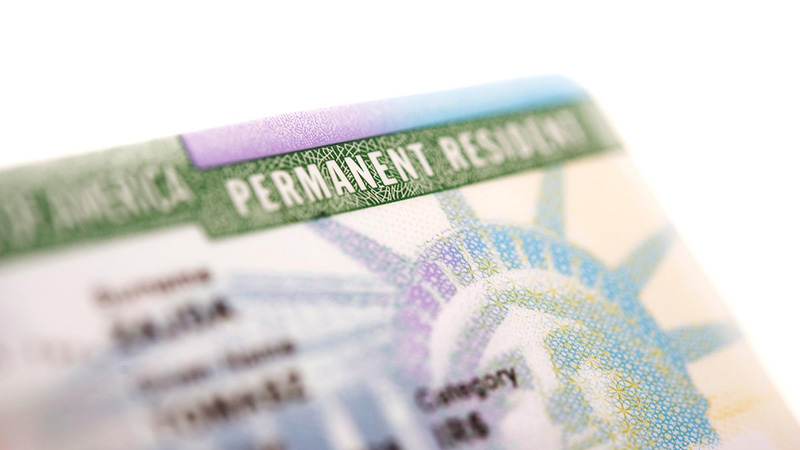
International students who possess qualifying relatives in the United States gain access to streamlined family-based adjustment pathways, provided they fulfill all statutory relationship requirements. Filing a family-sponsored petition anchors the student’s legal presence, establishing a highly reliable and clear roadmap early in their academic journey.
Domestic processing convenience: While the immigration dossier undergoes administrative processing, maintaining full-time enrollment or active OPT status inside the United States enables the student to preserve continuous lawful presence. This satisfies the baseline requirements to execute an Adjustment of Status domestically, completely bypassing the need to exit the country for risky consular processing abroad and ensuring your educational focus remains uninterrupted.
Unrestricted operational freedom: Upon formal Green Card approval, the international graduate secures the absolute right to live, work, and study anywhere in the United States with complete autonomy. Liberated from the strict constraints and time limits of nonimmigrant statuses, the new permanent resident can comfortably design their career trajectory, access local domestic tuition rates, and build a stable, permanent life in the United States.
Navigating the U.S. Green Card process as an international student features rigid regulatory hurdles. Many independent applicants inadvertently execute fatal errors that permanently compromise their dossiers. Identifying these systemic risks allows you to proactively safeguard your application and optimize your approval rate.
Failing to maintain a continuous, full-time course of study or violating active OPT/CPT employment rules.
Presenting contradictory, unverified, or inconsistent biographical data across various historical USCIS forms.
Submitting an Adjustment of Status package too quickly after an international entry, triggering an automated presumption of material misrepresentation under the 90-day rule.
Failing to attach sufficient objective, secondary evidence to satisfy the specific statutory thresholds of the selected visa track.
Omitting mandatory corporate verification, tax transcripts, or financial underwriting records from a sponsoring employer.
Accumulating even a single day of unauthorized employment or overstaying the authorized Form I-94 duration of stay.
Committing any legal infraction or misdemeanor, which can severely impact the mandatory Good Moral Character evaluation.
Structuring your written arguments or statements of purpose illogically, leading to immediate administrative rejections or extensive Requests for Evidence (RFEs).
These operational errors do not merely extend your waiting timeline; they can permanently derail your entire legal future in the United States. Our immigration specialists note that while specific employment categories permit Premium Processing to expedite the underlying Form I-140 evaluation, your overall adjustment timeline remains heavily dependent on the quality of your documentation and overall agency backlogs. Experiencing a technical status lapse or a SEVIS record termination can lead to the rapid denial of your adjustment package.
International students do not share identical backgrounds; some possess stellar academic publication records, others excel in specialized technical corporate roles, while some qualify through family relations. Therefore, true immigration strategy does not center on choosing the most common path, but on identifying the exact legal track that perfectly matches your current professional and personal credentials.
The EB-2 National Interest Waiver (NIW) immigrant classification is a top-tier pathway for transitioning from an F-1 status to a Green Card. This premium track completely waives the requirement of a corporate job offer and eliminates the complex employer-sponsored labor certification process, granting the international graduate the absolute autonomy to self-petition. To secure an approval, the applicant must demonstrate that their professional endeavors possess substantial merit and national importance to the United States.
An EB-2 NIW petition is adjudicated based on three stringent legal prongs established by precedent case law: the substantial merit and national importance of the proposed endeavor, the applicant’s advanced qualifications to advance the endeavor, and whether on balance it would be beneficial to the United States to waive the requirements of a job offer and labor certification. Presenting highly structured, objective documentation is mandatory.
The petition requires filing Form I-140, backed by absolute proof that the applicant holds an advanced degree (a U.S. Master’s or higher, or a Bachelor’s degree paired with at least 5 years of progressive post-baccalaureate experience) and that their future employment directly impacts the economic, educational, or technological welfare of the United States.
A comprehensive, well-articulated statement of purpose is the cornerstone of this dossier. You must explicitly document how your future professional milestones will yield national-level benefits for the country. Attaching concrete objective evidence—such as peer-reviewed scientific publications, high citation metrics, proprietary patents, or prestigious academic awards—drastically strengthens your approval probability.
Based on First Consulting Group’s extensive experience managing hundreds of complex cases, securing expert advisory letters from leading figures in your industry is critical. Renowned professionals must formally attest to your unique competencies and national-level influence. Outstanding recent graduates with notable research records can successfully secure an NIW approval, with standard administrative processing timelines typically ranging from 12 to 18 months.
Alternative high-achievement options: Applicants with extraordinary national or international acclaim can evaluate the EB-1A extraordinary ability track. Additionally, applicants can concurrently explore family-based marriage adjustment tracks if they share a genuine, bona fide relationship with a U.S. citizen.
The employer-sponsored EB-3 immigrant visa track represents the standard pathway for graduates who have not yet accumulated extensive academic publication records but have secured solid corporate employment. This process requires a U.S. enterprise to execute a rigid labor market test to prove to the Department of Labor that no qualified, willing, and available U.S. worker can be found to fill the offered position.
The sponsoring U.S. employer must formally commit to paying the professional a wage that meets or exceeds the federally mandated prevailing wage for that local industry. The company must extend a permanent, full-time job offer and submit certified corporate financial statements or corporate tax returns to verify their structural ability to pay the wage. Compared to the self-sponsored EB-2 NIW track, the EB-3 pathway features longer overall waiting timelines due to strict annual country quotas and massive global filing volumes.
The initial PERM Labor Certification phase legally obligates the company to run public advertisements and conduct interviews with local applicants. Only when the employer can document that no qualified U.S. worker applied can they secure a labor certification to sponsor the international graduate. Despite the extended administrative timeline, this remains a highly viable and reliable track for students. The ultimate key to success is partnering with an employer willing to fully invest the necessary time and corporate resources into the multi-stage sponsorship process.
The EB-3 track is divided into three subcategories: skilled workers, professionals, and other (unskilled) workers, each enforcing distinct academic and experiential baselines.
Marriage to a U.S. citizen establishes an immediate, direct pathway to permanent residency based on a lawful familial relationship, remaining completely independent of your academic degrees or professional achievements. For an international student navigating this adjustment, the ultimate legal requirement is proving that the marriage is entirely bona fide—entered into out of genuine love and a shared life during your lawful stay, rather than a fraudulent arrangement manufactured solely to bypass immigration laws.
The application package requires filing a comprehensive concurrent adjustment package inside the United States. Processing timelines are highly streamlined because immediate relatives of U.S. citizens are statutorily exempt from annual numerical visa quotas. However, USCIS fraud prevention units subject marriage petitions to rigorous verification, requiring exhaustive physical proof of shared financial assets, cohabitation records, and extensive joint documentation.
Step 1: Execute an objective assessment of your unique credentials to match your profile to the most viable immigration track.
Step 2: Audit your entire historical student record and F-1 tracking data to ensure zero technical presence lapses.
Step 3: Compile an ironclad evidentiary portfolio consisting of peer-reviewed data, citation metrics, and authoritative expert letters.
Step 4: Strategically calculate your filing windows to eliminate immigrant intent complications or 90-day rule conflicts.
Step 5: Structure your application to withstand intense agency vetting and design precise response methodologies to resolve potential Requests for Evidence (RFEs).
A highly successful dossier must feature perfectly formatted expert recommendation letters, a sophisticated analysis of national importance, and verified employment logs compiled during practical training phases. These components build massive credibility and drastically minimize the risk of lengthy administrative delays.
The legal team at First Consulting Group holds a deep, comprehensive understanding of the Immigration and Nationality Act (INA) and the evolving adjudication standards enforced by federal agencies. We have proudly guided hundreds of international students through complex adjustments across multiple immigrant visa classifications.
Securing a Green Card from an F-1 student status demands meticulous preparation and a clear, sophisticated legal strategy. Every individual profile features unique variables that require custom legal engineering. Transitioning into permanent U.S. residency is a fully realistic reality when backed by an optimized roadmap and expert legal advisors. Contact First Consulting Group today to secure your complimentary consultation and initiate your professional immigration path.
FOR A FREE CONSULTATION, PLEASE CALL:
– Hotline: (877) 348-7869
– Garden Grove Office: (714) 638-3111
– San Jose Office: (408) 998-5555
– Houston Office: (832) 353-3535
– Vietnam Office: (028) 3516-2118
Disclaimer: All information provided in this document is intended for general informational purposes only and does not constitute formal legal advice. Statistical data and processing timelines reflect the public records available at the time of publication. For precise legal assessments, please schedule a direct consultation with First Consulting Group.
Top Articles


The U.S. immigration process can be intricate, involving detailed legal requirements and procedures. To better address your unique situation, please provide your contact details to arrange a personalized consultation. A member of First Consulting Group’s dedicated team will contact you during business hours to offer expert guidance.

USA
12966 Euclid St., Suite 520, Garden Grove, CA 92840
(714) 638-3111
USA
989 Story Rd., Suite 8075, San Jose, CA 95122
(408) 998-5555
USA
1880 S Dairy Ashford Rd Ste 539, Houston, TX 77077
(832) 353-3535
VIETNAM
8th Floor, Tuoi Tre Tower, 60A Hoang Van Thu St., Duc Nhuan Ward, SaiGon
(028) 3516-2118
VIETNAM
5th Floor, Bao Minh Building, 08 Phan Van Tri St., Ninh Kieu Ward, Can Tho City
(0292) 383-0001
VIETNAM
5th Floor, Viettel Building, 11 Ly Thuong Kiet St., Thuan Hoa Ward, Hue City
(0234) 381-0016
VIETNAM
6th Floor, ACB Building, 218 Bach Dang St., Hai Chau Ward, Da Nang City
0886 00 34 00