
DHS issues final rule changing admission period for foreign students and exchange visitors
minhle
News

U.S. immigration is currently a pathway of great interest for foreign nationals seeking to stabilize their lives and develop long-term professional careers. In tandem with this interest, the question of how much a U.S. green card costs is also widely researched. Depending on the specific visa category, the number of applicants, and accompanying procedures, U.S. immigration costs will vary. In this article, First Consulting Group will provide detailed information regarding the necessary fees to prepare and analyze the realistic budget based on each sponsorship classification to ensure you have the best preparation.
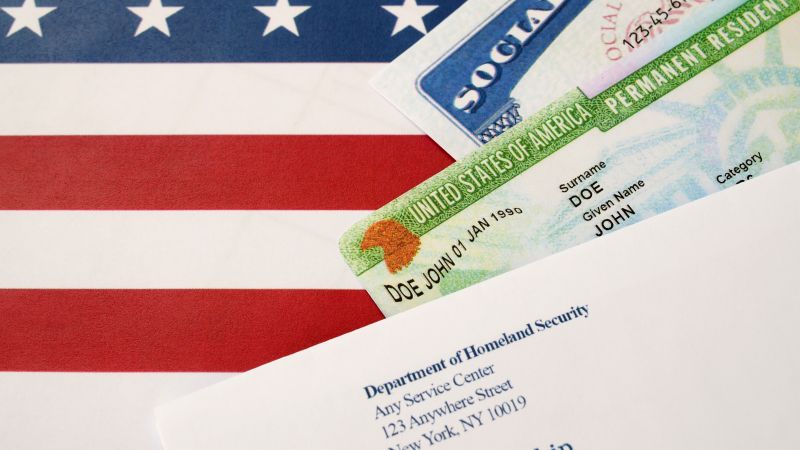
When researching how much a U.S. green card costs, many individuals look for a single, definitive number. However, the costs associated with a U.S. green card application vary from case to case due to multiple operational variables. The primary factor is the number of derivative applicants included in the principal petition. For a family of four, the cumulative cost is routinely much higher than that of an individual file. This is because each individual member must separately pay for their own mandatory medical examination, vaccinations, and corresponding visa processing fees.
The waiting period governed by the Visa Bulletin also dictates the final cumulative expense. Preference categories with protracted backlogs, such as the sponsorship of adult children or siblings, routinely incur extra expenses to renew expiring vital statistics, update documents, and maintain lawful legal status throughout the multi-year waiting period. Conversely, immediate relative petitions—such as those for spouses or unmarried children under the age of 21—benefit from accelerated processing times and are significantly less susceptible to compounding administrative fees.
U.S. immigration policy shifts also play a critical regulatory role. Depending on the timing of filing, new legislative amendments or programmatic restrictions can directly alter standard sponsorship fees. Regulatory requests for additional evidence represent another variable that drives up costs for specific cases. In scenarios where U.S. Citizenship and Immigration Services (USCIS) or the U.S. Consulate issues a Request for Evidence (RFE), the applicant will incur unexpected operational costs. These auxiliary expenses generally encompass professional document translation, notarization, and occasionally extra legal consultation fees to ensure full regulatory compliance.
The choice of professional U.S. immigration consultation services also contributes to the total budget. Each immigration services firm operates under its own distinct fee structure. It is vital to research thoroughly to select an established, reputable center that can guarantee efficient processing and maximize your overall approval odds. The baseline complexity of an individual file will naturally cause professional consultation fees to scale upward. Other variables, such as the underlying health conditions of the beneficiary or extensive secondary document demands, can also drive total costs higher than standard baselines.

As is widely recognized, securing a U.S. green card is a highly demanding legal process. Beyond managing the extensive procedural paperwork, compiling the necessary financial budget is the most crucial step. First Consulting Group has detailed the mandatory government and administrative fees required across primary family-sponsored pathways for your reference:
| Parental Sponsorship | Child Sponsorship | Spousal Sponsorship | Fiancé(e) Sponsorship (K-1) | |
| Form I-130 Filing Fee | $675 | $675 | $675 | Not Applicable |
| Form I-129F Filing Fee | Not Applicable | Not Applicable | Not Applicable | $675 |
| Consular Processing Fee | $120 | $120 | $445 ($120 for Affidavit of Support & $325 for civil document review) | $445 ($120 for Affidavit of Support & $325 for civil document review) |
| Medical Examination | $334 to $389 | $334 to $389 | $334 to $389 | $334 to $389 |
| USCIS Immigrant Fee | $220 | $220 | $220 | This fee is paid during post-entry Adjustment of Status after marriage |
| Immigration Pathway | Estimated Capital and Fee Requirements |
| Family-Sponsored Preferences | $3,000 to $20,000 |
| EB-5 Immigrant Investor Program | In excess of $800,000 |
| EB-3 Employment-Based (Skilled/Unskilled) | $50,000 to $70,000 |
Note: Federal government filing fees are subject to periodic, unannounced regulatory updates. Prior to executing your application, please connect directly with our center staff to secure the exact, real-time fee schedule.
Family-sponsored immigration remains the most widely utilized pathway for applicants who have qualifying relatives holding U.S. citizenship or lawful permanent residency. When analyzing how much a green card costs, this category experiences the highest volume of inquiries. The total financial allocation for a family-based petition depends heavily on the specific legal relationship. Standard spousal sponsorship cases typically range between three thousand and five thousand dollars for a single applicant. However, if sponsoring an entire family unit consisting of three to four derivative members, the cumulative expenditure can easily scale to fifteen thousand or twenty thousand dollars.
Parental sponsorship follows a matching fee architecture but benefits from accelerated processing speeds because parents of U.S. citizens are classified as Immediate Relatives and are exempt from Visa Bulletin backlogs. Conversely, sponsoring siblings or married/adult children carries extensive waiting lists, which heavily increases the probability of encountering recurring document renewal costs over the lifespan of the file.
The EB-3 employment-based visa represents an alternative pathway frequently pursued by professionals who lack qualifying family ties inside the United States. The total financial investment for an EB-3 green card typically ranges from fifty thousand to seventy thousand dollars. This comprehensive cost encompasses the Form I-140 filing fees, mandatory employer recruitment advertising costs, specialized legal fees, and all administrative expenses associated with securing a permanent Permanent Labor Certification from the Department of Labor. This category is highly suitable for skilled or unskilled workers who possess professional capabilities but lack massive capital reserves to deploy into investment channels.
The EB-5 immigrant investor program demands the most substantial capital reserve. The baseline cost of an EB-5 green card is legally dictated by the geographic classification of the project site. If the project is situated within a designated Targeted Employment Area (TEA), the statutory minimum investment capital is eight hundred hundred dollars. For non-TEA locations, the statutory baseline is set at one million fifty thousand dollars. In addition to the principal investment capital, applicants must budget for the Form I-526E regional center filing fees and extensive corporate-immigration legal fees. The total required capitalization for this pathway routinely exceeds the million-dollar threshold.
Beyond mandatory statutory fees, encountering incidental expenses during the green card journey is virtually unavoidable. This is the primary reason why many applicants, despite having researched standard green card fees, face real-world budget overruns during active processing. An applicant residing in a major metropolitan center shared that she initially budgeted strictly in accordance with the standard baseline checklists. However, after an eighteen-month waiting period, the U.S. Consulate issued an administrative demand for additional secondary evidence regarding her historical employment records and educational credentials. Consequently, she was forced to allocate an extra thousand dollars to cover certified document translations, notarizations, and the rapid procurement of updated civil records.

Prevalent incidental expenses to integrate into your budget:
Document renewal represents the most frequent incidental expense for applicants trapped in backlogged preference lines. Police clearance certificates typically retain an administrative lifespan of only six months to one year. If processing backlogs extend past this window, you are legally required to reproduce, re-verify, and re-translate these records, driving up total costs. Certain profiles must also submit updated financial affidavits if the petitioner’s tax or employment status shifts during the waiting interval.
Supplemental medical tracking can also generate sudden expenses if the panel physician uncovers an underlying clinical issue that requires specialist validation before a visa can be safely issued. These clinical hurdles not only require extra out-of-pocket fees but can severely stall your case progression. According to data compiled by First Consulting Group, applicants should proactively integrate a fifteen to twenty percent contingency buffer over their initial baseline budget to absorb these hidden fees seamlessly.
When assessing how much a U.S. green card costs, many applicants make the mistake of focusing strictly on the upfront filing fees. However, effective financial planning for U.S. immigration must be approached holistically to ensure you avoid sudden liquidity shortfalls during active processing and your subsequent relocation phase inside the United States. Beyond mandatory government fees, a sound budget must account for the auxiliary costs that naturally accrue while your file is navigating federal review channels.
To build a resilient and precise financial forecast, you must:
In addition to baseline statutory fees, your cumulative relocation costs will be heavily influenced by external variables. Mastering these distinct operational triggers allows you to construct a precise financial strategy, paving the way for a seamless and highly compliant entry into the United States. Below are the core variables that directly impact your sponsorship costs:
We trust this comprehensive analysis has provided you with total clarity regarding how much a U.S. green card costs and the realistic financial commitments required to execute a successful relocation. Mastering the underlying fee structures and the hidden variables that drive expenses allows you to prepare strategically for your family’s immigration milestones. Because total fees shift based on case complexity, applicant volume, and the exact timing of your submission, securing a formal professional evaluation is a vital prerequisite.
If you require detailed financial profiling, custom legal guidance on family-sponsored petitions, or administrative support with intricate immigration pathways, contact First Consulting Group today. Our dedicated professionals and legal advisors are committed to providing complimentary initial evaluations and rapid, elite procedural support to secure your international goals.
FOR A FREE CONSULTATION, PLEASE CALL:
– Hotline: (877) 348-7869
– Garden Grove Office: (714) 638-3111
– San Jose Office: (408) 998-5555
– Houston Office: (832) 353-3535
– Vietnam Office: (028) 3516-2118
Disclaimer: All information provided in this document is intended for general informational purposes only and does not constitute formal legal advice. Statistical data and processing timelines reflect the public records available at the time of publication. For precise legal assessments, please schedule a direct consultation with First Consulting Group.
Top Articles



The U.S. immigration process can be intricate, involving detailed legal requirements and procedures. To better address your unique situation, please provide your contact details to arrange a personalized consultation. A member of First Consulting Group’s dedicated team will contact you during business hours to offer expert guidance.

USA
12966 Euclid St., Suite 520, Garden Grove, CA 92840
(714) 638-3111
USA
989 Story Rd., Suite 8075, San Jose, CA 95122
(408) 998-5555
USA
1880 S Dairy Ashford Rd Ste 539, Houston, TX 77077
(832) 353-3535
VIETNAM
8th Floor, Tuoi Tre Tower, 60A Hoang Van Thu St., Duc Nhuan Ward, SaiGon
(028) 3516-2118
VIETNAM
5th Floor, Bao Minh Building, 08 Phan Van Tri St., Ninh Kieu Ward, Can Tho City
(0292) 383-0001
VIETNAM
5th Floor, Viettel Building, 11 Ly Thuong Kiet St., Thuan Hoa Ward, Hue City
(0234) 381-0016
VIETNAM
6th Floor, ACB Building, 218 Bach Dang St., Hai Chau Ward, Da Nang City
0886 00 34 00