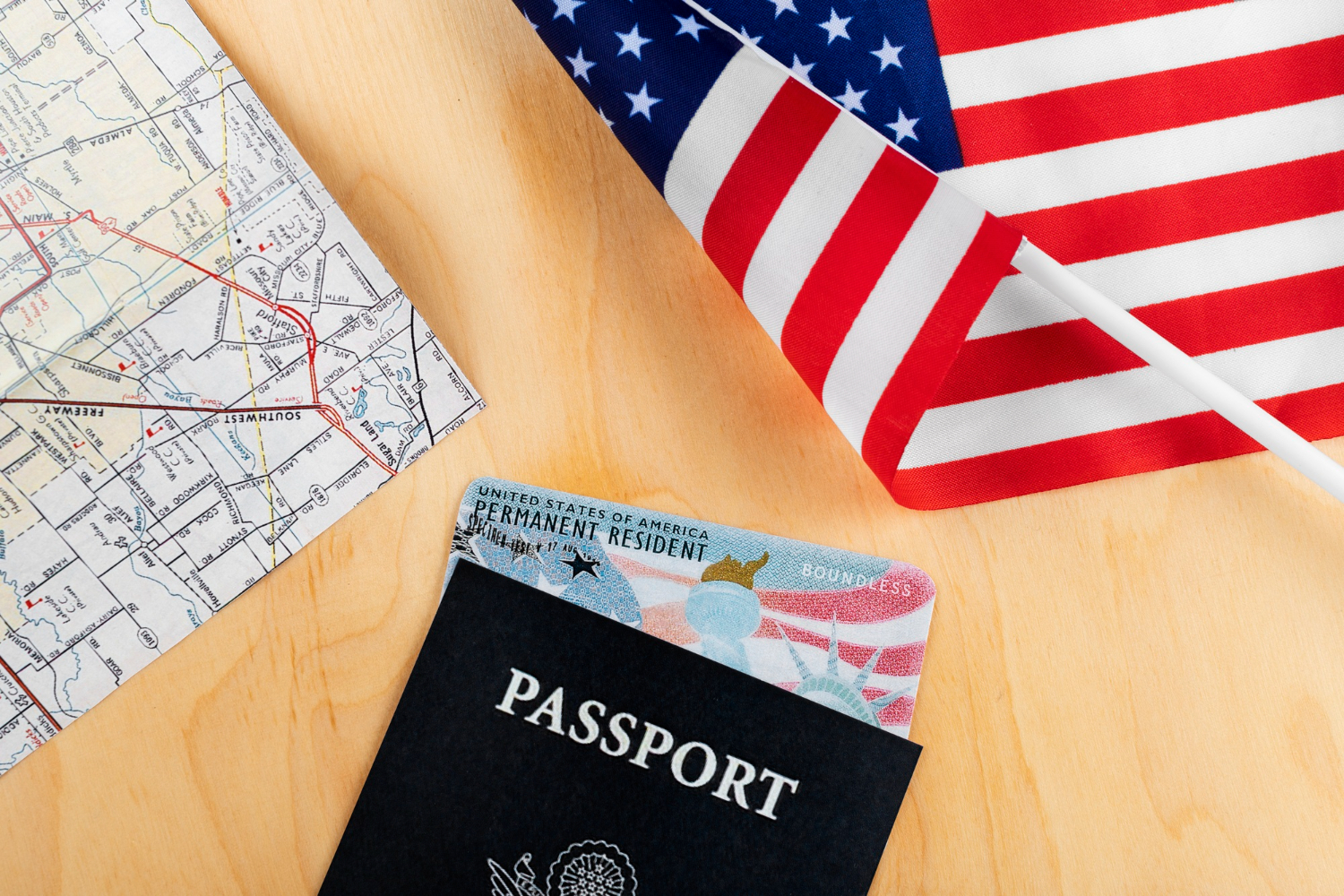
U.S. TO MAKE VISA BOND PROGRAM PERMANENT FOR APPLICANTS FROM DOZENS OF COUNTRIES
minhle
News
The 10-year green card, commercially and legally referred to as a permanent resident card, is issued to lawful permanent residents after successfully completing the process to remove conditions. This marks the formal transition from a conditional 2-year green card to unconditional permanent resident status. According to legal guidance from First Consulting Group, holding this permanent credential empowers residents to live and work in the United States indefinitely, while enjoying a vast array of rights substantially similar to those of U.S. citizens.
To successfully secure a 10-year green card (unconditional permanent resident card), a conditional permanent resident must formally execute and file Form I-751 with U.S. Citizenship and Immigration Services (USCIS) within the rigorous 90-day window immediately preceding the expiration date of their 2-year conditional card. The case file must be meticulously assembled in full accordance with federal regulatory procedures, providing comprehensive, objective evidence establishing that the marital relationship is completely bona fide and continues to be actively maintained in practice.
In scenarios where an individual immigrates to the United States via a spousal petition and the underlying marriage is less than 2 years in duration at the time of admission, or enters under the EB-5 immigrant investor program, the beneficiary is structurally issued a conditional residency card carrying a strict 2-year expiration limit. For fiancé(e) visa holders, a green card is not issued upon initial entry; rather, they are eligible to adjust to a 2-year conditional status only after celebrating the marriage and completing the formal adjustment of status procedures. Under United States immigration statutes, conditional permanent residents are legally mandated to execute the transition to unconditional residency to protect and maintain their lawful permanent resident standing within the country.
Mandatory documentation required for filing your petition:
In instances where the couple is legally separated or the marriage has been formally dissolved via divorce, the applicant must execute the petition independently under a specialized waiver. Navigating an independent filing demands the presentation of final judicial divorce decrees, an exhaustive personal statement detailing the relationship timeline, an explanation for the breakdown of the marriage, and secondary civil documents or third-party affidavits proving that the initial marriage was entered into in good faith.
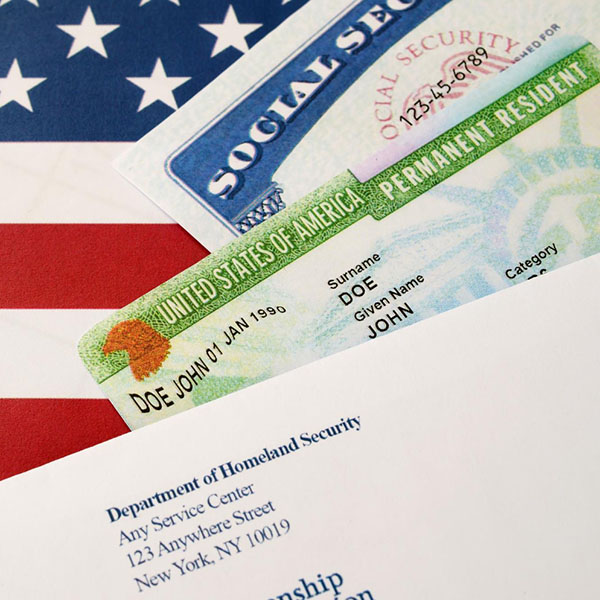
The 2-year conditional card and the 10-year permanent card represent the primary tiers of permanent residency within the United States, wherein the 2-year restriction is systematically applied to individuals whose marriage to a U.S. citizen is less than 2 years old at the time of status acquisition. These holders must successfully execute Form I-751 to remove conditions before their card lapses.
Conversely, unconditional permanent residency completely eliminates any future programmatic condition-removal filings. Physical presence restrictions and residential maintenance guidelines are structurally more secure, serving as the required legal foundation to seek naturalization after a 5-year tracking period.
Does holding an unconditional permanent resident card mean you have achieved U.S. citizenship? The answer is firmly no. A 10-year green card certifies nothing more than permanent resident status; to formally achieve U.S. citizenship, the permanent resident must satisfy all independent naturalization prerequisites and pass the required citizenship examinations. Although they hold the legal right to live and work permanently within the United States, permanent residents do not possess federal voting rights and remain subject to deportation if they commit egregious or aggravated criminal infractions.
An applicant holding conditional residency can transition to permanent status if they satisfy any of the following programmatic definitions:
Each category of resident operates under distinct operational parameters. Newly arrived immigrants frequently encounter structural difficulties mastering their physical presence and legal residency obligations. Conversely, individuals preparing to file for naturalization must direct intense focus to their continuous physical presence histories and global tax filings. Furthermore, multi-generational immigrant families or professionals who travel extensively across borders require an explicit residency strategy to prevent customs authorities from determining that they have abandoned their lawful status.
Upon the successful adjudication of your status and the issuance of a 10-year green card, the immigrant officially gains unconditional lawful permanent resident status in the United States. This represents a major milestone that unlocks expanded rights concerning employment flexibility, academic pursuits, and the capability to sponsor foreign relatives. However, holding a permanent green card does not exempt the bearer from federal liabilities. Absolute compliance with global tax laws, physical presence requirements, and general federal statutes remains mandatory to preserve your permanent standing and protect your eligibility for future naturalization.
Lawful permanent residents holding a 10-year green card must thoroughly understand the following obligations:
Beyond basic statutory mandates, First Consulting Group emphasizes that permanent residents must closely monitor their actual physical presence behavior, as this is a metric continuously audited by USCIS and border customs. Lingering outside the United States past authorized timelines, failing to maintain clear socioeconomic ties to the country, or failing to prove a continuous intent to reside permanently can cause border officers to suspect that you have abandoned your permanent status. In numerous scenarios, an applicant may hold a physically unexpired green card, yet their underlying legal right to reside is actively challenged at the port of entry.

You should immediately seek professional guidance if your case involves any of the following variables:
Unconditional permanent residency operates primarily as an interim legal step within a long-term immigration path. Once personal and professional lives stabilize, many residents naturally shift their focus to securing citizenship, bringing foreign relatives over, or adjusting their long-term asset structures. Possessing a comprehensive understanding of the upcoming legal milestones empowers unconditional permanent residents to navigate the system proactively, neutralizing errors that could permanently disrupt their family’s long-term future in the United States.

If you require comprehensive information, customized legal evaluations regarding family-sponsored petitions, or support with complex immigration pathways, contact First Consulting Group. Our highly specialized legal professionals and advisors are committed to guiding you through every administrative phase, providing transparent, elite, and completely personalized immigration solutions.
FOR A FREE CONSULTATION, PLEASE CALL:
– Hotline: (877) 348-7869
– Garden Grove Office: (714) 638-3111
– San Jose Office: (408) 998-5555
– Houston Office: (832) 353-3535
– Vietnam Office: (028) 3516-2118
Disclaimer: All information provided in this document is intended for general informational purposes only and does not constitute formal legal advice. Statistical data and processing timelines reflect the public records available at the time of publication. For precise legal assessments, please schedule a direct consultation with First Consulting Group.
Top Articles


The U.S. immigration process can be intricate, involving detailed legal requirements and procedures. To better address your unique situation, please provide your contact details to arrange a personalized consultation. A member of First Consulting Group’s dedicated team will contact you during business hours to offer expert guidance.

USA
12966 Euclid St., Suite 520, Garden Grove, CA 92840
(714) 638-3111
USA
989 Story Rd., Suite 8075, San Jose, CA 95122
(408) 998-5555
USA
1880 S Dairy Ashford Rd Ste 539, Houston, TX 77077
(832) 353-3535
VIETNAM
8th Floor, Tuoi Tre Tower, 60A Hoang Van Thu St., Duc Nhuan Ward, SaiGon
(028) 3516-2118
VIETNAM
5th Floor, Bao Minh Building, 08 Phan Van Tri St., Ninh Kieu Ward, Can Tho City
(0292) 383-0001
VIETNAM
5th Floor, Viettel Building, 11 Ly Thuong Kiet St., Thuan Hoa Ward, Hue City
(0234) 381-0016
VIETNAM
6th Floor, ACB Building, 218 Bach Dang St., Hai Chau Ward, Da Nang City
0886 00 34 00