U.S. Department of State updates visa fraud reporting form
Mr Tony
News
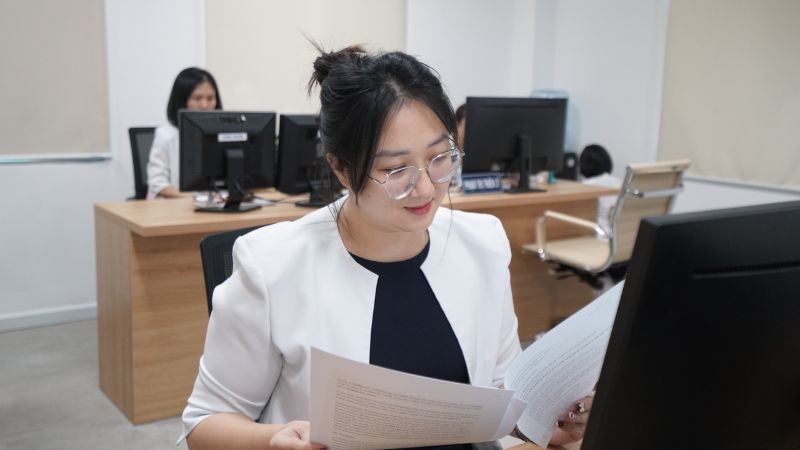
As part of the naturalization process, applicants must pass a two-part U.S. citizenship test. The first part is the English test, which evaluates the applicant’s reading, writing, and speaking abilities. The second part, the civics test, assesses the applicant’s knowledge of U.S. history and government.
An officer will conduct the naturalization test to determine whether the applicant meets the English and civics educational requirements. The U.S. citizenship test consists of two components:
Each applicant is given two opportunities to take the test, which typically occurs on the same day as the U.S. naturalization interview. USCIS will deny the naturalization application if the applicant fails any part of the tests after two attempts.
In cases where the applicant requests a USCIS hearing regarding the denial, officers must administer any failed portion of the tests. Unless waived by USCIS, an applicant’s failure to appear for a retest, or failure to take the test during an examination or hearing, will be treated as a failure to pass the test.
Applicants may be eligible for an exemption from the English requirement, the civics requirement, or both. Below are the exemptions regarding the English and civics requirements for naturalization.
1. Age and Residence Exceptions for the English Test
Applicants are exempt from the English language requirement but are still required to meet the civics requirement if:
Notes:
2. Medical Disability Exception for the English and Civics Tests

An applicant for naturalization only needs to demonstrate an ability to read, write, speak, and understand common words. Ordinary usage means understandable and appropriate communication through basic vocabulary and grammar, which may include noticeable errors in pronunciation, structure, spelling, and a complete understanding of certain words, phrases, and sentences.
Applicants may request the repetition or rephrasing of words and may make some pronunciation, spelling, and grammar errors while still meeting the English requirements for naturalization. An officer should repeat and rephrase questions until they are satisfied that the applicant either fully understands the question or is unable to understand English.
To demonstrate sufficient ability to read English, an applicant must read one out of three sentences. The reading test is administered by the officer using a standardized reading test template. Once the applicant correctly reads one of the three sentences, the officer will stop the reading test.
Passing the Reading Test
An applicant passes the reading test if they read one of the three sentences without extended pauses in a manner that conveys the meaning of the sentence so that the officer can understand it. Generally, the applicant must read all content words but may omit short words or make pronunciation or intonation errors that do not affect the meaning.
Failing the Reading Test
An applicant fails the reading test if they do not successfully read at least one of the three sentences. An applicant fails to read a sentence successfully when they:
To demonstrate adequate writing ability in English, the applicant must write one out of three sentences in a manner understood by the officer. The officer reads the sentence aloud to the applicant using a standardized writing test template.
An applicant passes the writing test if they can convey the meaning of one of the three sentences to the officer. The applicant’s writing sample may contain the following:
An applicant fails the writing test if they make errors to the extent that the meaning of the sentence is not conveyed and the officer cannot understand it. An applicant will fail the writing test if they write the following:
An applicant for naturalization must demonstrate a knowledge and understanding of the fundamentals of U.S. history, principles, and forms of government (civics). To sufficiently demonstrate civics knowledge, a naturalization applicant must pass the civics test by correctly answering a designated number of questions.
USCIS is committed to a test that serves as a civics learning tool and promotes civic assimilation as part of the test preparation process. USCIS will randomly select test questions, and an officer will administer the test orally. The standardized civics test consists of 10 questions. The officer will stop the test once the applicant answers the minimum number of questions required to pass.
Special Considerations
An officer will grant special consideration to applicants who are 65 years of age or older and have lived in the United States for a cumulative total of at least 20 years after being lawfully admitted for permanent residence. The age and time requirements must be met at the time of filing the application for naturalization.
The test for applicants granted special consideration consists of 20 specifically designated civics questions chosen from the standard list of 100 civics test study questions. An applicant meeting the criteria for special consideration passes the civics test if they correctly answer or provide an alternate phrasing for the correct answer to at least six out of 10 test questions chosen from the specially designated list of 20 questions.
If an applicant fails any part of the English test, the civics test, or all tests during the initial U.S. citizenship examination, USCIS will reschedule the applicant for a second examination between 60 and 90 days after the initial test.
When the applicant arrives for the retest, the re-examining officer must not administer the exact same English or civics tests given during the first examination. The officer must only retest the applicant on the portions they previously failed. For example, if the applicant passed the English speaking, reading, and civics sections but failed the writing portion during the first exam, the officer may only conduct the English writing test during the re-examination.
If the applicant fails any portion of the U.S. citizenship test for the second time, the officer must deny the application based on the applicant’s failure to meet the educational requirements for naturalization. The officer must also address any other areas of ineligibility within the denial notice.
An applicant who refuses to be tested or refuses to answer individual questions on the reading, writing, or civics test, or fails to answer eligibility questions because they do not understand the questions when asked or rephrased, does not meet the educational requirements. The officer must treat the applicant’s refusal to be tested or to answer test questions as a failure to pass the examination.
FOR A FREE CONSULTATION, PLEASE CALL:
– Hotline: (877) 348-7869
– Garden Grove Office: (714) 638-3111
– San Jose Office: (408) 998-5555
– Houston Office: (832) 353-3535
– Vietnam Office: (028) 3516-2118
Disclaimer: All information provided in this document is intended for general informational purposes only and does not constitute formal legal advice. Statistical data and processing timelines reflect the public records available at the time of publication. For precise legal assessments, please schedule a direct consultation with First Consulting Group.
Top Articles

The U.S. immigration process can be intricate, involving detailed legal requirements and procedures. To better address your unique situation, please provide your contact details to arrange a personalized consultation. A member of First Consulting Group’s dedicated team will contact you during business hours to offer expert guidance.

USA
12966 Euclid St., Suite 520, Garden Grove, CA 92840
(714) 638-3111
USA
989 Story Rd., Suite 8075, San Jose, CA 95122
(408) 998-5555
USA
1880 S Dairy Ashford Rd Ste 539, Houston, TX 77077
(832) 353-3535
VIETNAM
8th Floor, Tuoi Tre Tower, 60A Hoang Van Thu St., Duc Nhuan Ward, SaiGon
(028) 3516-2118
VIETNAM
5th Floor, Bao Minh Building, 08 Phan Van Tri St., Ninh Kieu Ward, Can Tho City
(0292) 383-0001
VIETNAM
5th Floor, Viettel Building, 11 Ly Thuong Kiet St., Thuan Hoa Ward, Hue City
(0234) 381-0016
VIETNAM
6th Floor, ACB Building, 218 Bach Dang St., Hai Chau Ward, Da Nang City
0886 00 34 00