
DHS issues final rule changing admission period for foreign students and exchange visitors
minhle
News
Many individuals frequently confuse lawful permanent residency with naturalization in the United States, or assume that possessing a green card means they have automatically become a U.S. citizen. In reality, these are two entirely distinct legal statuses with significant differences in rights, obligations, and long-term stability. Distinguishing between a green card and U.S. citizenship helps readers clearly understand their lawful residential standing, while simultaneously providing direction to build a suitable relocation roadmap for the entire family. First Consulting Group—a leading immigration services firm—shares a detailed comparison from a legal perspective, examining practical benefits and key factors to consider when deciding to apply for citizenship.
To clearly comprehend the differences between these two statuses, one must examine each specific dimension. This includes their underlying legal nature, accompanying benefits, and the potential limitations that may arise during long-term residency in the United States.
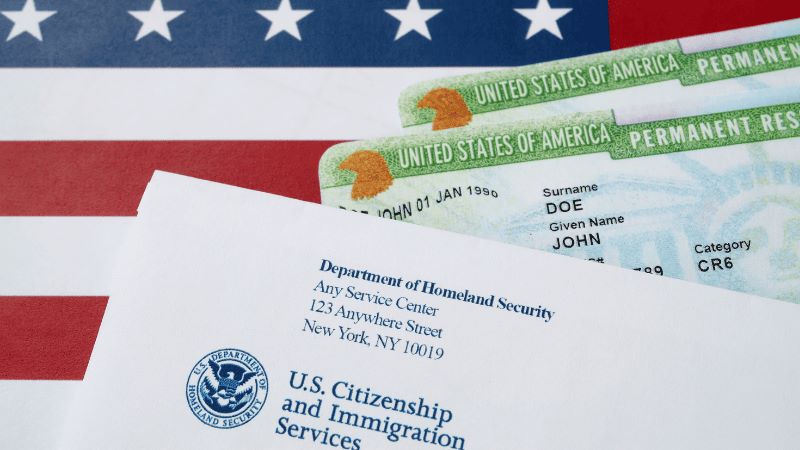
A green card, formally known as Lawful Permanent Residency (LPR), confirms that a foreign national is authorized to lawfully reside and work permanently in the United States, provided they continuously fulfill all obligations mandated for permanent residents under immigration law. This document is officially issued as Form I-551, printed on a secure card containing the bearer’s photograph and biometric data. U.S. Citizenship and Immigration Services (USCIS) is responsible for adjudicating permanent residency applications through various authorized pathways: family-sponsored petitions, extraordinary abilities, immigrant investor programs, or asylum. Each application must conclusively establish its legal validity and satisfy the prerequisites of current immigration statutes.
Lawful Permanent Residents are strictly prohibited from registering to vote or casting ballots in federal elections. They must rigorously adhere to statutory physical presence rules and maintain their lawful standing. For conditional permanent residents holding a 2-year green card, the applicant must formally submit a petition to remove conditions within the 90-day window immediately preceding the card’s expiration date. Conversely, a standard 10-year green card requires a renewal application to be filed approximately 6 months prior to its expiration to ensure that permanent residency status continues without administrative disruption.
A frequently asked question is whether a U.S. green card is completely permanent. The legal answer is no. Lawful Permanent Resident status can be revoked if the individual violates their residency obligations. For instance, residing outside the United States for an extended duration without obtaining a valid Reentry Permit, or committing serious criminal offenses, can trigger revocation. Many individuals have lost their permanent resident status simply because they failed to maintain continuous physical residence within the United States. This requires careful attention from those who travel frequently between the United States and their home countries. The question “Does living outside the U.S. result in the loss of a green card?” consistently receives significant attention from international workers and business professionals.

Many individuals assume that merely possessing the physical card ensures total safety, but in reality, retaining a green card over many years carries inherent risks if regulatory compliance is not strictly maintained. USCIS can re-examine a case file upon discovering violations of U.S. residency obligations, a failure to maintain actual physical residence in the U.S., or unresolved tax compliance issues. Numerous permanent residents have faced green card revocations due to prolonged absences from the United States or inconsistent declarations made during the standard renewal process.
Citizenship represents the highest legal standing available under the law. It is achieved through the naturalization process after an applicant fully satisfies mandatory statutory requirements concerning physical residence duration, English language proficiency, and a fundamental knowledge of U.S. civics. Citizens are issued a U.S. passport and enjoy comprehensive rights, including voting in all elections, running for public office, holding federal government employment, and absolute immunity from deportation under standard immigration laws—except in extraordinary, rare scenarios involving egregious initial naturalization fraud. The naturalization application package is submitted via Form N-400, which includes a formal examination testing historical knowledge, governmental structures, and English communication skills.
The naturalization exam consists of two primary components: an English reading and writing test, and a civics test drawing from 100 standard study questions covering history, the U.S. Constitution, and governmental architecture. Applicants must correctly answer 6 out of 10 randomly selected questions to secure a passing mark. Upon formal approval, they participate in a judicial or administrative Oath of Allegiance ceremony, officially becoming citizens of the United States.
Distinct from permanent residents, what specific rights does U.S. citizenship confer that a green card does not? Primarily, U.S. citizens can sponsor parents, spouses, and unmarried children under the age of 21 under the “Immediate Relative” classification. This specific group is completely exempt from annual numerical visa limitations and does not face waiting lists governed by the monthly Visa Bulletin, unlike family preference categories. Because they are unconstrained by annual quotas, case processing speeds are typically accelerated and remain entirely insulated from visa backlogs. Furthermore, citizens enjoy comprehensive diplomatic protection when traveling abroad. Most importantly, citizenship offers absolute stability—this legal status virtually cannot be stripped away unless severe fraudulent misrepresentation is uncovered in the initial immigration file.

When posing the question “Is a green card or U.S. citizenship more advantageous?”, several critical dimensions must be systematically evaluated. Below is a detailed comparison:
Residency and Entry Rights: Lawful Permanent Residents are permitted to reside indefinitely but must continuously fulfill strict residency obligations. U.S. citizens face no statutory limitations regarding the duration of time spent outside the United States.
Employment and Career Mobility: Both statuses authorize lawful employment within the United States; however, specific sensitive roles within federal agencies and defense sectors are restricted exclusively to U.S. citizens. International students who adjust status to permanent residency after graduation frequently pursue this pathway to permanently secure their professional careers.
Global Mobility: Another profound divergence lies in international travel capabilities. While permanent residents remain entirely dependent on the passport issued by their original country of citizenship, U.S. citizens possess a U.S. passport granting visa-free or visa-on-arrival entry to a vast number of nations globaly. This provides a distinct operational advantage for individuals managing international business, pursuing global studies, or maintaining multi-national residencies, while significantly mitigating border-entry risks in developed nations.
Family Sponsorship Capabilities: Lawful Permanent Residents are legally restricted to sponsoring only spouses and unmarried children. Conversely, U.S. citizens can sponsor parents, spouses, unmarried children, married children, and siblings.
Residency and Fiscal Obligations: In tandem with physical residency rules, permanent residents are subject to global income tax compliance identical to U.S. citizens. Global tax exposure is mandated under federal tax laws independent of your physical location, frequently creating severe legal and financial risks for long-term permanent residents who reside primarily outside the United States.
Many individuals fail to recognize that holding a green card carries a strict legal responsibility to report global income earned both inside and outside the United States. When living long-term abroad, international regulatory frameworks like FATCA can trigger mandatory financial reporting disclosures, resulting in severe legal liabilities if not fully complied with.
Risk of Status Revocation: Permanent resident status can be systemically revoked due to criminal non-compliance or prolonged international absences. U.S. citizenship is virtually irrevocable.
Political Participation and Voting: Only U.S. citizens possess the legal right to vote in federal elections, run for constitutional public office, and serve on federal or state judicial juries.
Family and Generational Stability: Children born abroad to a U.S. citizen parent typically acquire U.S. citizenship automatically at birth, subject to physical presence laws. Children born to Lawful Permanent Residents outside the United States do not inherit this automatic right.
For professionals who travel frequently or plan to have children abroad, deciding whether to remain a permanent resident or pursue U.S. naturalization becomes a pivotal strategic question. First Consulting Group regularly counsels high-skilled international professionals on balancing global career opportunities with strict U.S. residency mandates.

To determine the optimal legal roadmap, you must progressively evaluate the statutory requirements, unique individual circumstances that may impact your eligibility, and ultimately, how each status aligns with your personal and professional long-term goals in the United States.
To successfully transition from a Lawful Permanent Resident to a U.S. citizen, an applicant must satisfy the following statutory conditions:
The specific timeline for how long you must hold a green card before entering naturalization depends entirely on these legal variables. The naturalization process generally requires 8 to 12 months from the initial intake of Form N-400 to the formal Oath ceremony. This multi-step procedure encompasses submitting the application package and associated filing fees, undergoing biometric fingerprint indexing, attending a formal interview, and passing the required tests. The final phase concludes with the Oath of Allegiance ceremony. Our firm strongly advises meticulous case file preparation to prevent administrative delays or outright denials.
Not all applications progress through administrative channels seamlessly. A significant percentage of naturalization denials stem from latent legal issues, such as minor prior offenses, a history of statutory non-compliance, or outstanding federal tax liabilities. Furthermore, extended international absences that break continuous residence during the statutory tracking period can cause an application to be heavily delayed or rejected. Therefore, a rigorous audit of your legal background and regulatory compliance is mandatory prior to submitting your petition.
The strategic decision of whether to pursue U.S. citizenship or maintain permanent resident status depends on several personalized elements:
You should pursue naturalization if: You plan to reside permanently in the United States, wish to sponsor parents or siblings, require a U.S. passport for seamless international mobility, desire full voting and political participation rights, or have minor children and want to secure absolute citizenship protection for future generations.
You should retain your green card if: Your primary career or business requires you to live and work extensively outside the United States, you do not wish to relinquish your original nationality (in scenarios where your home country strictly prohibits dual citizenship), you do not yet satisfy the statutory continuous residence or language proficiency requirements, or you have serious personal concerns regarding mandatory jury duty obligations.
Strategic diagnostic checklist for individual alignment: Long-term residential objectives, annual physical presence margins within the United States, family sponsorship requirements, citizenship goals for your children, and your capacity to accept permanent federal legal constraints.
A major factor that is frequently weighed is the issue of dual nationality. United States constitutional law permits dual citizenship; however, whether acquiring U.S. citizenship results in the automatic loss of your original nationality depends entirely on the sovereign laws of your home country. For individuals with complex international assets, family obligations, or plans to operate parallel residencies across multiple nations, understanding the legal and tax risks of holding dual nationality is an indispensable step.
An international business professional once shared with our firm that he intentionally maintained his green card status for 15 years to manage his corporate enterprises across Asia. However, as his son approached university age, he chose to undergo naturalization to secure federal scholarship access and advanced employment opportunities for his child. This case clearly demonstrates that there is no uniform solution; rather, the strategy must be customized to your unique family dynamic.
If you require detailed information, custom legal counsel on family-sponsored petitions, or support with intricate immigration pathways, contact First Consulting Group. Our team of highly specialized legal professionals is committed to supporting, guiding, and managing your file with the utmost professional excellence. Connect with our offices today to receive a personalized evaluation and secure a dedicated partner for your entire immigration journey.
FOR A FREE CONSULTATION, PLEASE CALL:
– Hotline: (877) 348-7869
– Garden Grove Office: (714) 638-3111
– San Jose Office: (408) 998-5555
– Houston Office: (832) 353-3535
– Vietnam Office: (028) 3516-2118
Disclaimer: All information provided in this document is intended for general informational purposes only and does not constitute formal legal advice. Statistical data and processing timelines reflect the public records available at the time of publication. For precise legal assessments, please schedule a direct consultation with First Consulting Group.
Top Articles



The U.S. immigration process can be intricate, involving detailed legal requirements and procedures. To better address your unique situation, please provide your contact details to arrange a personalized consultation. A member of First Consulting Group’s dedicated team will contact you during business hours to offer expert guidance.

USA
12966 Euclid St., Suite 520, Garden Grove, CA 92840
(714) 638-3111
USA
989 Story Rd., Suite 8075, San Jose, CA 95122
(408) 998-5555
USA
1880 S Dairy Ashford Rd Ste 539, Houston, TX 77077
(832) 353-3535
VIETNAM
8th Floor, Tuoi Tre Tower, 60A Hoang Van Thu St., Duc Nhuan Ward, SaiGon
(028) 3516-2118
VIETNAM
5th Floor, Bao Minh Building, 08 Phan Van Tri St., Ninh Kieu Ward, Can Tho City
(0292) 383-0001
VIETNAM
5th Floor, Viettel Building, 11 Ly Thuong Kiet St., Thuan Hoa Ward, Hue City
(0234) 381-0016
VIETNAM
6th Floor, ACB Building, 218 Bach Dang St., Hai Chau Ward, Da Nang City
0886 00 34 00