
DHS issues final rule changing admission period for foreign students and exchange visitors
minhle
News
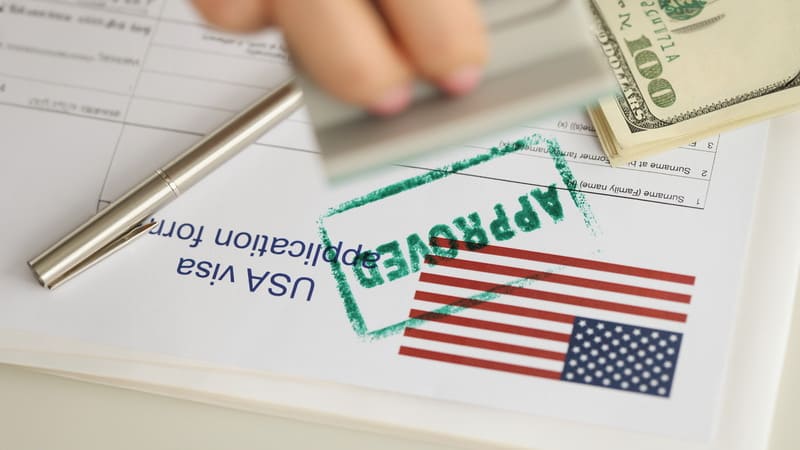
The J1 visa has emerged as the definitive gateway to achieving international academic and professional goals for many students, primarily because the baseline threshold for this visa classification is highly accessible. This is a dedicated exchange visitor nonimmigrant visa that empowers individuals to relocate to the United States to participate in authorized training, cultural engagement, or structural exchange programs. To gain a deeper grasp of this specific nonimmigrant tier, join First Consulting Group as we analyze its parameters below.
The J1 visa is classified within the broader nonimmigrant visa framework, authorizing participants to enter the United States to engage in approved employment-based, cultural, and educational exchange programs. The foundational intent of this visa is to actively foster international educational exchange, facilitate cross-border work-study programs, stimulate cultural interaction, and expand global diplomatic relations.
This program unlocks pristine opportunities to evaluate the academic and professional infrastructure inside the United States, while concurrently enabling participants to accumulate vital global experience and forge long-term academic and professional roadmaps for the future. The specific program variants operating under this visa classification encompass secondary school student exchanges, professional internships, teaching assignments, advanced academic research, clinical nursing paths, and summer work-travel options.
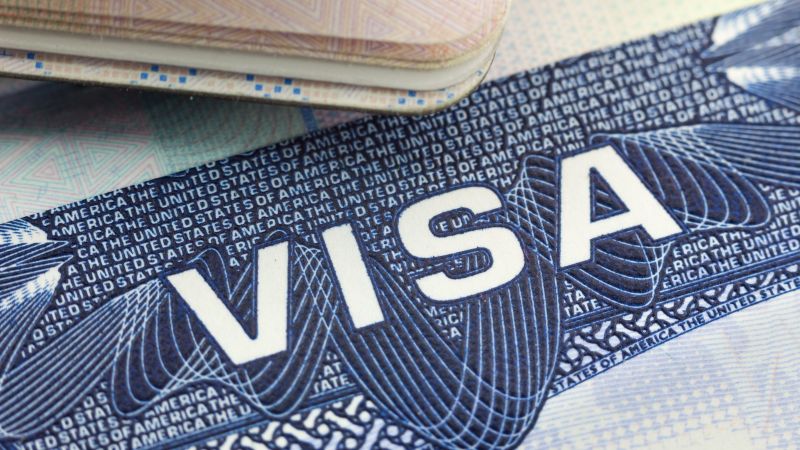
Under the J1 visa umbrella, eligible candidates are granted the opportunity to enter the United States to participate in formalized training tracks officially recognized by the U.S. government for the purpose of structural learning and professional skill enhancement. The primary eligible demographics authorized to pursue a U.S. J1 visa encompass:

Compiling a flawless document portfolio and mastering the exact statutory mandates is the definitive key to maximizing your approval probability during the consular interview. The section below delivers an exhaustive breakdown regarding mandatory language standards, verified financial sourcing, Department of State-designated sponsoring organizations, and the chronological step-by-step assembly workflow.
To qualify for a J1 visa, you must comprehensively satisfy the following legal parameters:
To prevent procedural confusion regarding the exact composition of your application, use the following exhaustive inventory of mandatory immigration forms and civil records:
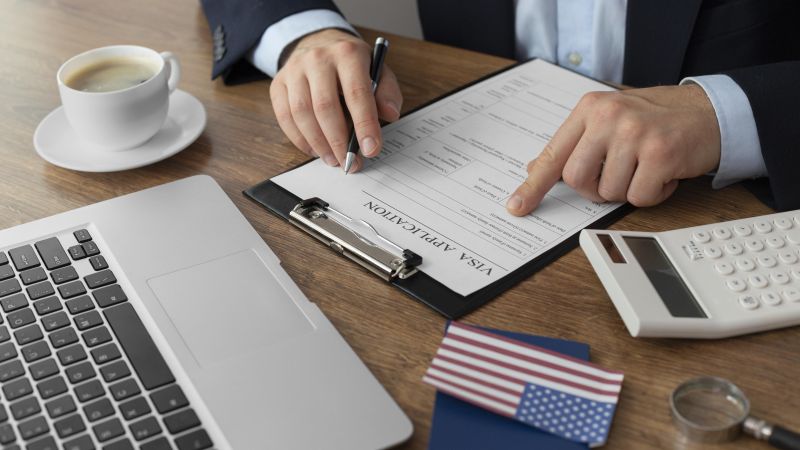
Once you have compiled your entire J1 visa application package, you must execute the process following the 6 sequential phases mapped out by First Consulting Group below:
Phase 1: Secure your Form DS-2019:
Upon formal acceptance into your chosen exchange curriculum, your designated program sponsor will transmit your physical Form DS-2019 via secure international courier or provide a digitized PDF version via encrypted email. If you receive a digital PDF file, you are legally required to print it out and physically execute your signature using ink within the designated applicant attestation block on page 1. This printed document bearing your wet signature operates as the valid, legal original required for your consular interview.
Phase 2: Reconcile your Form I-901 SEVIS fee
Access the official domain at FMJfee.com, input your biographical details alongside the unique SEVIS ID string displayed on your Form DS-2019, process the financial payment via an authorized international credit card, and print out your tracking transaction receipt.
Phase 3: Executing your online Form DS-160
Log into the official system at ceac.state.gov/genniv and accurately complete the mandatory fields detailing your background, international travel history, and stated purpose of entry. Securely record your unique Application ID to facilitate future profile retrieval.
Phase 4: Book your consular interview date
Access the authorized regional visa scheduling engine, configure your secure user profile, and execute the required MRV fee payment as directed by the portal (via designated banking streams or secure online routing). Once the transaction is cleared by the treasury ledger, select an open interview date and time slot, then print out your official Appointment Confirmation document.
Phase 5: Attend your consular review at the Embassy or Consulate
Present yourself at the consular facility carrying your complete original document portfolio, ensuring absolute punctuality. Consular officers routinely center their inquiries around your specific program goals, your strategy to return home post-program, your underlying funding mechanisms, and your ongoing anchors to your home country. Deliver honest, confident, and highly articulate responses.
Phase 6: Retrieve your passport housing the active visa stamp
If your petition secures a successful adjudication, your passport will be routed to your registered delivery coordinates via authorized courier within 3 to 7 business days. If your application triggers an administrative hold under Section 221(g), simply follow the instructional directive issued by the officer and transmit the requested secondary documents promptly.
In addition to mastering the core eligibility baselines and documentation requirements of the J1 category, you must follow these vital operational notes to ensure a seamless filing experience.
Following the electronic transmission of your core forms, you must lock in your appointment date with the U.S. Embassy or Consulate at the earliest opportunity to protect your timeline from processing bottlenecks. During peak international travel seasons running from May through August annually, portal calendar waiting periods can easily extend from several weeks to over a month. Consequently, the moment your Form DS-2019 arrives and your SEVIS fee is successfully captured, you should instantly book your interview date to guarantee an adequate buffer prior to your program start date.
First Consulting Group emphasizes that locking in an early appointment block grants you access to a wider pool of optimized dates and times, preventing you from being forced into an inconvenient time block or facing program start delays. As a strict compliance baseline, your physical visa must be successfully issued at least 1 to 2 weeks prior to the formal program start date displayed on your Form DS-2019 to allow sufficient time to manage international flight logistics and border processing workflows.
The active validity lifecycle of your J1 visa varies dynamically based on the specific exchange program you are pursuing. Typically, an exchange participant is authorized to remain physically present within the United States for a duration spanning 1 to 3 years under J-1 parameters, dictated by the precise sub-category of exchange. For context, review these standard category durations:
For international students and short-term exchange tracks, you are strictly prohibited from remaining physically present inside the United States for more than 30 days following the formal program end date displayed on your documentation. This specific 30-day window operates as an authorized administrative grace period designed exclusively to enable you to pack your personal belongings, engage in domestic leisure travel, and arrange your departure. Throughout these 30 days, you are subject to an absolute statutory prohibition on local labor and cannot participate in any income-generating activities.
If you fail to depart and overstay this grace period without a valid, legally recognized cause, the infraction will be permanently recorded within your federal immigration history, generating severe negative consequences for all future U.S. visa applications. In severe scenarios, an un-waived overstay can trigger a long-term statutory bar to re-entering the United States.

Navigating the U.S. J1 visa tier opens up world-class professional training and educational opportunities within the United States. While the underlying rules of the J1 classification are highly logical, achieving a successful outcome demands precise, comprehensive case assembly and total data transparency. To save valuable time, eliminate procedural risks, and avoid unnecessary re-filing expenses, connect with the legal team at First Consulting Group today to secure your specialized, dedicated guidance. We are fully committed to protecting your immigration profile and guiding you through every milestone on your path to success in the United States.
FOR A FREE CONSULTATION, PLEASE CALL:
– Hotline: (877) 348-7869
– Garden Grove Office: (714) 638-3111
– San Jose Office: (408) 998-5555
– Houston Office: (832) 353-3535
– Vietnam Office: (028) 3516-2118
Disclaimer: All information provided in this document is intended for general informational purposes only and does not constitute formal legal advice. Statistical data and processing timelines reflect the public records available at the time of publication. For precise legal assessments, please schedule a direct consultation with First Consulting Group.
Top Articles
The U.S. immigration process can be intricate, involving detailed legal requirements and procedures. To better address your unique situation, please provide your contact details to arrange a personalized consultation. A member of First Consulting Group’s dedicated team will contact you during business hours to offer expert guidance.

USA
12966 Euclid St., Suite 520, Garden Grove, CA 92840
(714) 638-3111
USA
989 Story Rd., Suite 8075, San Jose, CA 95122
(408) 998-5555
USA
1880 S Dairy Ashford Rd Ste 539, Houston, TX 77077
(832) 353-3535
VIETNAM
8th Floor, Tuoi Tre Tower, 60A Hoang Van Thu St., Duc Nhuan Ward, SaiGon
(028) 3516-2118
VIETNAM
5th Floor, Bao Minh Building, 08 Phan Van Tri St., Ninh Kieu Ward, Can Tho City
(0292) 383-0001
VIETNAM
5th Floor, Viettel Building, 11 Ly Thuong Kiet St., Thuan Hoa Ward, Hue City
(0234) 381-0016
VIETNAM
6th Floor, ACB Building, 218 Bach Dang St., Hai Chau Ward, Da Nang City
0886 00 34 00