USCIS ISSUES NEW GUIDANCE ON PUBLIC CHARGE INADMISSIBILITY: WHAT APPLICANTS NEED TO KNOW
minhle
News
The question “Can a US Green Card holder sponsor a relative?” is a common concern for many families who wish to reunite as soon as possible. Unlike US citizens, who possess broader sponsorship privileges, Lawful Permanent Residents (LPRs) are only permitted to petition for specific categories of family members. First Consulting Group provides a detailed breakdown of who a Green Card holder can sponsor, who they cannot sponsor, the corresponding wait times, and critical compliance factors to help you avoid costly mistakes during the application process.
Can a US Green Card Holder Sponsor a Relative? Yes, US Green Card holders can sponsor certain qualified relatives, though their scope of eligibility is more restricted compared to US citizens. Specifically, Lawful Permanent Residents are permitted to petition for their eligible family members to immigrate to the United States under the following family-sponsored preference categories:
The required procedures, documentation, and processing timelines vary significantly depending on the specific immigration category.
The F2A category holds the highest priority within the family-sponsored preference system for permanent residents. Currently, the typical processing and waiting time for this category ranges from approximately 3.5 to 4 years. Petitioners must regularly monitor the Visa Bulletin published by the US Department of State to track their specific priority date. Even after the Form I-130 petition is approved by US Citizenship and Immigration Services (USCIS), the beneficiary must still await visa availability according to the F2A priority sequence.
Note: The aforementioned wait time is subject to change depending on the specific processing agency and several external variables. These include the beneficiary’s country of chargeability (e.g., Vietnam, India, etc.), the total volume of pending backlogs, the completeness of the initial submission, and potential adjustments to US immigration laws and policies.
Required Documentation for the F2A Category Includes
Eligibility Requirements for the Petitioner (Lawful Permanent Resident – LPR)
When a Lawful Permanent Resident naturalizes and becomes a US citizen, their pending F2A petition is automatically upgraded to the IR1/CR1 Immediate Relative category (Spouse/Child of a US Citizen). This transition significantly accelerates the overall timeline because Immediate Relative visas are not subject to annual numerical limitations or fiscal quotas.
Furthermore, when a Permanent Resident sponsors their children, the Child Status Protection Act (CSPA) provides vital legal safeguards to protect beneficiaries from losing benefits due to administrative processing delays.
Under the Immigration and Nationality Act (INA), a “child” is legally defined as an unmarried individual under the age of 21. If a beneficiary reaches 21 years of age before an immigrant visa is issued, they may “age out,” which shifts them into a lower-priority category with substantially longer wait times or causes them to lose their immigration pathway entirely. Enacted in 2002, the CSPA introduces a mathematical formula that permits “freezing” the child’s age on the date the Form I-130 is filed for Immediate Relatives, provided the beneficiary remains unmarried. In tragic circumstances where the petitioner passes away, the petition may be eligible for reinstatement or conversion to a Form I-360 Self-Petition, preserving the child’s CSPA eligibility.
The F2B category generally involves a significantly extended waiting period, frequently ranging from 8 to 9 years. The specific speed of adjudication depends heavily on the beneficiary’s country of origin, the monthly updates to the Visa Bulletin, and the aggregate visa backlogs accumulated during that fiscal year.
Upon the petitioner’s naturalization, an F2B petition automatically converts into the F1 category (Unmarried Sons and Daughters of US Citizens). However, pursuant to Section 204(k) of the INA, the beneficiary has the legal right to request an “opt-out” of this automatic conversion. This allows them to retain their original F2B classification if the wait times in the F2B category are more favorable than those in the F1 category for their respective country.
Whether a petitioner holds a 2-year Conditional Green Card or a standard 10-year Permanent Resident Card does not alter the beneficiary’s eligibility for CSPA protections. CSPA is a statutory mandate that applies equally across family-sponsored classifications. Nonetheless, the petitioner must ensure that the child remains strictly unmarried throughout the pendency of the process, and must provide verifiable civil birth certificates to conclusively demonstrate the biological or legal parental relationship.
– Lawful Permanent Residents are statutorily barred from sponsoring family members under the following specific US immigration pathways:
– Sponsorship of Parents via a 10-Year Green Card
A frequent question asked is: “Can a 10-year Green Card holder sponsor their parents?” The answer is unequivocally no. Only a US citizen who is at least 21 years old is authorized to petition for their parents under the IR5 Immediate Relative visa category. Acquiring US citizenship through naturalization is the sole legal mechanism available to achieve family reunification for parents under this classification.
– Sponsorship of Siblings or Married Children by Permanent Residents
Green Card holders are legally prohibited from sponsoring relatives under the F3 and F4 classifications, as these visas are strictly restricted to US citizens. A critical warning regarding the F2B category: “If an unmarried son or daughter gets married, is the F2B petition revoked?” Yes. Any change in the beneficiary’s marital status to married will automatically invalidate the underlying F2B petition, resulting in its immediate revocation.
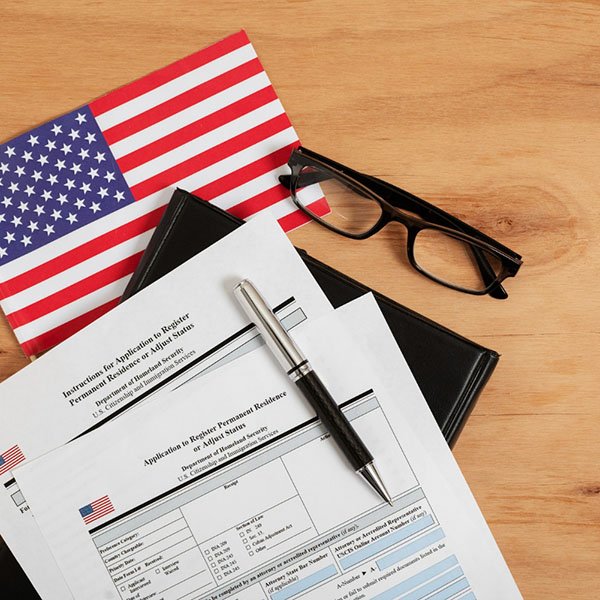
First Consulting Group brings over 23 years of specialized expertise in US immigration law, having successfully processed more than 40,000 diverse immigrant visa applications, including complex permanent resident sponsorship cases. Our firm provides end-to-end strategic legal support, meticulous documentation review, comprehensive preparation for the consular interview, and mock interview coaching. We are dedicated to acting as your trusted partner throughout your US immigration journey. Contact us today to receive the latest updates on immigration policies and a tailored strategy designed for your family’s unique circumstances.
FOR A FREE CONSULTATION, PLEASE CALL:
– Hotline: (877) 348-7869
– Garden Grove Office: (714) 638-3111
– San Jose Office: (408) 998-5555
– Houston Office: (832) 353-3535
– Vietnam Office: (028) 3516-2118
Disclaimer: All information provided in this document is intended for general informational purposes only and does not constitute formal legal advice. Statistical data and processing timelines reflect the public records available at the time of publication. For precise legal assessments, please schedule a direct consultation with First Consulting Group.
Top Articles
The U.S. immigration process can be intricate, involving detailed legal requirements and procedures. To better address your unique situation, please provide your contact details to arrange a personalized consultation. A member of First Consulting Group’s dedicated team will contact you during business hours to offer expert guidance.

USA
12966 Euclid St., Suite 520, Garden Grove, CA 92840
(714) 638-3111
USA
989 Story Rd., Suite 8075, San Jose, CA 95122
(408) 998-5555
USA
1880 S Dairy Ashford Rd Ste 539, Houston, TX 77077
(832) 353-3535
VIETNAM
8th Floor, Tuoi Tre Tower, 60A Hoang Van Thu St., Duc Nhuan Ward, SaiGon
(028) 3516-2118
VIETNAM
5th Floor, Bao Minh Building, 08 Phan Van Tri St., Ninh Kieu Ward, Can Tho City
(0292) 383-0001
VIETNAM
5th Floor, Viettel Building, 11 Ly Thuong Kiet St., Thuan Hoa Ward, Hue City
(0234) 381-0016
VIETNAM
6th Floor, ACB Building, 218 Bach Dang St., Hai Chau Ward, Da Nang City
0886 00 34 00