
U.S federal court officially blocks immigrant visa suspension for 75 countries
minhle
News
Every year, many individuals are denied a U.S. tourist visa, not because their application is weak, but primarily because they do not fully grasp the official procedures for obtaining a foreign visa, lack specific paperwork, or fail to establish strong, binding ties to their home country. With a B-1/B-2 nonimmigrant visa, the absolute key factor is convincing the U.S. Consulate of your legitimate travel purpose and your clear intent to return home. With over 23 years of experience, First Consulting Group provides this standard procedural guide along with the common mistakes you must avoid.
The official procedures for obtaining a foreign visa can vary depending on the destination nation. However, the workflow generally comprises three main phases: compiling the required documents, submitting the application package along with paying the mandatory fees, and finally, attending an in-person interview at the Consulate. Understanding each phase clearly allows you to verify the validity of your paperwork proactively. This minimizes the risk of missing documents or presenting inconsistent data—which are the most common reasons for a visa refusal.
In the first phase of this guide, what specific documents must you prepare?
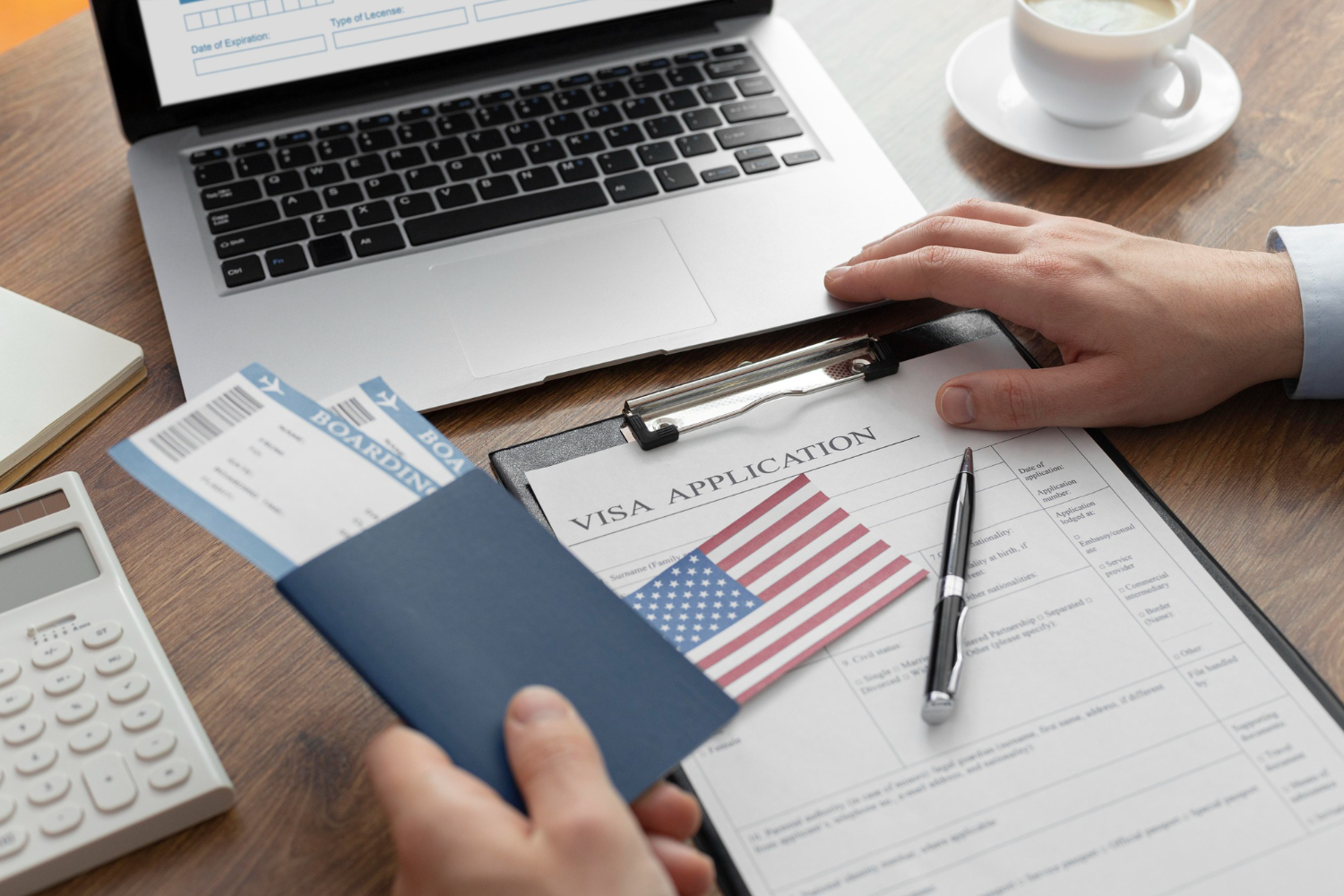
A standard visa application dossier consists of four primary document pillars: personal identification records, financial proof, employment verification, and a detailed travel itinerary. Each pillar plays a specific role in satisfying the visa adjudication officers regarding your financial capability, your transparent purpose of entry, and your firm intent to return to your country of origin following the trip.
A passport that must remain valid for at least 6 months beyond your intended date of departure from the United States, as required by consular visa regulations.
Passport-sized photographs that adhere strictly to standard consular specifications (correct dimensions and background color based on the specific country’s rules). It is highly recommended to have these taken at a professional studio to guarantee full compliance.
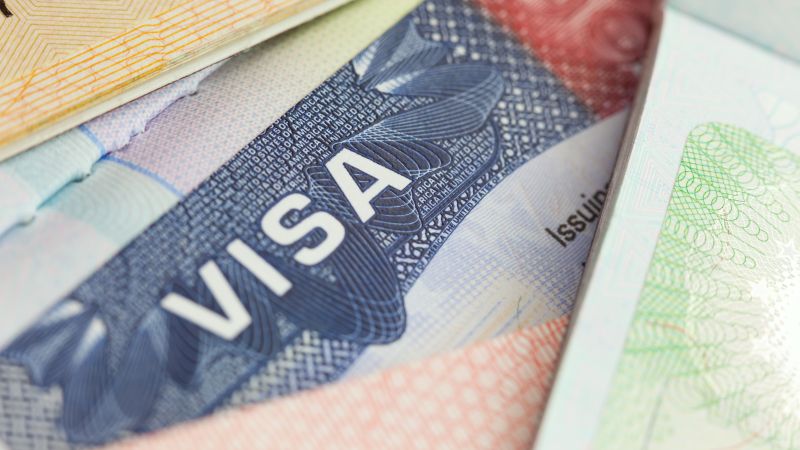
A completely filled-out visa application form—which corresponds to Form DS-160 for United States visa applications.
Demonstrating stable financial health and robust ties ensuring your return home holds a decisive influence over your foreign visa approval rate. Your application package should ideally include certified bank statements from the last 6 months, personal income tax returns, a long-term employment contract, or an official business registration license. For complex financial profiles, you should supplement your file with a comprehensive written letter explaining the source of your funds, or an international travel insurance policy to bolster credibility. Holding a solid international travel history—having traveled to other developed nations and returned strictly on time—serves as a major advantage.
International students applying for a U.S. tourist visa frequently face unique challenges because they lack an independent source of income and clear professional obligations. Therefore, it is critical to add an official enrollment verification letter from their educational institution alongside certified proof of financial sponsorship from their parents to strengthen the case. For business owners, the document portfolio must explicitly display active business licenses and the verified financial performance of the enterprise. Meanwhile, homemakers must demonstrate a stable, verified family income stream to assure consular officers of adequate financial coverage for the entire trip.
Applicants who cannot provide transparent financial proof—such as freelancers operating without formal bookkeeping or individuals without registered assets under their name—often face substantial obstacles when applying for a short-term nonimmigrant visa. Furthermore, individuals who have previously experienced a visa denial or violated immigration and customs laws will be subjected to rigorous security checks in accordance with the statutory immigration codes of the destination country.
When an entire family applies for a visa together, they must provide clear, legal documentation of their familial relationships along with their shared financial capacity. Accompanying minors must be backed by official birth certificates and a notarized parental consent letter. If the trip features a financial sponsor residing in the United States, you must provide verified tax transcripts and the lawful residency status of the sponsor to increase your chances of success.
Being granted a visa does not give you an unconditional right to remain in the country indefinitely. Upon each entry, you are only permitted to stay until the exact date stamped onto your passport or recorded on your electronic entry record. Overstaying your authorized period of stay can result in the immediate cancellation of your visa and a multi-year bar on re-entering the country. If a legitimate need arises to extend your stay, you must formally execute an application to extend your lawful nonimmigrant status before your current authorization expires.
Once your application dossier is fully compiled, the applicant must schedule an official interview appointment through the electronic system of the U.S. Embassy/Consulate or the designated visa application center. Processing and review timelines fluctuate depending on seasonal demand. If your application is approved without requiring supplemental background checks, the physical passport containing the visa is typically returned within a few business days. However, the preliminary preparation phase can extend from 2 to 4 weeks if you lack required documentation. The overall cost of obtaining a visa includes the standard consular processing fees and associated administrative service fees.
First-time applicants navigating these foreign visa procedures often experience anxiety regarding the verbal questions asked during a U.S. visa interview, particularly those targeting the travel purpose, financial stability, and return plans. Providing completely honest information and maintaining absolute consistency with the data declared on your written application form is vital. Ensuring a perfect alignment between your physical paperwork and your verbal testimony builds crucial credibility with the consular officer.
If your application status shows that your documents are pending or have been placed under additional administrative processing, it means that the consulate requires further verification. During this phase, applicants should monitor their case status using the online tracking systems provided by the Consulate or the visa center to receive progress updates. Following a visa denial, an applicant is legally permitted to reapply at any time. However, it is strategically advisable to reapply only after your personal circumstances have clearly changed or when you can present fresh, objective evidence that directly resolves the specific grounds of your prior refusal.

Why are visas frequently denied even when applicants feel they prepared their paperwork meticulously? In most cases, application failures stem from easily avoidable errors. Understanding these underlying causes allows you to adjust your document strategy effectively.
Presenting incomplete documentation or inconsistent data is the single most frequent mistake. Many applicants inadvertently create contradictions between the written data on Form DS-160 and their verbal interview answers regarding their job duties, exact monthly income, or day-to-day travel itinerary. Consular officers possess the absolute authority to cross-reference your statements against historical data and official government archives to evaluate your credibility under standard immigration laws. A single minor discrepancy can severely compromise the integrity of your entire application.
For weaker profiles, a pathway to visa approval still exists, but the probability of success is inherently lower compared to applicants holding deep-rooted financial and professional stability. A weak profile typically features a bank account opened immediately prior to the application date, unstable or unverified employment, or an inability to demonstrate binding social ties to the home country. Freelancers or self-employed individuals must carefully compile customer contracts, formal invoices, and bank ledger records to offset the absence of a traditional corporate employment certificate.
While a past visa refusal can influence the evaluation of your subsequent applications, it does not mean your opportunity to travel to the United States is permanently lost. When reapplying, you must focus entirely on reinforcing your prior weak points by presenting clear financial documentation, explaining your social and economic ties to your home country persuasively, and providing concrete factors that prove your intent to return home after your temporary stay.
A savings book or bank account established for an adequate duration, showing regular, consistent transaction history.
Current employment verified clearly through a valid labor contract or an official business license.
A logical, well-planned travel itinerary accompanied by hotel reservations and flight itineraries.
Zero contradictions or discrepancies across all submitted paperwork and forms.
No historical record of violating immigration, customs, or border laws in any country.
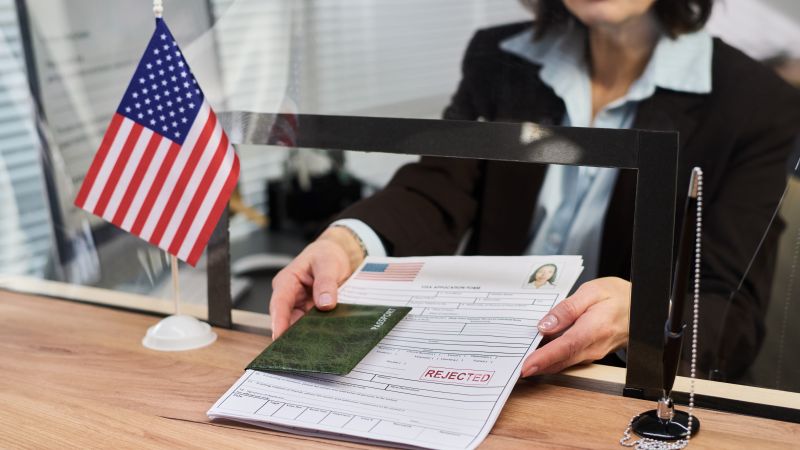
When executing foreign tourist visa procedures, applicants generally choose between two pathways: managing the entire application independently or hiring a professional firm specializing in international tourist visa processing. Each option carries distinct advantages and disadvantages depending on your profile.
Handling your application independently saves money on service fees and gives you total, direct control over your personal information. Individuals who possess an excellent international travel history, transparent financial assets, and stable employment can comfortably manage the entire workflow on their own. The foundational instructions provided by the Consulate are highly detailed and readily accessible on their official websites.
However, an independent application requires you to dedicate significant time to researching every precise step, keeping up with the latest policy updates, and maintaining complete confidence during a live interview. For first-time applicants or those dealing with complex variables, navigating this alone can lead to critical omissions.
Professional visa consulting firms deliver three core benefits: comprehensive document auditing, situational interview coaching tailored to your background, and real-time updates on shifting consular policies. Experienced specialists know how to properly position a weak dossier and build an individualized strategy to emphasize your binding ties.
With First Consulting Group, our firm does not merely address short-term tourist visa procedures; we provide long-term immigration mapping: guiding clients seamlessly from a tourist visa to a student visa, and eventually transitioning to permanent U.S. residency. Our office features an established team of legal experts who deeply understand immigration law. Consequently, our clients receive full support in maintaining continuous lawful presence within the United States and executing timely visa renewals whenever required.
You have a history of a prior U.S. visa refusal and wish to reapply strategically.
Your financial documentation is highly complex, or you lack significant assets registered under your own name.
You need to secure a visa urgently for an upcoming, time-sensitive trip.
You intend to pursue long-term study abroad or family-based immigration pathways in the future.
When registering for professional visa services, always evaluate firms based on verifiable document-processing experience, a track record of adapting to consular policy shifts, and the presence of qualified immigration legal experts.

If you require supplementary information or formal legal assessments regarding family-based immigrant petitions, corporate sponsorship, or foreign nonimmigrant visa procedures, contact First Consulting Group today. Our legal team is ready to provide dedicated guidance and professional dossier management.
FOR A FREE CONSULTATION, PLEASE CALL:
– Hotline: (877) 348-7869
– Garden Grove Office: (714) 638-3111
– San Jose Office: (408) 998-5555
– Houston Office: (832) 353-3535
– Vietnam Office: (028) 3516-2118
Disclaimer: All information provided in this document is intended for general informational purposes only and does not constitute formal legal advice. Statistical data and processing timelines reflect the public records available at the time of publication. For precise legal assessments, please schedule a direct consultation with First Consulting Group.
Top Articles
The U.S. immigration process can be intricate, involving detailed legal requirements and procedures. To better address your unique situation, please provide your contact details to arrange a personalized consultation. A member of First Consulting Group’s dedicated team will contact you during business hours to offer expert guidance.

USA
12966 Euclid St., Suite 520, Garden Grove, CA 92840
(714) 638-3111
USA
989 Story Rd., Suite 8075, San Jose, CA 95122
(408) 998-5555
USA
1880 S Dairy Ashford Rd Ste 539, Houston, TX 77077
(832) 353-3535
VIETNAM
8th Floor, Tuoi Tre Tower, 60A Hoang Van Thu St., Duc Nhuan Ward, SaiGon
(028) 3516-2118
VIETNAM
5th Floor, Bao Minh Building, 08 Phan Van Tri St., Ninh Kieu Ward, Can Tho City
(0292) 383-0001
VIETNAM
5th Floor, Viettel Building, 11 Ly Thuong Kiet St., Thuan Hoa Ward, Hue City
(0234) 381-0016
VIETNAM
6th Floor, ACB Building, 218 Bach Dang St., Hai Chau Ward, Da Nang City
0886 00 34 00