
USCIS ISSUES NEW GUIDANCE ON PUBLIC CHARGE INADMISSIBILITY: WHAT APPLICANTS NEED TO KNOW
minhle
News
The U.S. Citizenship and Immigration Services (USCIS) has issued new guidance explaining how officers will determine whether certain applicants for adjustment of status are likely to become a “public charge” under U.S. immigration law.
The updated guidance follows a final rule issued by the Department of Homeland Security (DHS) that rescinds the 2022 Public Charge rule and restores the framework used to evaluate whether an applicant is likely to become primarily dependent on the U.S. government for support.
The new guidance is particularly important for individuals preparing to file Form I-485, Application to Register Permanent Residence or Adjust Status, because public charge inadmissibility may affect eligibility for lawful permanent residence in certain cases.
The DHS final rule was published in the Federal Register on July 20, 2026, and is scheduled to take effect on September 18, 2026.
The updated guidance will apply to certain adjustment of status applications that are postmarked or electronically submitted on or after the effective date.
Applicants who are preparing Form I-485 around this date should therefore carefully review the requirements that apply to their specific immigration category and filing date.
In general, applicants for adjustment of status are subject to the public charge ground of inadmissibility unless their immigration category is specifically exempt under U.S. law.
USCIS identifies a broad range of family-based and employment-based immigrant categories that may be subject to public charge consideration. These include certain spouses, children, parents, siblings, and other relatives of U.S. citizens and lawful permanent residents, as well as certain employment-based immigrants, investors, religious workers, and Diversity Visa immigrants.
At the same time, Congress has specifically exempted certain humanitarian and other protected categories from the public charge ground of inadmissibility.
The following provides a general overview:
| Examples of Immigration Categories | Public Charge Applicability |
| Certain family-based immigrants, including spouses, children, parents, and siblings of U.S. citizens | Subject |
| Certain family members of lawful permanent residents | Subject |
| Certain employment-based immigrants, including Priority Workers, Professionals, Skilled Workers, and Other Workers | Subject |
| Individuals with advanced degrees or exceptional ability | Subject |
| Investors and Religious Workers | Subject |
| Diversity Visa immigrants | Subject |
| Certain Amerasian immigrants and other specified immigrant categories | Subject, depending on the classification |
| Refugees and Asylees | Exempt |
| Special Immigrant Juveniles | Exempt |
| Temporary Protected Status (TPS) applicants | Exempt |
| T Nonimmigrants and U Nonimmigrants | Exempt |
| VAWA self-petitioners | Exempt |
| Certain Cuban and Haitian entrants | Exempt |
| Certain Afghan and Iraqi nationals who assisted the U.S. Government | Exempt |
| Certain diplomats and foreign government officials | Exempt |
| Certain individuals covered by specific humanitarian or special statutory provisions | Exempt |
See more: https://www.uscis.gov/newsroom/alerts/uscis-issues-guidance-on-making-public-charge-inadmissibility-determination
The table is provided for general informational purposes only. Whether an individual is subject to or exempt from public charge inadmissibility depends on the specific immigration classification and applicable law.
Being subject to the public charge ground of inadmissibility does not mean that an applicant will automatically be denied a green card.
USCIS officers are required to consider the applicant’s circumstances as a whole. The law identifies five primary factors that must be considered:
USCIS may also consider other relevant factors when determining whether an applicant is likely to become a public charge.
The determination is therefore based on the totality of the circumstances, rather than on a single factor or isolated piece of information.
For example, the receipt of a particular public benefit does not, by itself, automatically result in a finding of inadmissibility.
For many family-based immigrant cases, Form I-864, Affidavit of Support Under Section 213A of the INA, remains an important part of the financial assessment.
The Form I-864 is a legally enforceable commitment by a sponsor to provide financial support to the intended immigrant and to help prevent the immigrant from becoming dependent on certain public benefits.
However, the submission of Form I-864 does not necessarily eliminate all public charge considerations.

The updated guidance provides important information regarding the treatment of means-tested public benefits, which are benefits generally provided based on an individual’s income or financial circumstances.
For benefits received before September 18, 2026, USCIS will generally consider:
For benefits received on or after September 18, 2026, USCIS may consider a broader range of means-tested public benefits when making a public charge determination.
These may include certain forms of:
However, receiving one of these benefits does not automatically mean that an applicant will be found inadmissible.
USCIS will consider the benefit information together with the applicant’s overall circumstances and all relevant evidence available in the case.
In certain circumstances, an applicant who is determined to be inadmissible solely on public charge grounds may be given an opportunity to post a Public Charge Bond.
A public charge bond is a financial guarantee intended to protect the U.S. Government if the individual later becomes a public charge.
The bond may generally take the form of:
The bond is submitted using Form I-945, Public Charge Bond.
Applicants should be aware that they should not independently submit Form I-945 unless USCIS has specifically invited or instructed them to do so. USCIS determines whether an applicant may be offered the opportunity to post a public charge bond.
Individuals preparing to adjust their status to lawful permanent resident should first determine whether their immigration category is subject to the public charge of inadmissibility.
For applicants who are subject to public charge consideration, it is important to review the overall strength of the case, including:
Applicants should also avoid assuming that a particular benefit, financial circumstance, or joint sponsor will automatically determine the outcome of a public charge assessment.
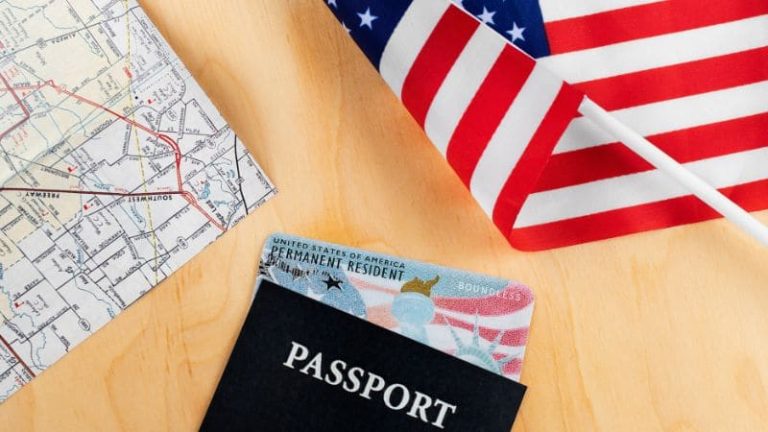
The new DHS final rule is scheduled to take effect on September 18, 2026.
For individuals preparing to file Form I-485, the effective date may be particularly important depending on when the application is submitted and whether the applicant’s immigration category is subject to the public charge of inadmissibility.
Because immigration policies and procedures can change, applicants should review the requirements applicable to their individual circumstances before filing.
Our experienced immigration team is available to provide guidance and discuss your specific circumstances.
Disclaimer: This content is provided for general informational purposes only and does not constitute formal legal advice. Immigration policies and regulations are subject to frequent changes. Please consult an immigration attorney for an evaluation based on your specific circumstances.
Top Articles



The U.S. immigration process can be intricate, involving detailed legal requirements and procedures. To better address your unique situation, please provide your contact details to arrange a personalized consultation. A member of First Consulting Group’s dedicated team will contact you during business hours to offer expert guidance.

USA
12966 Euclid St., Suite 520, Garden Grove, CA 92840
(714) 638-3111
USA
989 Story Rd., Suite 8075, San Jose, CA 95122
(408) 998-5555
USA
1880 S Dairy Ashford Rd Ste 539, Houston, TX 77077
(832) 353-3535
VIETNAM
8th Floor, Tuoi Tre Tower, 60A Hoang Van Thu St., Duc Nhuan Ward, SaiGon
(028) 3516-2118
VIETNAM
5th Floor, Bao Minh Building, 08 Phan Van Tri St., Ninh Kieu Ward, Can Tho City
(0292) 383-0001
VIETNAM
5th Floor, Viettel Building, 11 Ly Thuong Kiet St., Thuan Hoa Ward, Hue City
(0234) 381-0016
VIETNAM
6th Floor, ACB Building, 218 Bach Dang St., Hai Chau Ward, Da Nang City
0886 00 34 00