
USCIS ISSUES NEW GUIDANCE ON PUBLIC CHARGE INADMISSIBILITY: WHAT APPLICANTS NEED TO KNOW
minhle
News
When researching U.S. visas, many people often do not fully understand what a visa actually is. In reality, a visa is a legal document that allows a foreign national to request entry into the United States for a specific duration and purpose. However, being issued a visa does not guarantee entry, as the final decision rests entirely with the immigration officer at the port of entry. Misunderstanding the true nature of a visa can lead to selecting the wrong visa category and preparing an inadequate dossier from the very beginning. With over 23 years of experience in the U.S. immigration field, First Consulting Group will help you clarify each concept and prepare the correct path for your application.
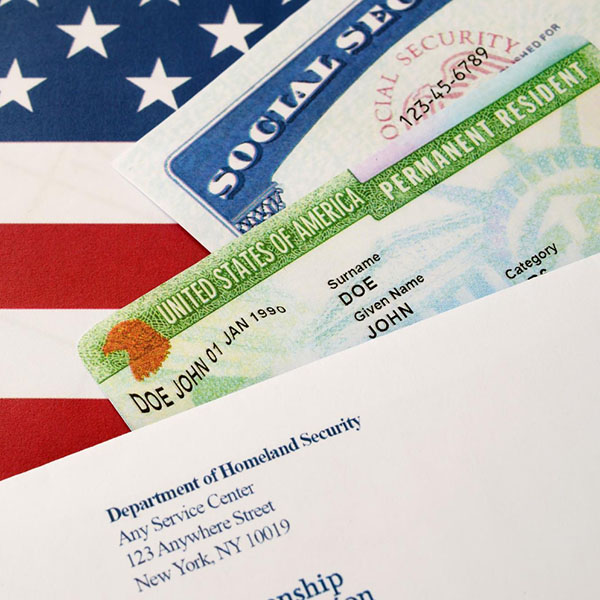
A visa is a permit issued by a country’s competent authority to a foreign national, allowing them to request entry and legally stay in that country for a specific timeframe and purpose. Therefore, clearly understanding “what a visa is” will help you choose the correct visa type for your tourism, business, study, or immigration needs.
See also: Download Form DS-260 in Your Language – Applying for a U.S. Immigrant Visa
Tourist, business, and family visitor visas belong to the nonimmigrant visa group. They are suitable for the following individuals:
Tourists exploring the U.S.
Business travelers on short-term trips.
Parents visiting their children who are studying abroad.
Individuals attending weddings or funerals.
The application dossier must demonstrate these key factors:
A clear purpose backed by an invitation letter and a detailed itinerary.
Strong binding ties to your home country.
Financial capacity to cover the entire cost of the trip.
The visa validity often ranges from 1 to 10 years. However, each entry only permits a maximum stay of up to 6 months.
U.S. student visas (F-1, M-1) and U.S. employment visas (H-1B, L-1) possess distinct characteristics, including:
Requiring an official invitation or petition from a school or an employer.
The obligation to maintain lawful status throughout the entire period of stay.
The eligibility to extend stay or change visa status.
“How does a U.S. student visa differ from a tourist visa?” is a frequently asked question. Student and employment visas allow temporary residency for a specific duration aligned with the approved purpose. In certain cases, visa holders can apply for extensions or change their status under the regulations. Conversely, tourist visas are only suitable for short-term trips and strictly prohibit long-term residency. Whether a U.S. employment visa can lead to permanent residency depends on the specific subcategory; some allow a pathway to permanent resident status, while others do not.
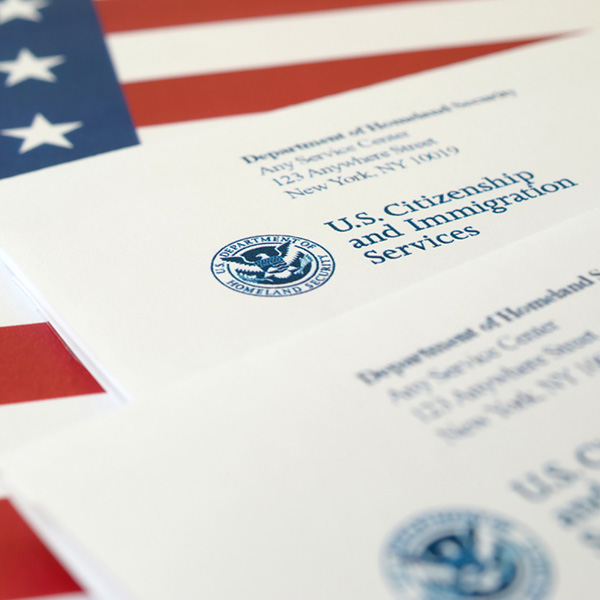
A U.S. immigrant visa is a visa that allows an individual to enter the United States with the intent to reside permanently, rather than staying temporarily like tourist or business travelers. This is the initial step on the path to becoming a Lawful Permanent Resident (Green Card holder), but it does not mean you receive the physical Green Card immediately upon arrival.
Many people mistakenly believe that being issued an immigrant visa grants them immediate permanent residency rights. In reality, after entering the country, you must still complete the processing and fee requirements with USCIS to officially receive your physical Green Card.
USCIS and the U.S. Department of State classify immigrant visas based on three primary pillars:
Family-sponsored immigration: Sponsored by a relative who is a U.S. citizen or Lawful Permanent Resident.
Employment-based immigration: For workers with specific professional skills, advanced degrees, or extraordinary abilities.
Investment-based immigration: Programs such as EB-5, EB-1C, or EB-2 NIW.
Each visa category has its own unique process, waiting times, and annual statutory quotas. The U.S. Embassy or Consulate handles the case processing and interview after USCIS approves the initial underlying petition.
An approved U.S. immigrant visa allows the recipient to build a permanent life in the United States with specific benefits:
The right to permanent residency and a direct pathway to U.S. citizenship.
The right to work legally without needing a separate work authorization document.
Access to education and social benefits matching those of local residents.
These rights mature across different legal stages. The waiting time for an immigrant visa varies from a few months to several years, depending on the specific category.
Immigrant and nonimmigrant visas are two completely distinct groups:
Categories: Tourism, business, short-term study.
Requirement: The applicant must legally overcome the presumption of immigrant intent and prove they will return home.
Limitations: Stays are strictly time-limited, and visa benefits are restricted (e.g., tourist visas prohibit working and studying; student visas prohibit unauthorized full-time employment).
Categories: Family reunification, investment, employment, or humanitarian pathways.
Purpose: A clear intent to live and establish a permanent life in the United States.
Process: Highly complex procedures with substantial waiting timelines.
Benefits: Full access to permanent residency rights, including free public education for children up to age 18, legal employment rights, social welfare access, and eligibility for U.S. citizenship.

In the U.S. immigration framework, it is crucial to distinguish between three concepts that are frequently confused: holding a visa, being granted entry, and permanent residential status. A visa only functions as a travel document allowing a foreign national to travel to a U.S. port of entry and request permission to enter for a specific purpose. Whether you are allowed entry or not is decided solely by the border officer at the time of arrival. Only after being admitted is the foreign national issued an I-94 record (the official electronic document noting the lawful duration of stay), which serves as the legal basis for your lawful presence in the United States.
Many applicants hold the misconception that simply possessing a visa guarantees entry. The reality is entirely different. U.S. immigration law draws a strict boundary between the right to apply for a visa and the right to enter the country. Visa adjudication takes place at a U.S. Embassy or Consulate abroad, where consular officers evaluate paperwork and conduct interviews. However, the absolute authority to grant or deny entry at the border belongs exclusively to the immigration officers at the port of entry.
This scenario occurs frequently in practice. A traveler holding a perfectly valid tourist visa can still be denied entry if:
Their true purpose of travel has changed since the visa was issued.
There are indications of a prior visa condition violation.
They fail to satisfy the border officer of their intent to depart the U.S. on time (due to a lack of binding ties in their home country or answers that suggest an underlying intent to stay permanently).
CBP (U.S. Customs and Border Protection) is the sole agency with the authority to grant or deny admission at the port of entry. Meanwhile, USCIS (U.S. Citizenship and Immigration Services—the agency that manages domestic residency status after entry) is responsible for handling matters such as stay extensions, visa status changes, or adjustments to permanent resident status.
The processing timeline and associated costs for a U.S. visa depend entirely on the specific visa category and the submission date. In addition to the standard consular fees, applicants must prepare for dossier compilation costs, financial proof requirements, and travel logistics. Misunderstanding visa conditions or providing inconsistent declarations can lead to immediate denials and negatively impact any future U.S. visa applications.

Understanding what a visa truly represents is the vital first step in your U.S. immigration journey. With an expert team holding over 23 years of experience, First Consulting Group is ready to provide step-by-step guidance and detailed case assessments to ensure you choose the correct visa category. Contact us today for support tailored to your unique circumstances.
FOR A FREE CONSULTATION, PLEASE CALL:
– Hotline: (877) 348-7869
– Garden Grove Office: (714) 638-3111
– San Jose Office: (408) 998-5555
– Houston Office: (832) 353-3535
– Vietnam Office: (028) 3516-2118
Disclaimer: All information provided in this document is intended for general informational purposes only and does not constitute formal legal advice. Statistical data and processing timelines reflect the public records available at the time of publication. For precise legal assessments, please schedule a direct consultation with First Consulting Group.
Top Articles



The U.S. immigration process can be intricate, involving detailed legal requirements and procedures. To better address your unique situation, please provide your contact details to arrange a personalized consultation. A member of First Consulting Group’s dedicated team will contact you during business hours to offer expert guidance.

USA
12966 Euclid St., Suite 520, Garden Grove, CA 92840
(714) 638-3111
USA
989 Story Rd., Suite 8075, San Jose, CA 95122
(408) 998-5555
USA
1880 S Dairy Ashford Rd Ste 539, Houston, TX 77077
(832) 353-3535
VIETNAM
8th Floor, Tuoi Tre Tower, 60A Hoang Van Thu St., Duc Nhuan Ward, SaiGon
(028) 3516-2118
VIETNAM
5th Floor, Bao Minh Building, 08 Phan Van Tri St., Ninh Kieu Ward, Can Tho City
(0292) 383-0001
VIETNAM
5th Floor, Viettel Building, 11 Ly Thuong Kiet St., Thuan Hoa Ward, Hue City
(0234) 381-0016
VIETNAM
6th Floor, ACB Building, 218 Bach Dang St., Hai Chau Ward, Da Nang City
0886 00 34 00